
Insights & Stories
Sourcing intelligence, product trends, and global manufacturing strategies from the SourceWithAI team.

The Hidden Cost of Fragmented Procurement: Why One PO Can Change How Teams Buy
Procurement becomes complicated when everyday requirements are handled as separate purchasing processes. Repeated research, approvals, purchase orders, deliveries, invoices, and follow-ups create friction that grows with the organization. A consolidated approach can bring related requirements together under one PO, creating a more structured supply program. With purchasing data and AI-assisted research, teams can also identify recurring requirements and make procurement more predictable.
Latest Articles

The quote that made you say yes is not the price you will pay
The quote that made you say yes is not the price you will pay. It is their product, on their calendar, in their box before duty, freight, your color, and the week a holiday eats the inbound. Finding a supplier is cheap. The expensive part is the first PO with someone you already like. Ask five things before the wire: factory or trader, real MOQ, three dates, who owns the tooling, and what happens if bulk misses the sample. Start a brief. Then ask these.
Why Better Sourcing Starts Before the Supplier Search
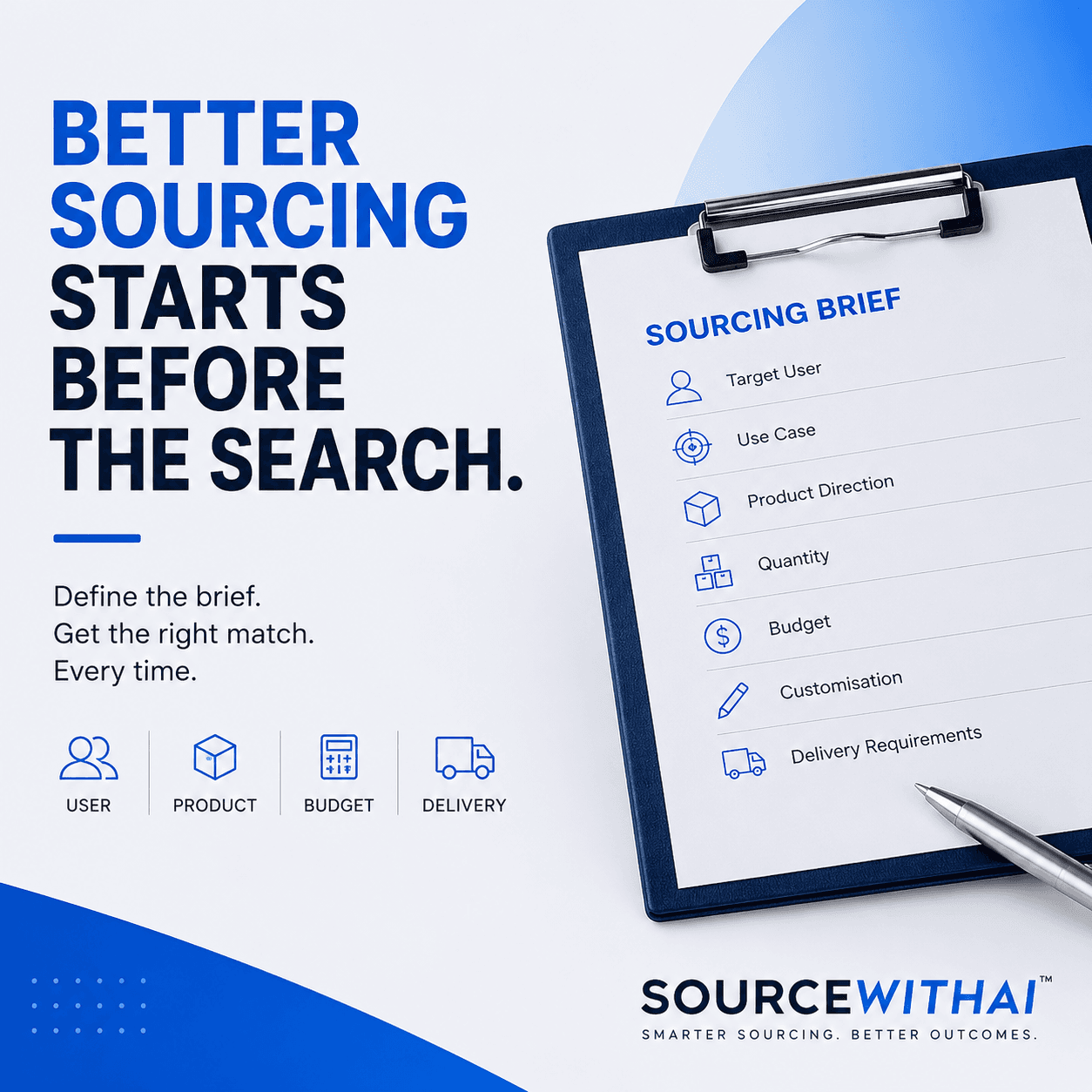
Most sourcing journeys start with supplier searches, but better sourcing starts earlier. Before comparing quotes, buyers need clarity on the user, use case, product direction, quantity, budget, customization, and delivery requirements. A clear brief makes supplier validation more accurate, reduces irrelevant quotes and misaligned samples, and helps buyers reach the right sourcing decision faster.
Why Corporate Gifts Are Starting to Look More Like Retail Products
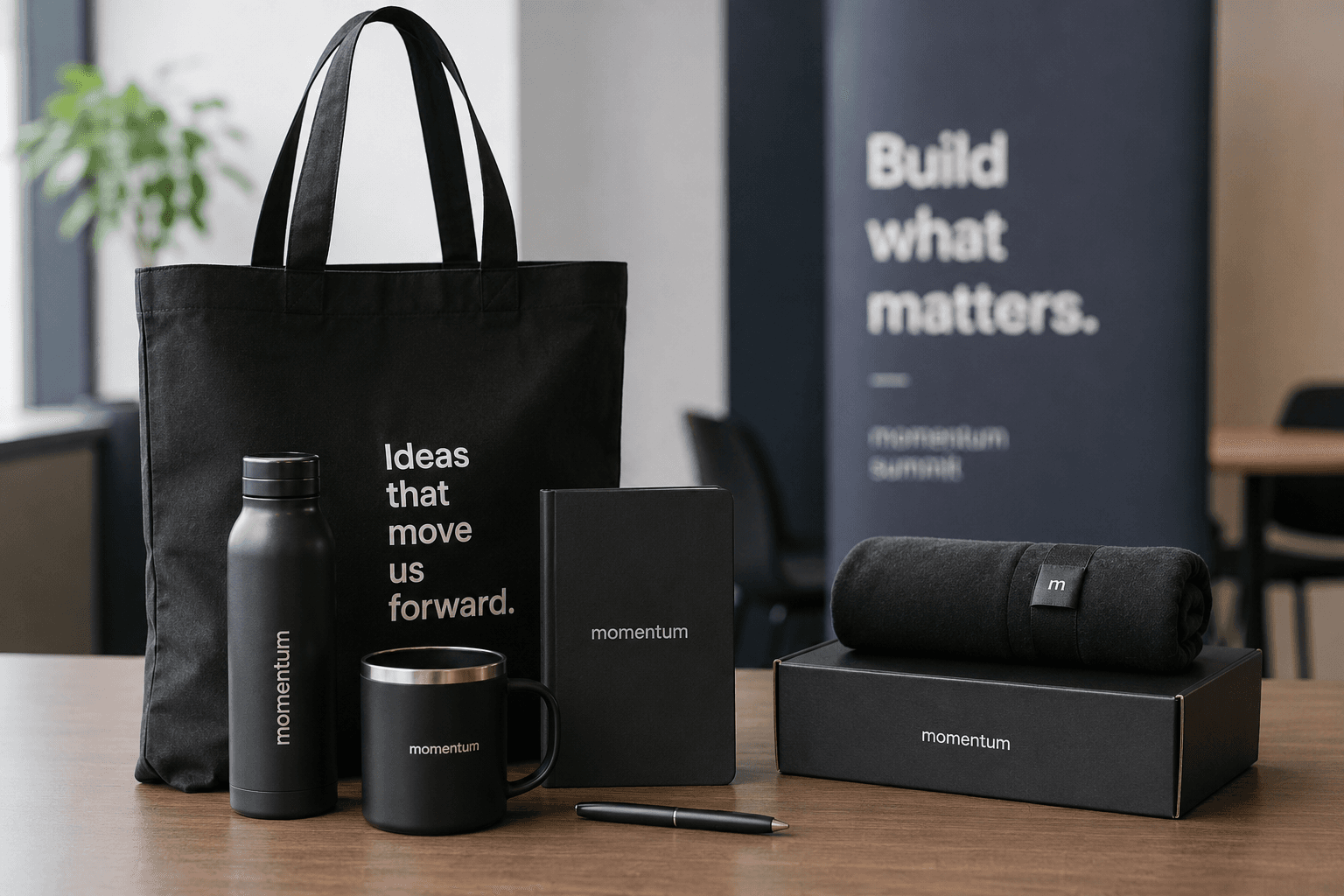
Corporate gifts are evolving from disposable giveaways into useful, retail-quality products. Learn which product details make the biggest difference to perceived value and long-term brand impact.
Your Brand Doesn't Stop at the Office Door: 3 Everyday Products That Keep It Moving
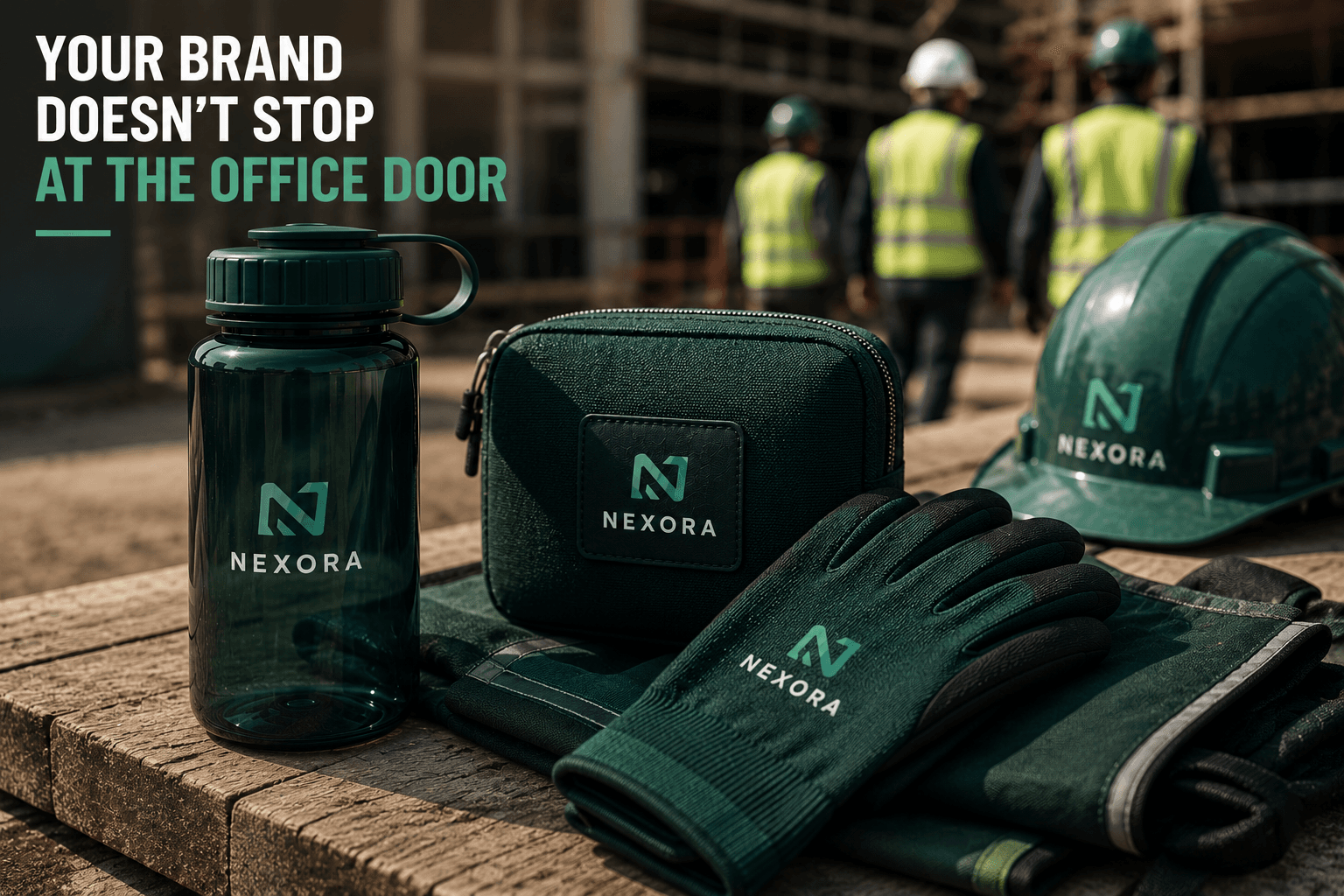
Brand presence shouldn’t stop at the office door. For field teams, practical merchandise can keep your brand visible through the commute, across the jobsite, and into client-facing moments. A canvas pouch, Tritan bottle and branded safety gloves may serve different purposes, but when they share a colourway and considered logo treatment, they become one cohesive brand system useful, visible and built into the working day.
Why Better Sourcing Starts Before the Supplier Search
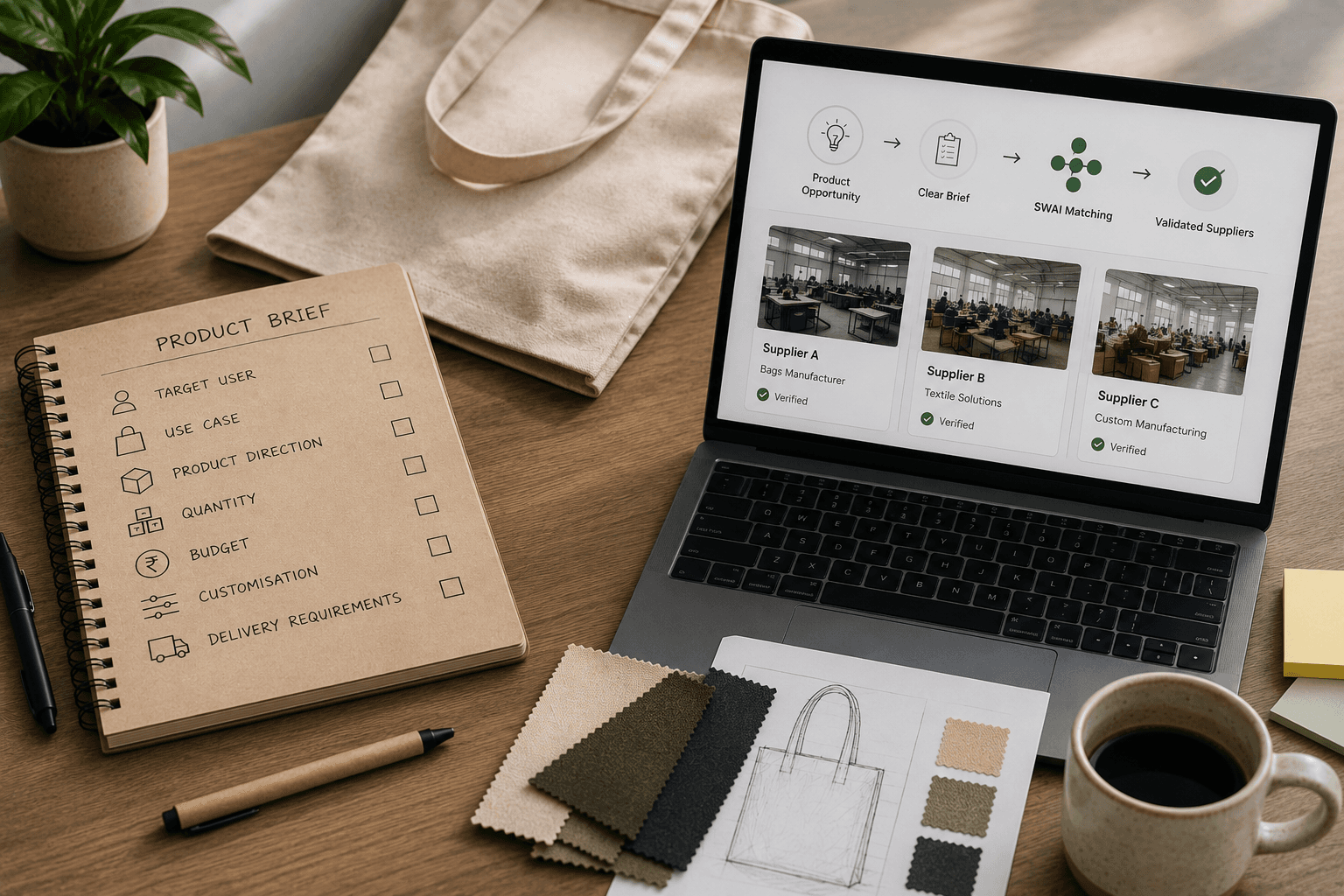
Most sourcing mistakes happen before a supplier is even contacted. Instead of comparing quotes first, define the product: who it's for, how it will be used, your budget, quantity, customization, and delivery needs. A clear brief leads to better supplier matches, fewer revisions, and faster sourcing. SourceWithAI turns that brief into validated supplier recommendations, helping buyers start with clarity instead of guesswork.

Why Corporate Gifts Are Starting to Look More Like Retail Products
Corporate gifts are evolving from disposable giveaways into thoughtfully designed, retail-quality products people actually want to keep. From better materials and useful features to subtle branding and premium packaging, small specification choices can make a significant difference. Explore how to match product quality to the occasion, prioritise upgrades within your budget, and make smarter sourcing decisions when manufacturing corporate gifts in China.
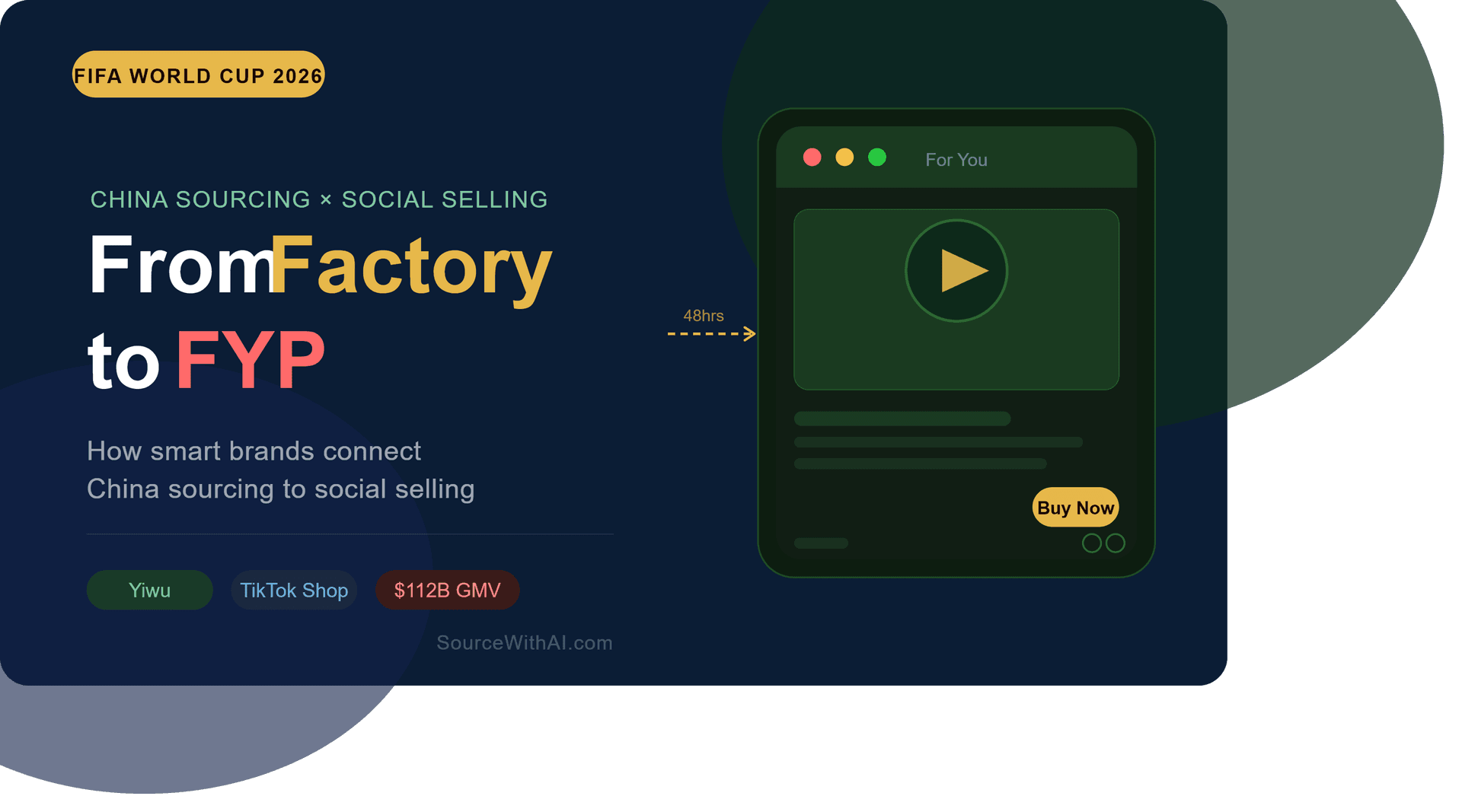
From Factory to FYP How Smart Brands Are Connecting China Sourcing to Social Selling
The best-selling World Cup product on TikTok Shop right now isn't a jersey. It's a $60 drinkware gift set — and 305 creators are selling it through a single pour-and-clink moment on video. This is the factory-to-FYP model: China sourcing connected directly to social selling. The brands winning World Cup 2026 commercially built this loop before the tournament started. Here's exactly how it works and how to build it for your next product.
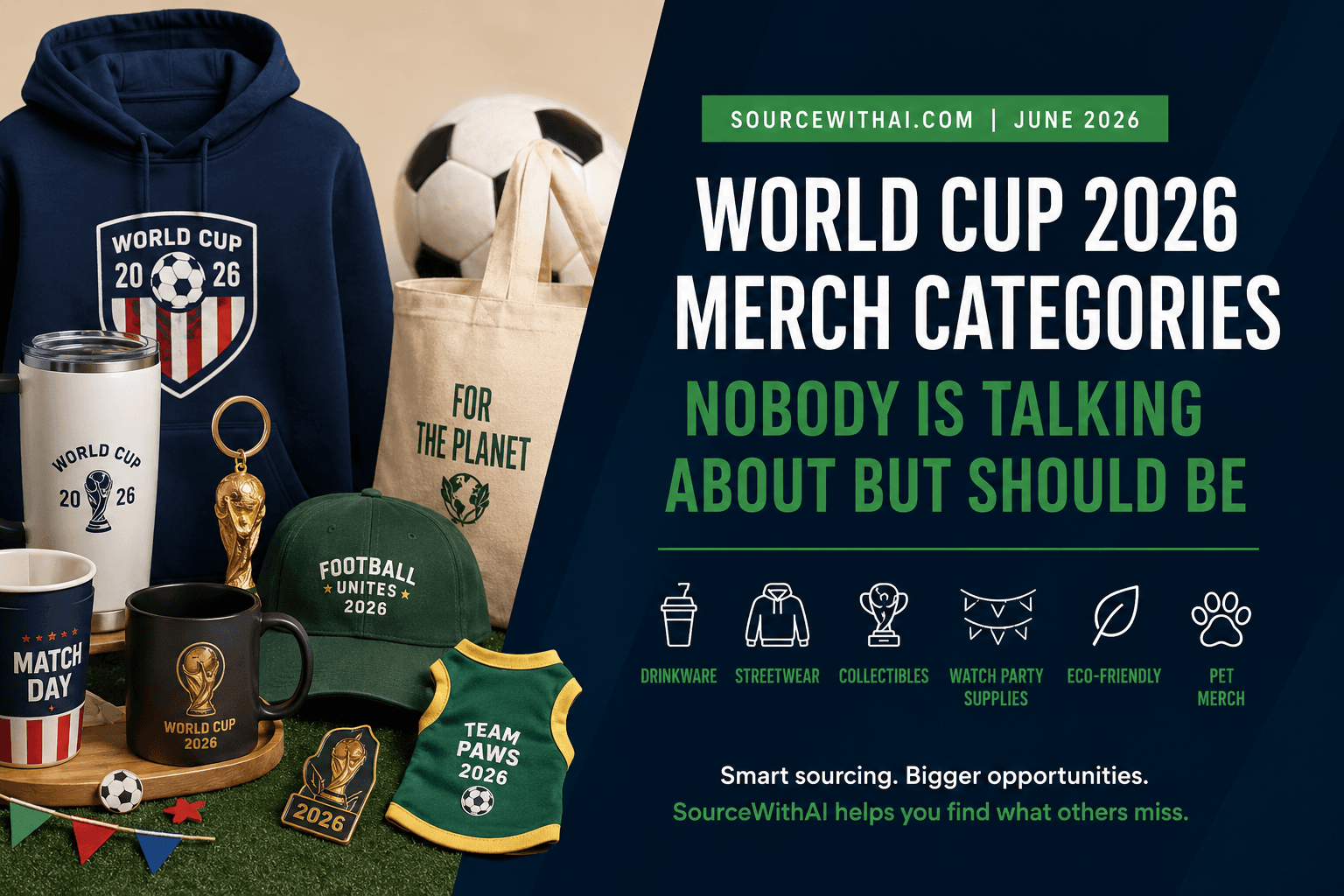
The World Cup Merch Categories Nobody Is Talking About But Should Be
Everyone focuses on jerseys, scarves, and flags during the World Cup—but the biggest opportunities often lie elsewhere. From premium drinkware and lifestyle streetwear to collectibles, watch party supplies and fan accessories, the categories nobody is crowding are often the ones worth sourcing.
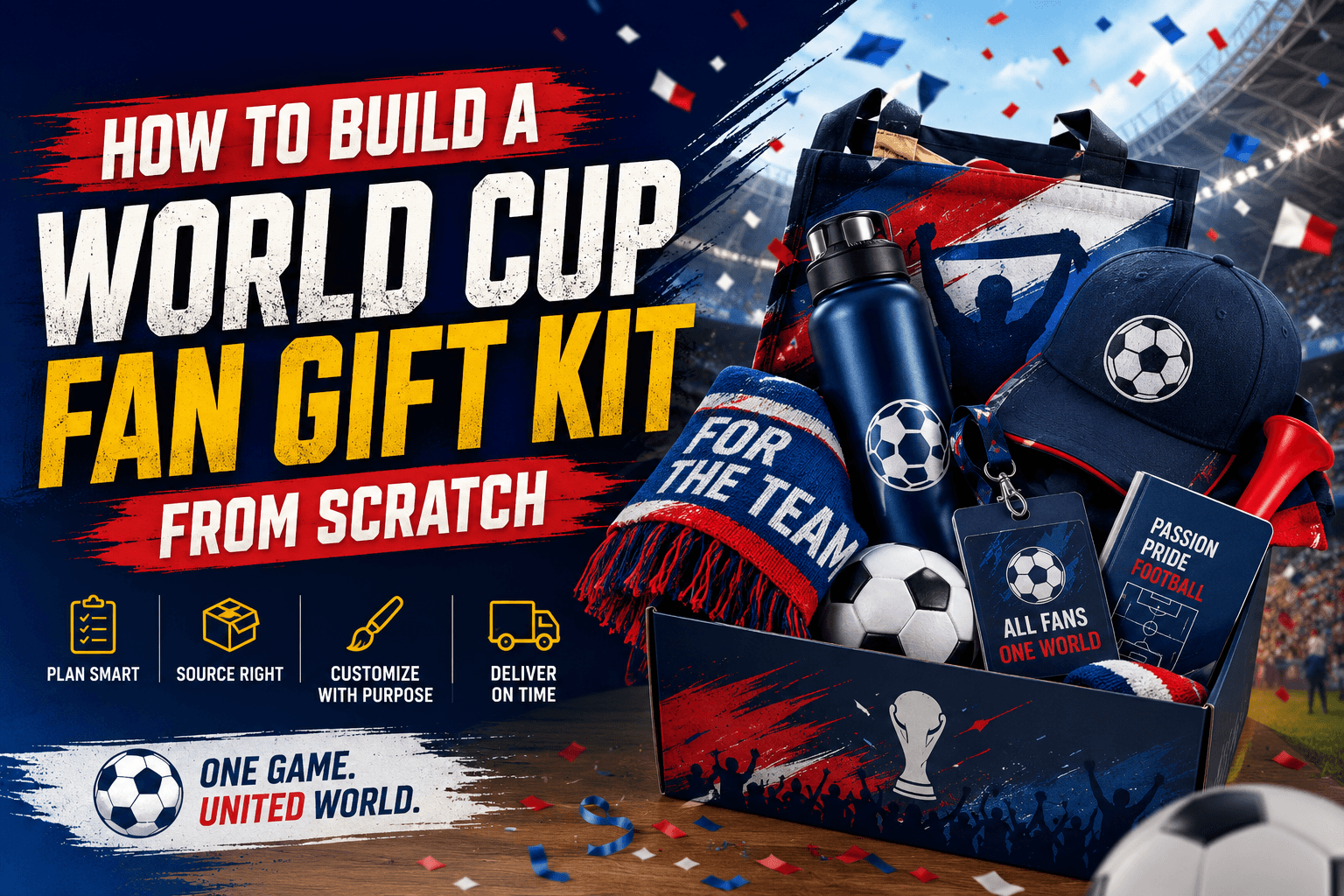
How to Build a World Cup Fan Gift Kit from Scratch : A Sourcing Roadmap
Building a World Cup fan gift kit sounds simple. A scarf, a mini ball, a lanyard — all customised, all on-theme. But the brands that get it right didn't start with products. They started with a sourcing strategy. From Jinjiang scarves to Yiwu novelties to Guangdong drinkware — here's the complete roadmap to building a kit that arrives on time, on budget, and on brief.
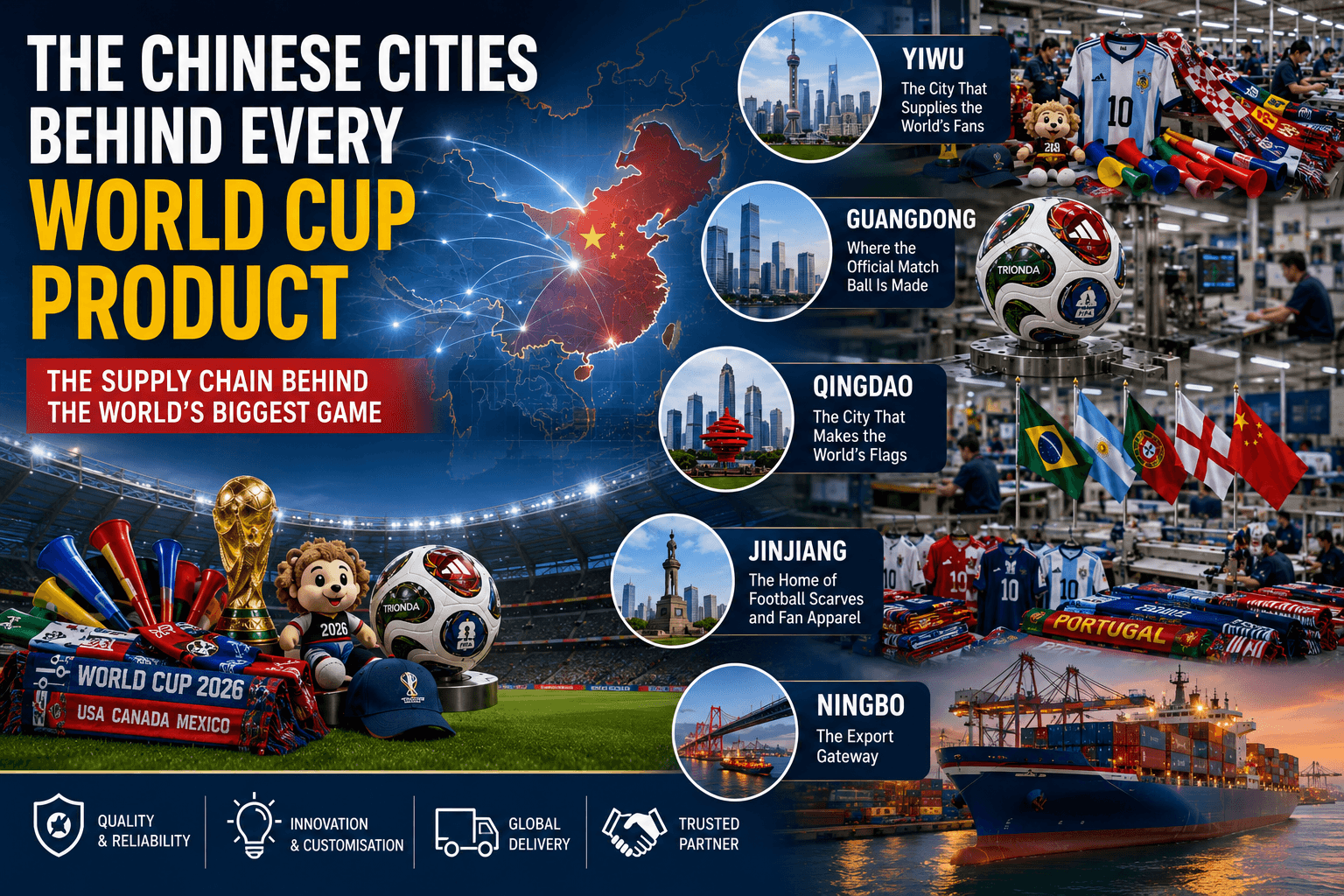
The Chinese Cities Behind Every World Cup Product You've Ever Touched
Behind every World Cup scarf, jersey, flag, and football is a powerful manufacturing network spanning China. From Yiwu’s fan merchandise empire and Guangdong’s precision match-ball production to Qingdao’s flag factories, Jinjiang’s scarf specialists, and Ningbo’s global logistics gateway, these cities quietly power the world’s biggest sporting event. Discover how China’s manufacturing clusters are moving beyond volume into design, innovation, quality, and world-class sourcing capability.
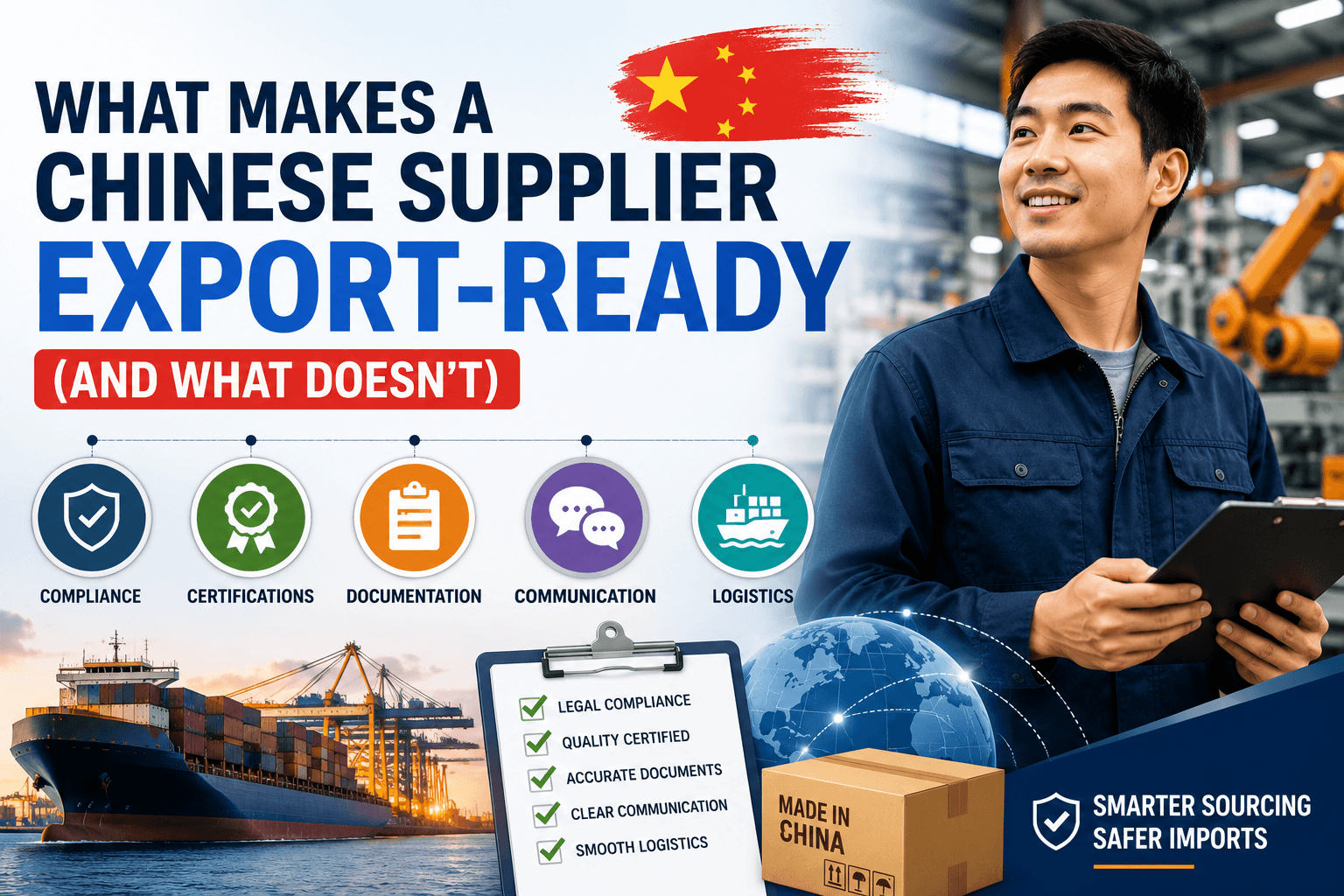
What Makes a Chinese Supplier Export-Ready And What Doesn't
China has millions of manufacturers, but only a fraction are truly export-ready. The difference goes far beyond production capability. Export-ready suppliers combine legal compliance, quality certifications, documentation expertise, strong communication, cultural fluency, and logistics experience to deliver reliably in international markets. This guide explains how to identify suppliers that can support long-term global growth and avoid costly mistakes that often emerge only after order placed.
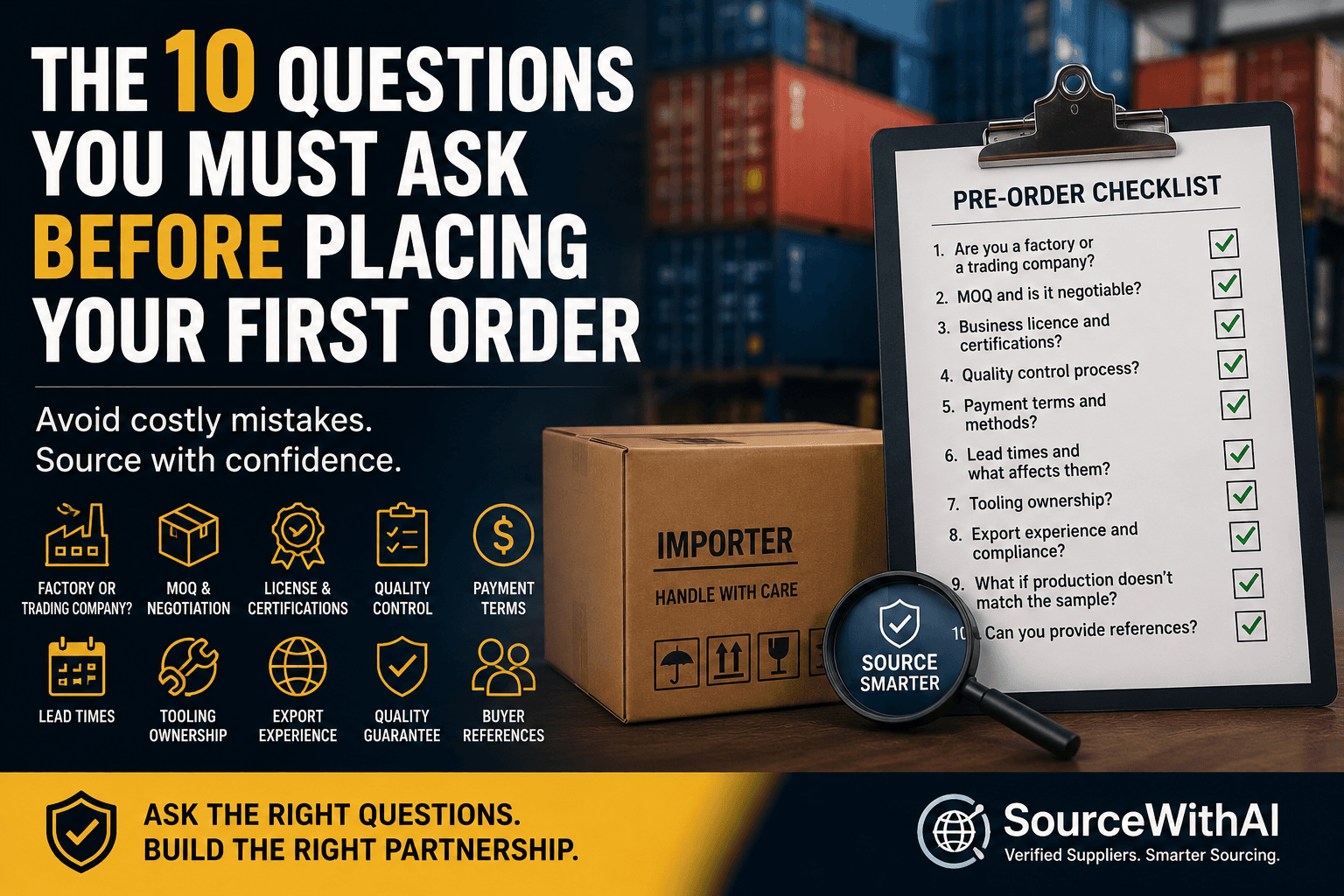
The 10 Questions You Must Ask Before Placing Your First Order
Placing your first order with a supplier can feel straightforward until something goes wrong. From verifying whether you're dealing with a factory or a trading company to understanding lead times, quality control, payment terms, and compliance requirements, the right questions can prevent costly mistakes. This guide covers the 10 essential questions every buyer should ask before committing to an order and explains why the answers matter.
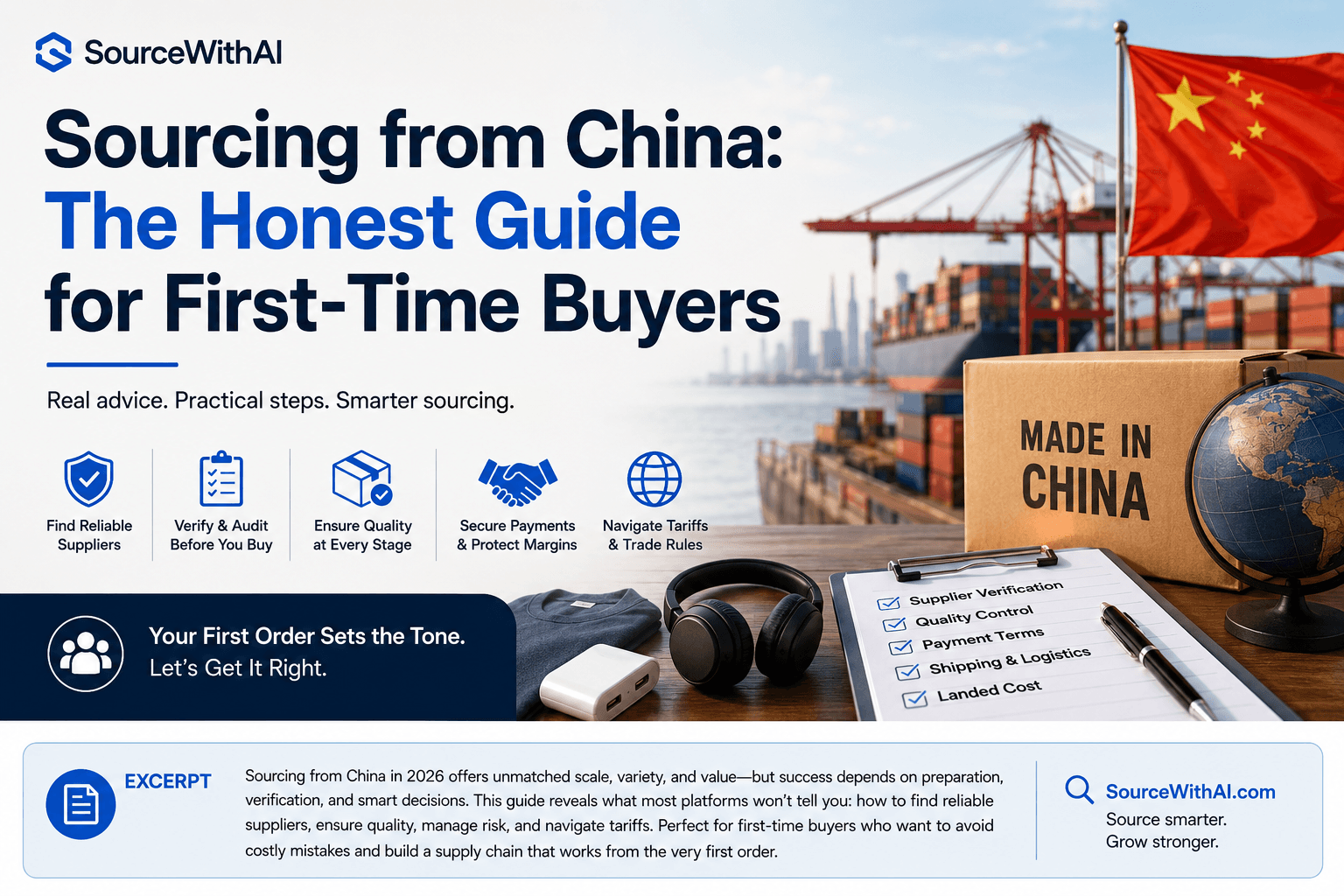
Sourcing from China: The Honest Guide for First-Time Buyers
China remains the world's leading sourcing destination, but success isn't about finding a supplier it's about finding the right one. This guide reveals what first-time buyers need to know about supplier verification, quality control, payment terms, tariffs, and avoiding costly mistakes. Learn how to source confidently, reduce risk, and build a reliable supply chain from day one with practical advice that goes beyond marketplace listings and sales pitches.
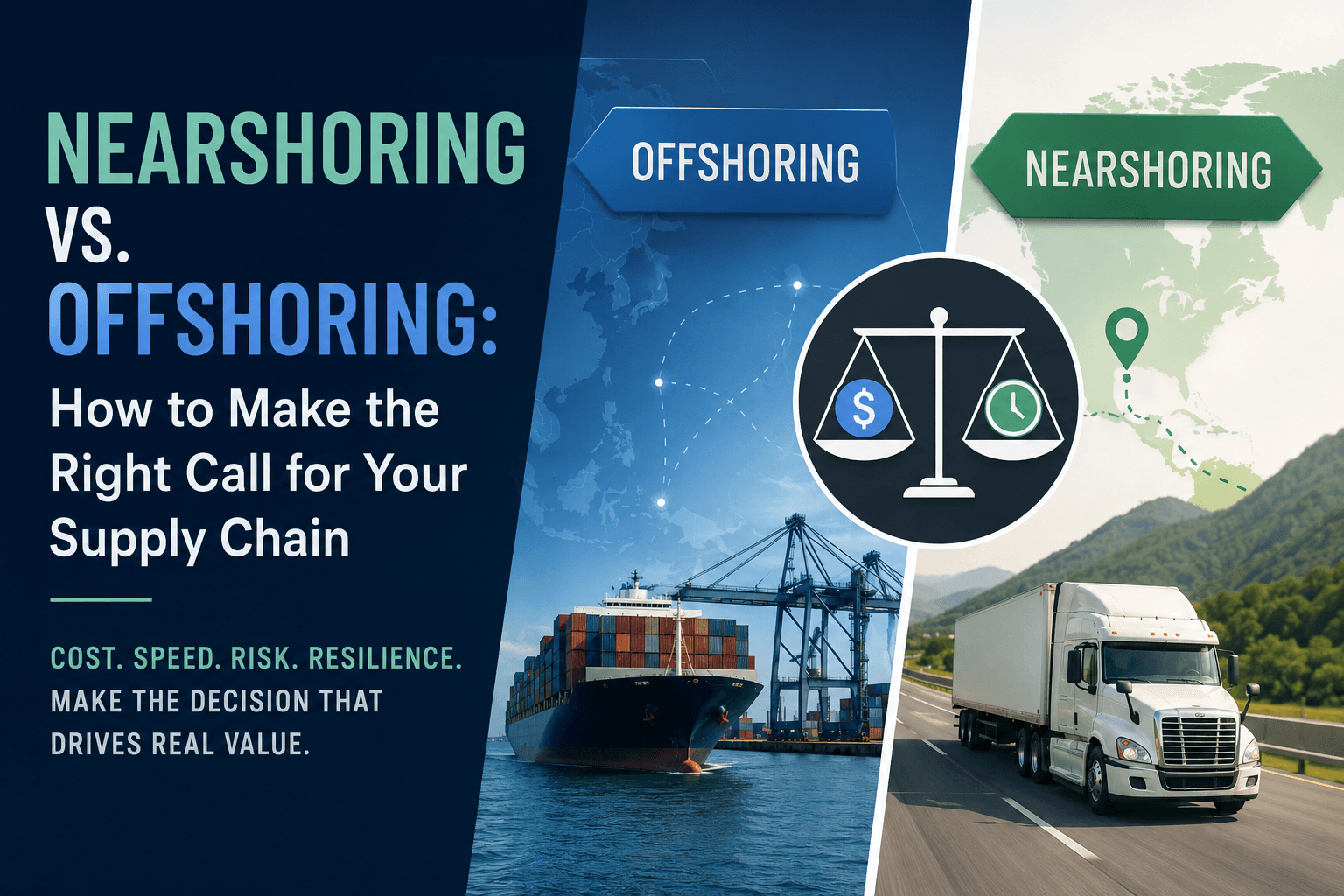
Nearshoring vs Offshoring: How to Make the Right Call for Your Supply Chain
A resilient supply chain isn’t built on the cheapest factory it’s built on the right configuration. As tariffs, geopolitical tensions, and shipping disruptions reshape global trade, sourcing leaders are rethinking the balance between nearshoring and offshoring. This guide breaks down the real trade-offs between cost, speed, resilience, and scalability, helping procurement teams evaluate where each model works best and how to design a smarter, diversified sourcing strategy for 2026 and beyond.
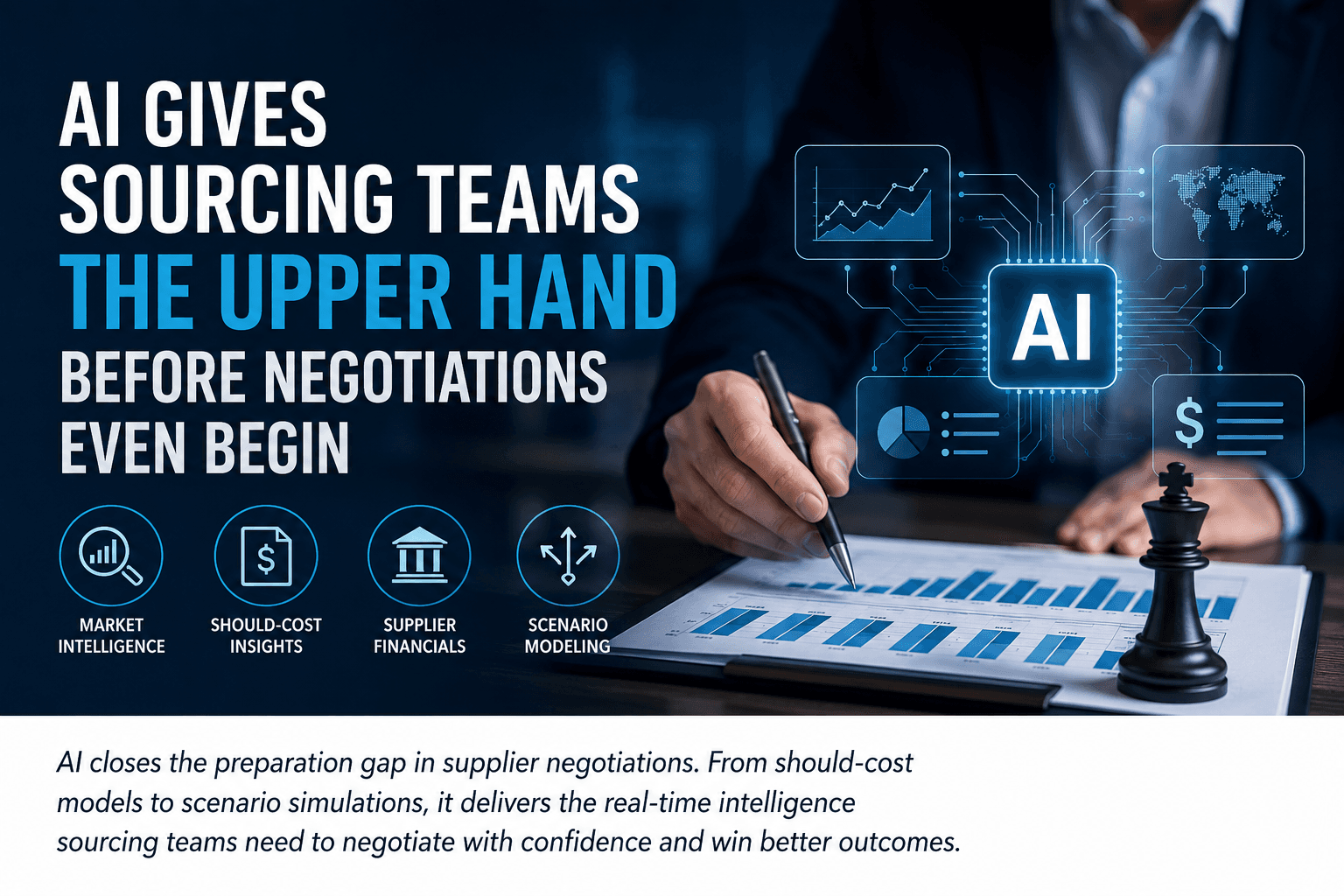
How AI Gives Sourcing Teams the Upper Hand Before Negotiations Even Begin
AI is changing supplier negotiations before they even begin. Instead of relying on outdated benchmarks and instinct, sourcing teams now enter negotiations armed with real-time market intelligence, should-cost modelling, supplier financial insights, and AI-driven scenario analysis. The result isn’t replacing human negotiators it’s giving them the preparation, leverage, and strategic clarity needed to negotiate from a position of strength in an increasingly data-driven sourcing landscape.

Sourcing with Integrity: How Ethical AI Builds Supplier Trust That Lasts
Ethical AI is redefining sourcing by strengthening, not replacing, supplier trust. Transparency, fairness, and accountability ensure AI-driven decisions remain explainable and inclusive. Companies that embed integrity into their sourcing systems unlock stronger relationships, reduce risk, and build more resilient supply chains turning responsible AI from a compliance task into a lasting competitive advantage.

AI Supplier Due Diligence: Reducing Risk in Global Sourcing
AI supplier due diligence is transforming global sourcing by helping businesses reduce risk, improve supplier selection, and gain end-to-end visibility across the supply chain. From verifying suppliers and analyzing factory capabilities to predicting logistics disruptions, AI enables faster, smarter decision-making. As sourcing becomes more complex, companies using AI can avoid costly mistakes, streamline operations, and scale globally with greater confidence.
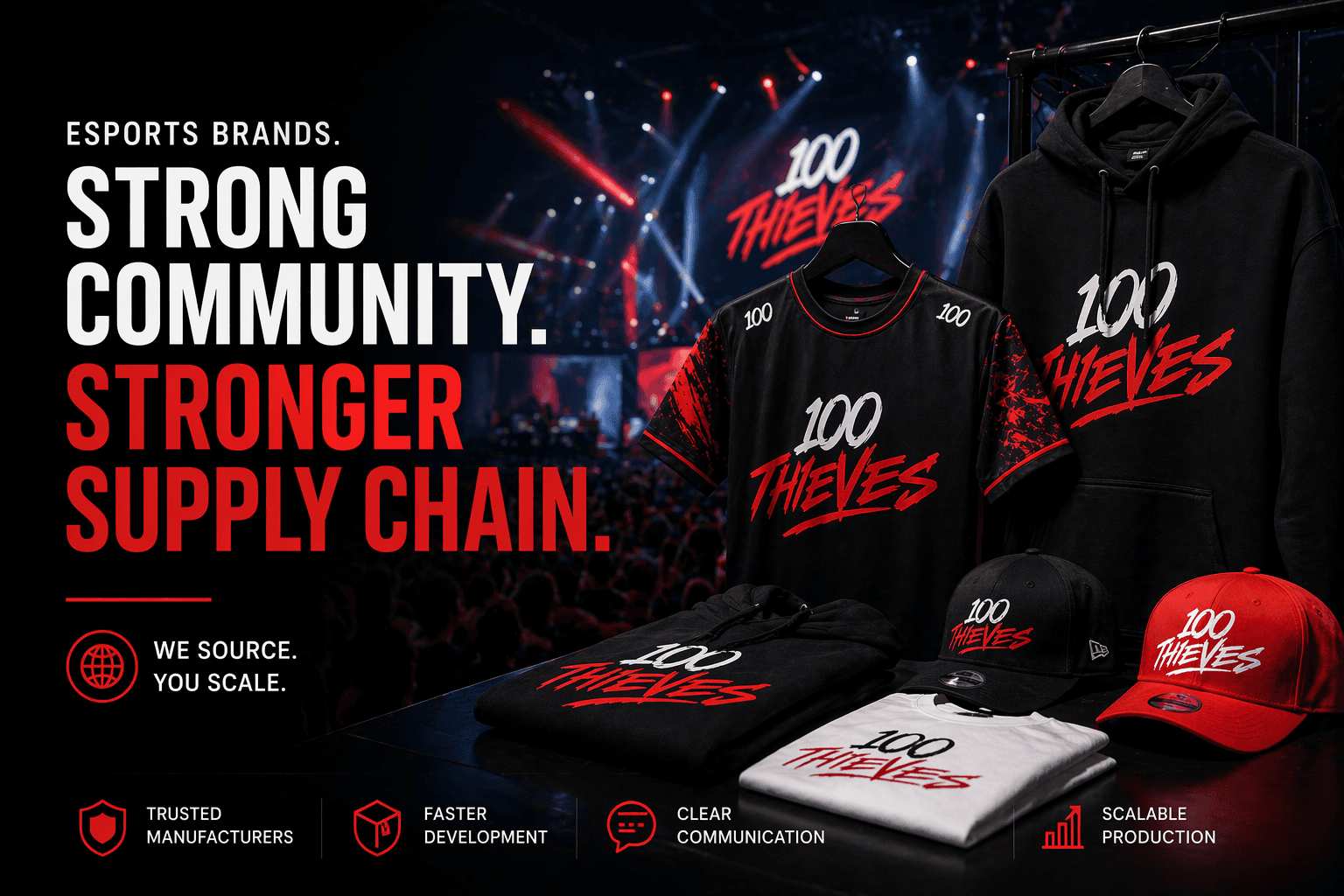
The Evolution of Esports: From Competition to Commerce
Esports teams are no longer just competing in tournaments — they’re building global merchandise businesses. As fan communities grow, demand for apparel and physical products is rising fast. This shift makes reliable sourcing and scalable manufacturing essential. In this article, we explore how esports brands can turn audience attention into real products and how SourceWithAI helps make that journey faster, smoother, and more scalable.

Why Businesses Struggle With Research in 2026 and How AI Fixes It
Businesses in 2026 don’t struggle to find information they struggle to manage it. Endless data, fragmented tools, and slow manual workflows make research costly and outdated. AI is transforming business research by automating data collection, generating real-time insights, and unifying workflows. Companies adopting AI research tools are making faster decisions and gaining a competitive edge in a rapidly changing world.
AI in Analytics vs Traditional Market Research Methods: Which Wins in 2026?
In 2026, the debate between AI analytics and traditional market research is reshaping how businesses understand consumers. While surveys and focus groups still offer emotional depth, AI delivers real-time insights, predictive trends, and cost efficiency at scale. The future lies in hybrid research models that blend human expertise with automation. With support from SourceWithAI, companies can turn faster data into smarter, confident decisions.
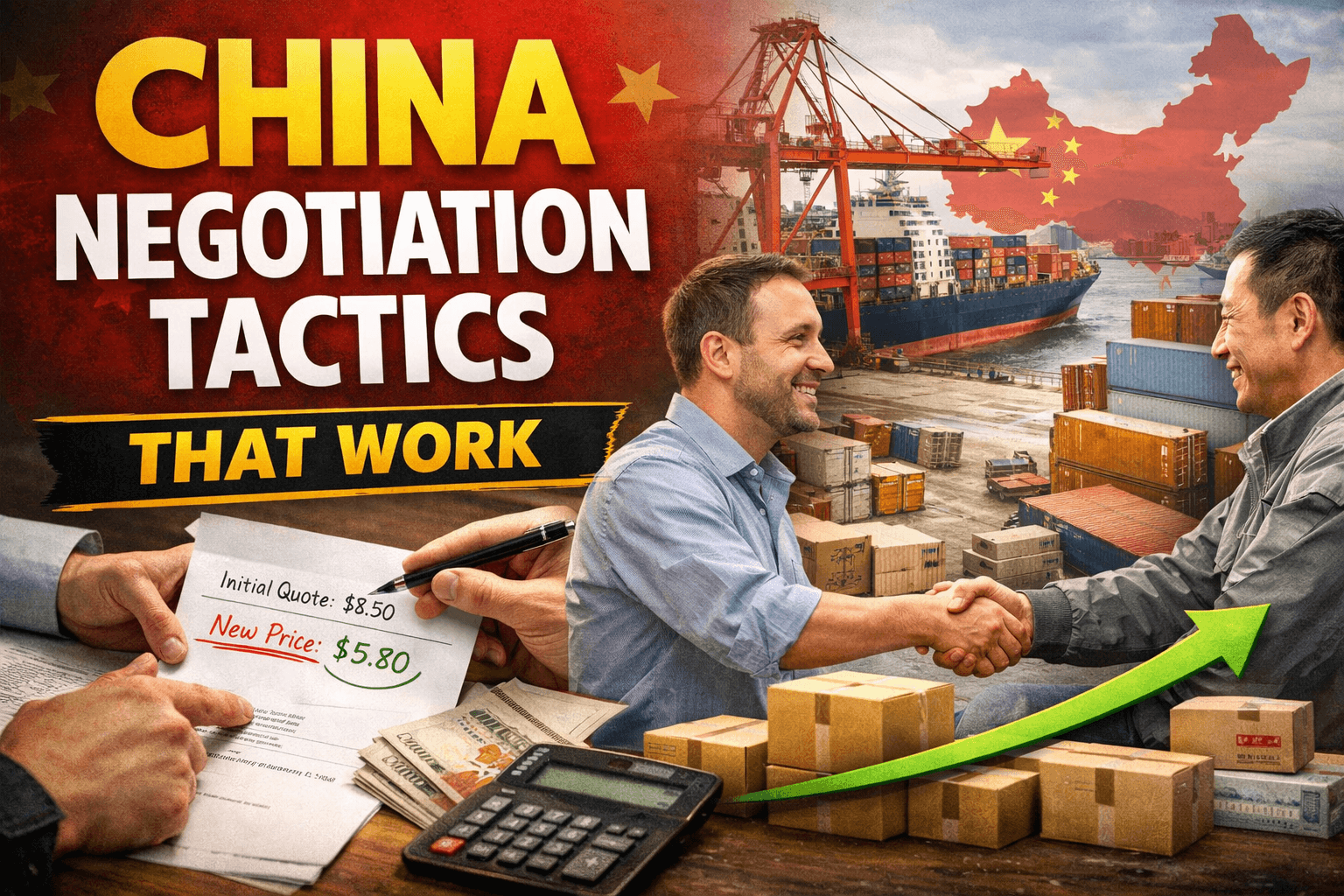
China Negotiation Tactics That Actually Work for Sourcing in Asia and China
Mastering China negotiation tactics isn’t about chasing the lowest price—it’s about building relationships, leveraging psychology, and thinking long-term. By focusing on value, timing, and supplier trust, businesses can unlock better deals, stronger partnerships, and sustainable growth in global sourcing.
Sourcing Products from China: Trading Company vs Factory : What Actually Works Better?
Sourcing from China often starts with one big question: factory or trading company? Factories offer lower prices and control but require experience and larger orders. Trading companies simplify sourcing and logistics but add costs and reduce transparency. Over time, businesses realize neither option alone solves everything. Success comes from building a reliable sourcing system that balances cost, quality, communication, and long-term scalability.

Speed, Scale, and Strategy: Why Chinese Products Are Winning the Global Race
Chinese companies have rapidly evolved from low-cost manufacturers to global product leaders by mastering speed, scale, and strategy. Their success is driven by efficient supply chains, rapid innovation, strong digital integration, and a massive domestic market for testing. By combining execution with adaptability, they are not only competing globally but increasingly setting the pace for product development worldwide.
Shipping From China: 7 Mistakes That Can Cost Importers Time and Money
Shipping is one of the most overlooked parts of importing products from China. While businesses often focus on product development and supplier negotiations, mistakes in logistics can lead to unexpected costs, delays, and operational challenges. This article explores the most common shipping mistakes importers make and how understanding freight forwarders, shipping terms, and landed costs can help you build a smoother and more reliable global supply chain.

Choosing Your Production Base in 2026: A Margin-First Approach
Manufacturing decisions in 2026 are no longer about simply choosing between China, Vietnam, or India. They are about choosing a risk structure that affects margin, cash flow, and growth velocity. Lead times, defect variability, MOQs, and scaling capacity shape the real economics of production. The most effective operators model these trade-offs early, because small operational differences can quickly outweigh small unit-price advantages.

Nearly everything is made in China : Source it Smarter
Walk into almost any store and you will likely see the label “Made in China.” This is not a coincidence. Over decades, China has built one of the most efficient manufacturing ecosystems in the world, combining large-scale production, integrated supply chains, skilled labor, and strong infrastructure. These advantages allow businesses to balance manufacturing cost and high quality, making Chi

Which Cities to Source From in China and How Choosing the Wrong City Can Cost Your Business
China’s manufacturing landscape is highly specialized, with different cities dominating specific industries. Choosing the wrong sourcing city can lead to higher costs, delays, and quality issues due to middlemen and mismatched expertise. Understanding where your product category is best manufactured helps secure better pricing, smoother production, and stronger supplier relationships—making location a critical factor in global sourcing success.
Achieving Competitive Pricing and Customised Sourcing at Scale With AI
Balancing competitive pricing with product customisation is often seen as a trade-off in global sourcing. In reality, the challenge lies in how decisions are structured. When cost and flexibility are evaluated separately, businesses face higher costs and constraints later. AI-led sourcing aligns pricing and customisation from the start, enabling scalable, cost-efficient, and flexible procurement decisions.

How AI Helps Brands Predict Demand and Manage Inventory Efficiently
Inventory mismanagement can stall growth and drain capital. SourceWithAI uses AI to forecast demand, optimize inventory levels, and factor in supplier lead times with precision. By replacing reactive decisions with proactive, data-driven planning, brands reduce stockouts, control costs, and turn inventory management into a strategic advantage across the supply chain.

How to Evaluate Supplier Quotes Like a Pro Using AI
Supplier quotes are rarely comparable as written. Unit price hides tooling, freight terms, payment schedules and quality assumptions that only surface later. This guide walks through putting quotes on a like-for-like basis — what to normalise, what to ask for, and which differences actually matter before you commit to an order.

From Idea to Prototype: How SourceWithAI Accelerates Product Development
Many product ideas fail not due to lack of innovation, but because turning them into prototypes is slow and complex. SourceWithAI simplifies this journey using AI to structure ideas, match founders with the right manufacturers, accelerate prototyping, and support faster iteration. By reducing friction at every stage, SourceWithAI helps founders move from idea to prototype with speed, clarity, and confidence.

Top 5 Ways to Use SourceWithAI to Find High-Quality Suppliers
Finding high-quality suppliers no longer needs to rely on trial and error. SourceWithAI uses AI-powered insights to simplify supplier discovery, compare quotes intelligently, and connect brands with verified manufacturers. From clear product specifications to fulfillment planning, the platform brings structure, speed, and reliability to the entire sourcing process—helping modern businesses source with confidence, clarity, and control.

The Hidden Costs of Manual Sourcing — And How AI Eliminates Them
Manual sourcing appears cost-effective but hides major inefficiencies—lost time, errors, communication delays, and missed market insights. AI transforms this process by automating supplier matching, quote comparison, documentation checks, and real-time analytics. With AI tools like SourceWithAI, businesses eliminate hidden costs and make smarter, faster sourcing decisions.

Why Small Businesses Need AI-Powered Sourcing to Compete Globally
Small businesses often struggle with limited supplier networks, rising costs, and slow manual sourcing. AI-powered platforms like SourceWithAI help them compete globally by automating supplier discovery, reducing errors, improving compliance, and accelerating time-to-market. With AI, SMBs gain the speed and intelligence once reserved for large enterprises.
How AI-Powered Sourcing Is Transforming E-Commerce: A Complete Guide (2025)
AI-powered sourcing is transforming e-commerce by replacing slow, manual workflows with fast, data-driven decision-making. Brands can find verified suppliers, compare costs instantly, forecast demand, and launch products faster. As speed and efficiency become the new competitive edge, AI sourcing is emerging as an essential tool for scaling in 2025 and beyond.