
Procurement rarely becomes complicated because a single product is difficult to purchase. It becomes complicated when every requirement turns into a separate purchasing process.
A team needs safety supplies. Someone else needs uniforms. New employees need onboarding kits. Another department needs everyday equipment. Operations needs replenishment. Finance needs invoices matched to orders. Procurement has to collect requirements, compare options, coordinate approvals, place orders, track deliveries, and follow up when something changes.
Individually, none of these tasks seems particularly difficult. Together, they create a system that is slow, repetitive, and difficult to manage. This is the hidden cost of fragmented procurement. And it raises a simple question:
What if the same requirements could be handled through one coordinated supply program and one purchase order?
That shift can change procurement from a series of disconnected transactions into a more structured, repeatable process.
The Real Problem Isn't the Number of Products
Modern teams rarely purchase just one thing. A construction company, for example, may regularly require dozens of different items across its workforce and operations. Different teams may have different requirements, quantities, replacement cycles, and delivery schedules. The traditional approach is often to handle these needs separately. One person searches for one product. Another person contacts a different source for another requirement. A department raises a separate request. Finance processes another invoice. Procurement creates another purchase order. Then someone has to coordinate delivery. The problem isn't necessarily the individual purchases.
The problem is the repetition.
Every additional purchasing process can create another round of:
Requirement collection
Product research
Option comparison
Internal approvals
Purchase orders
Payment coordination
Delivery tracking
Invoice management
Follow-ups
Reordering
When this happens repeatedly, procurement teams can spend significant time managing the process around the products rather than focusing on higher-value purchasing decisions.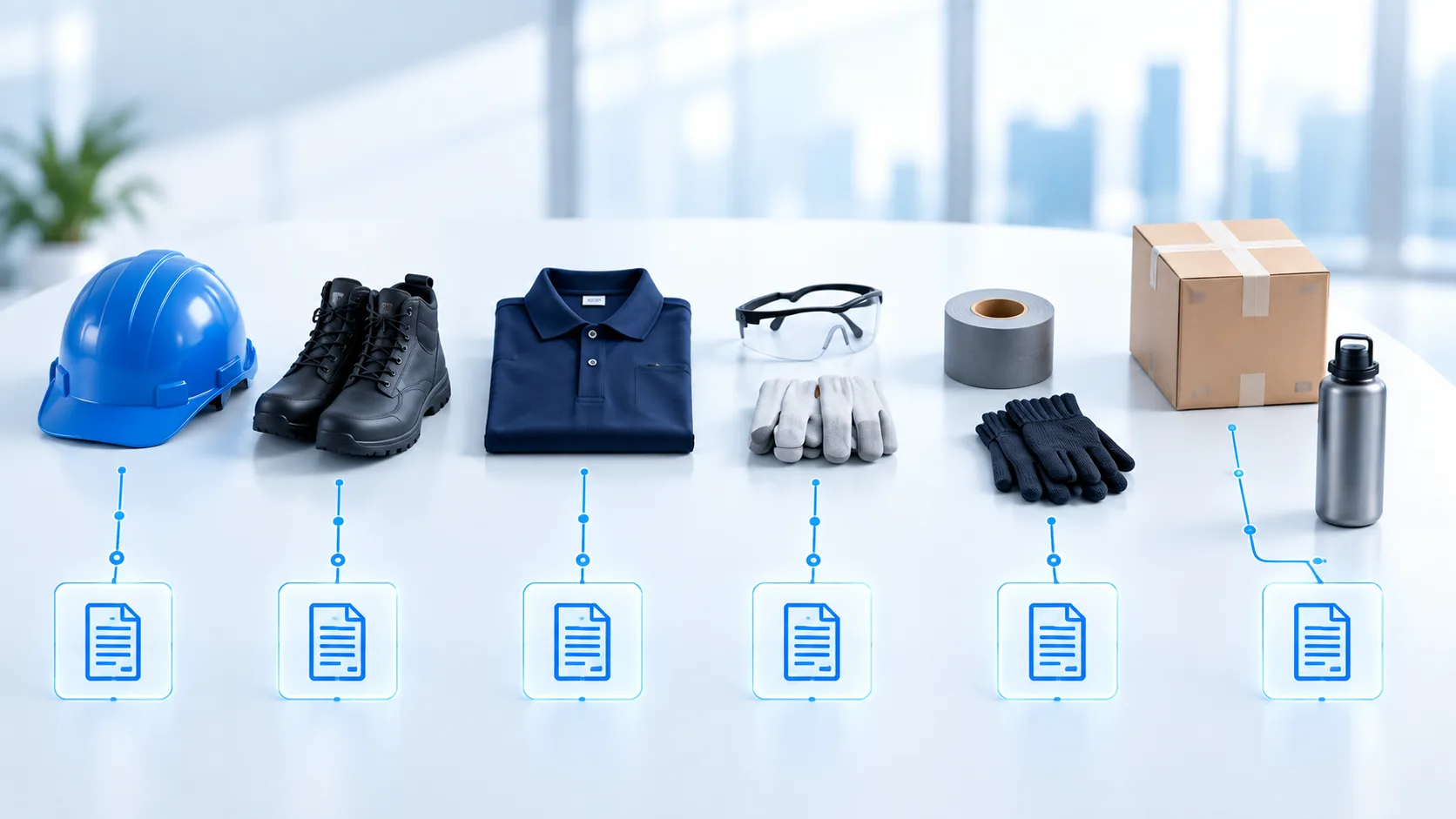
Fragmented Purchasing Creates Operational Friction
Imagine a company has five different requirements for the same workforce. Instead of treating those requirements as one supply need, they are purchased independently. The procurement team now has five separate processes to manage. Even if each process takes only a small amount of administrative effort, that effort accumulates. The purchasing team may need to answer questions such as:
What exactly does each team need?
How many units are required?
Which specifications matter?
Has the requirement already been purchased?
When does the team need it?
Who approved the purchase?
Has the order arrived?
When will it need to be reordered?
None of these questions is unusual. But when they are repeated across multiple purchases, procurement becomes increasingly reactive. Instead of having a clear picture of the organization's supply requirements, teams are constantly responding to individual requests. That is where fragmentation becomes expensive, not necessarily because every individual transaction costs more, but because the organization spends more time coordinating transactions.

One PO Changes the Structure of the Problem
Supply consolidation approaches the same problem differently. Instead of beginning with:
“What do we need to purchase today?” the process can begin with:
“What does this team or organization actually need?”
That distinction matters. Requirements can be grouped, researched, and considered together before purchasing decisions are finalized. The structure becomes:
Team requirements → Sourcing → Consolidated selection → One PO → Coordinated fulfillment
Rather than:
Requirement → Search → Approval → PO → Delivery → Repeat
The goal isn't to force every product into a single catalogue or to eliminate choice. It is to reduce unnecessary purchasing complexity. One purchase order can bring multiple relevant requirements into one coordinated purchasing workflow. That means procurement teams have fewer individual processes to initiate, track, and reconcile.

One PO Doesn't Mean One Product
One of the biggest misconceptions about consolidation is that it limits what a company can purchase. It doesn't have to. A consolidated order can contain different products serving different functions, departments, or teams. For example, a construction organization might have requirements across:
Jobsite supplies
Workforce essentials
New-hire requirements
Field equipment
Everyday consumables
Replacement items
Team-specific supplies
These products don't need to be identical. They simply need to belong to a coordinated purchasing requirement. The value comes from bringing related needs into the same procurement conversation. Instead of asking procurement to repeatedly solve individual purchasing problems, the organization can address a broader supply requirement in one structured process.

The Difference Between Buying Products and Building a Supply Program
Traditional purchasing often focuses on the transaction.
A product is required. The product is sourced. The order is placed. The transaction is completed. Then, eventually, the same requirement appears again. A supply program looks beyond that individual transaction.
It asks:
What does this team use repeatedly?
Which requirements are predictable?
Which items need regular replenishment?
What does a new employee need?
What does a field team typically require?
Which products tend to be purchased together?
These questions create a different kind of procurement visibility. Instead of viewing every purchase as a standalone event, organizations can begin identifying patterns in their purchasing behavior. That is particularly valuable for recurring requirements. If a team repeatedly purchases the same category of supplies, procurement doesn't necessarily need to rediscover that requirement from scratch every time.
The process can become more structured.

Where AI Research Fits In
Consolidation solves one part of the problem. The next question is:
How do you know what should be purchased together? This is where AI-assisted research can become useful. Purchasing data contains information about how teams actually buy.
Over time, those records can reveal patterns:
Frequently purchased products
Recurring requirements
Reorder behavior
Product combinations
Changes in purchasing needs
Categories that appear repeatedly across orders
The objective isn't to make unsupported predictions or automatically decide what a company should buy. Instead, purchasing patterns can provide useful signals for procurement teams. AI-assisted research can help surface those signals so teams can investigate them and make better-informed purchasing decisions. That creates an important shift:
Procurement doesn't have to begin from a blank page every time.
The organization's previous purchasing activity can become part of the research process.

From Reactive Procurement to Predictable Procurement
The ultimate goal of supply consolidation isn't simply fewer purchase orders. It is greater predictability. Consider two procurement environments.
Environment A: Reactive
A requirement appears.
Someone searches for a product.
Options are collected.
Approvals are requested.
An order is placed.
The product arrives.
Several weeks later, another requirement appears.
The process begins again.
Environment B: Structured
Team requirements are identified.
Relevant products are researched.
Purchasing patterns are reviewed.
Requirements are consolidated.
A coordinated order is placed.
Recurring needs are tracked.
Future requirements become easier to anticipate.
The second model doesn't eliminate procurement work. It changes where the work happens. Instead of repeatedly reacting to individual requests, procurement can spend more time understanding the organization's actual supply requirements.

Why This Matters for Growing Teams
As organizations grow, purchasing complexity often grows with them. More employees create more requirements. More locations create more coordination. More departments create more purchasing requests. More recurring supplies create more replenishment activity. Without a structured procurement approach, growth can mean more administrative work.
A process that works when a company has a small number of requirements may become inefficient when the same organization is managing hundreds of recurring purchasing needs. This is why procurement structure matters.
The question isn't simply:
“Can we purchase this product?”
It is:
“Can we build a purchasing process that continues to work as our requirements grow?”
That is a much more important question.
Consolidation Should Simplify, Not Compromise
There is also an important distinction between consolidation and standardization.
They are not the same thing. Consolidation means bringing related purchasing requirements into a more coordinated process. Standardization means making those requirements more uniform. An organization may benefit from consolidation without standardizing every product. Different teams may still require different specifications. Different locations may have different needs. Different products may serve different functions. The objective is not to remove those differences. It is to make the purchasing process around them easier to manage.
One PO should simplify procurement not force teams into products that don't fit their requirements.
The Future of Procurement Is Less About More Options
Procurement teams today have access to more information and more purchasing options than ever before. But more options don't automatically create better procurement. In many cases, they create more decisions.
More products to evaluate.
More requirements to compare.
More purchasing paths to manage.
More information to organize.
The opportunity is not necessarily to give procurement teams even more choices. It is to help them make sense of the choices they already have. That is where better research, purchasing data, consolidation, and structured supply programs can work together. The goal is simple:
Make procurement easier to understand, easier to manage, and easier to repeat.

One PO Is More Than an Administrative Shortcut
A purchase order may look like a simple administrative document. But when multiple requirements are brought together under one coordinated purchasing process, it can represent something much bigger.
It can mean:
Fewer fragmented buying processes.
Less repetitive coordination.
Better visibility into team requirements.
More structured replenishment.
A clearer connection between what teams use and what procurement purchases.
And ultimately, a shift from buying individual products to building a repeatable supply system. That is the real opportunity behind one PO.
How SourceWithAI Approaches Procurement
SourceWithAI is built around a simple idea:
Companies shouldn't have to repeatedly figure out what their teams need, where to source it, and how to manage every requirement separately.
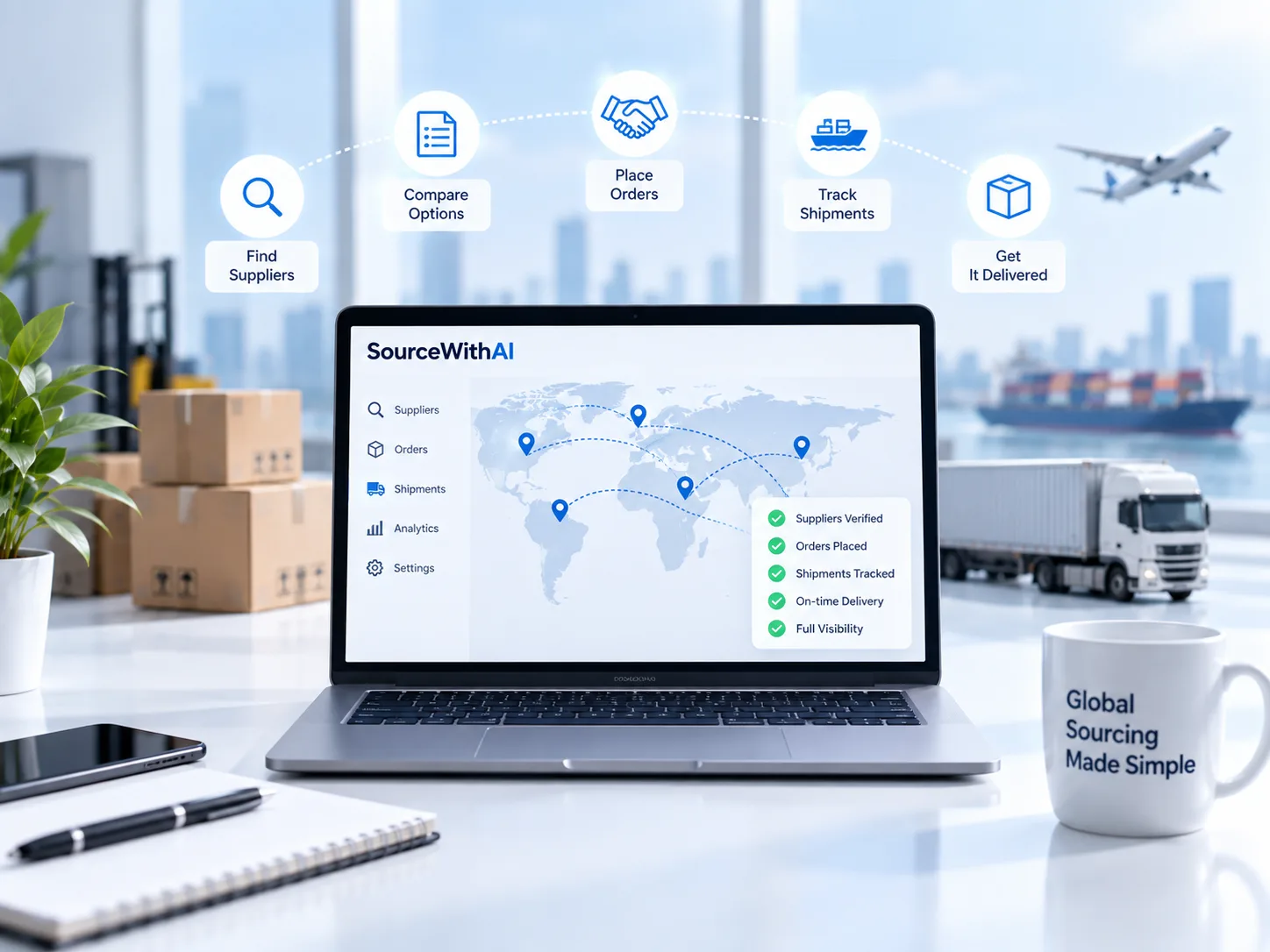
The platform combines supply sourcing with AI-assisted research to help organizations understand their purchasing requirements and build more coordinated supply programs. Instead of treating every requirement as an isolated transaction, SourceWithAI looks at the broader purchasing need.
What does the team actually use?
What needs to be purchased together?
What requirements repeat?
What might need to be reordered?
And how can those requirements be organized into a simpler purchasing process?
The objective is not to add another layer to procurement.
It is to remove unnecessary layers. Because the best procurement process isn't necessarily the one with the most options, the most transactions, or the most complexity. It is the one that gives teams what they need while making the process behind it easier to manage.

One Team. One Supply Program. One PO.
Procurement doesn't have to become more complicated simply because a company is growing. When purchasing requirements are understood as a connected system rather than a collection of individual transactions, organizations can begin building a more predictable way to buy.
One PO is only the starting point.
The bigger shift is moving from fragmented purchasing to a smarter, more connected supply program. And that is where procurement starts working for the business not just processing its next order.

Written by
Admin
September 16, 2026 · 8 min read