You already like them.
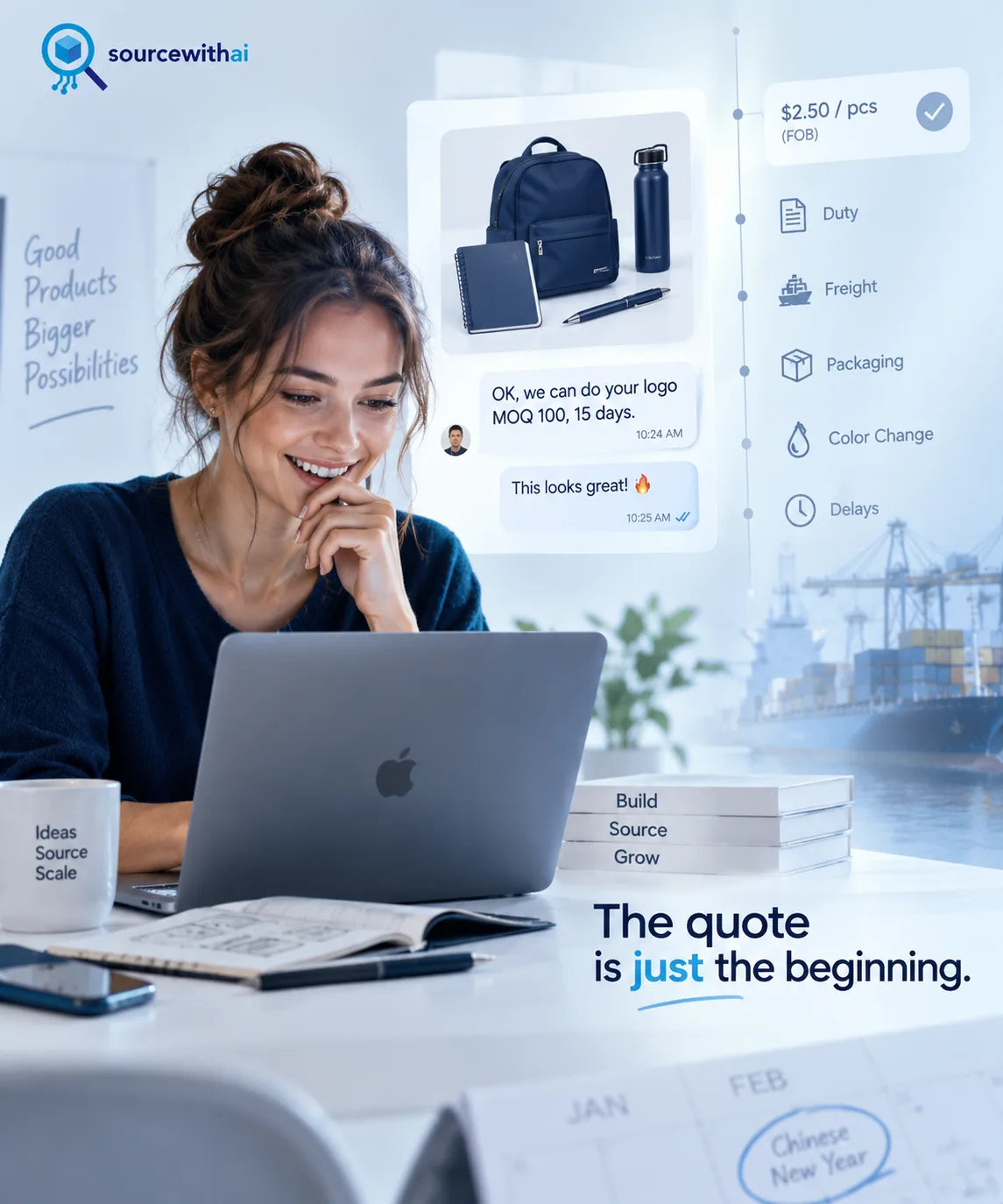
The photos look clean. The sample landed in ten days. The message says OK, we can do your logo, MOQ 100, 15 days. You forward the screenshot to a cofounder with a fire emoji.
That is the most expensive moment in a first factory order. Not the wire. The moment the number feels finished.
It isn’t.
The quote that made you say yes is almost never the price you will pay. It is the price of their product, on their calendar, with their box, before duty, freight, a color change, and the week Chinese New Year eats your inbound.
SourceWithAI exists for the stretch between “I like this factory” and “money moved.” This is that stretch, written down.
The feeling is not “I can’t find a supplier”
You can find a supplier in an afternoon. Alibaba, a friend who “knows a guy,” a booth photo from last year’s show. Finding is cheap. The expensive part is the first PO with someone you already trust a little too early.
That is why “how do I find a factory?” is the wrong question. The useful one is: what do I still not know about the factory I already like?
Five things, before the deposit.
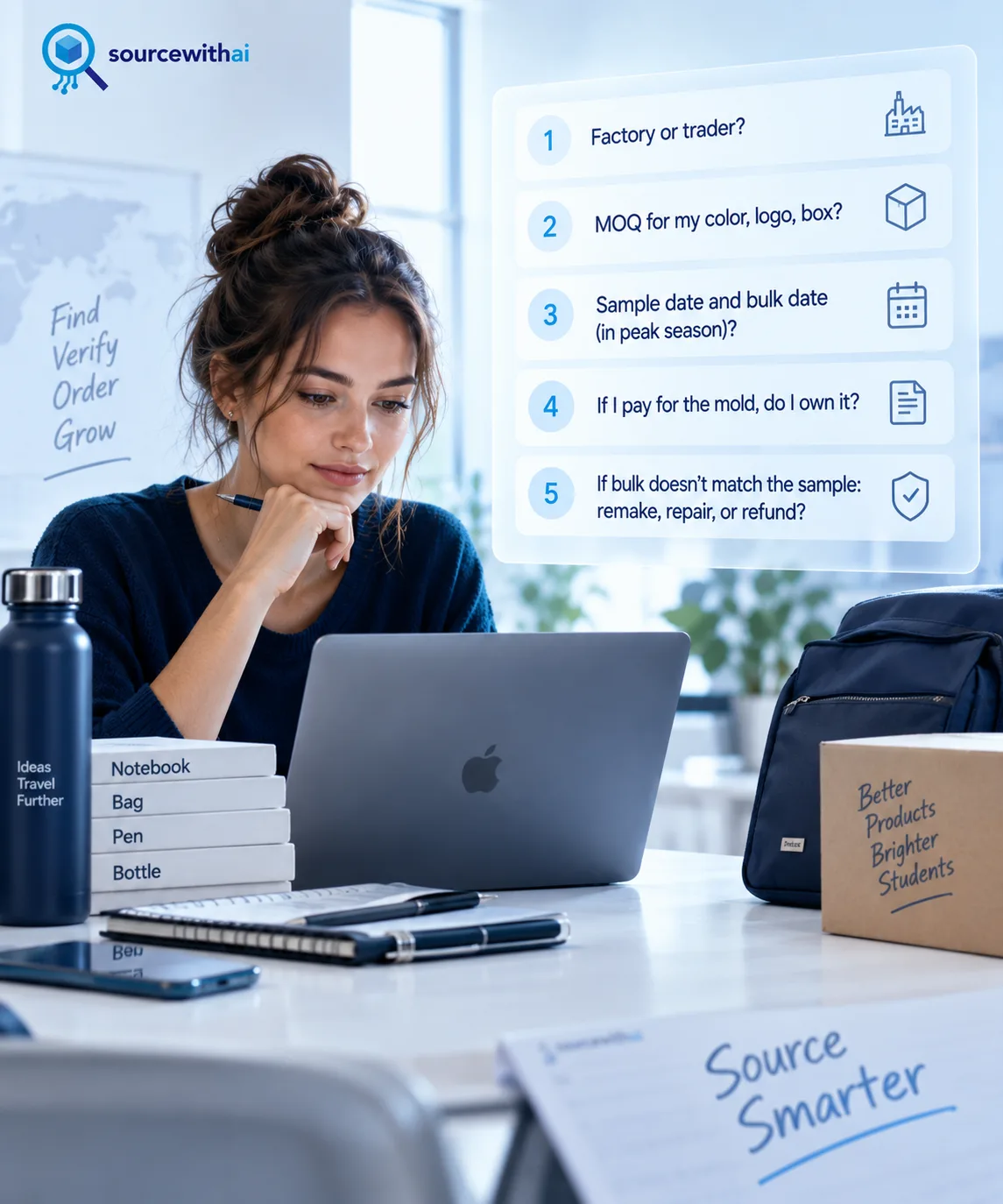
Who is actually making this factory or trader?
What is the MOQ for my color, my logo, my box not the listing photo?
Sample date, first-bulk date, and bulk in peak season / Chinese New Year?
If I pay for the mold, screen, or die do I own it?
If bulk does not match the sample: remake, repair, or refund? Who inspects?
If they can say those plainly, they can take the order. If they say “quality guaranteed, trust us,” you do not have a process. You have a slogan.
What the number on the page actually is
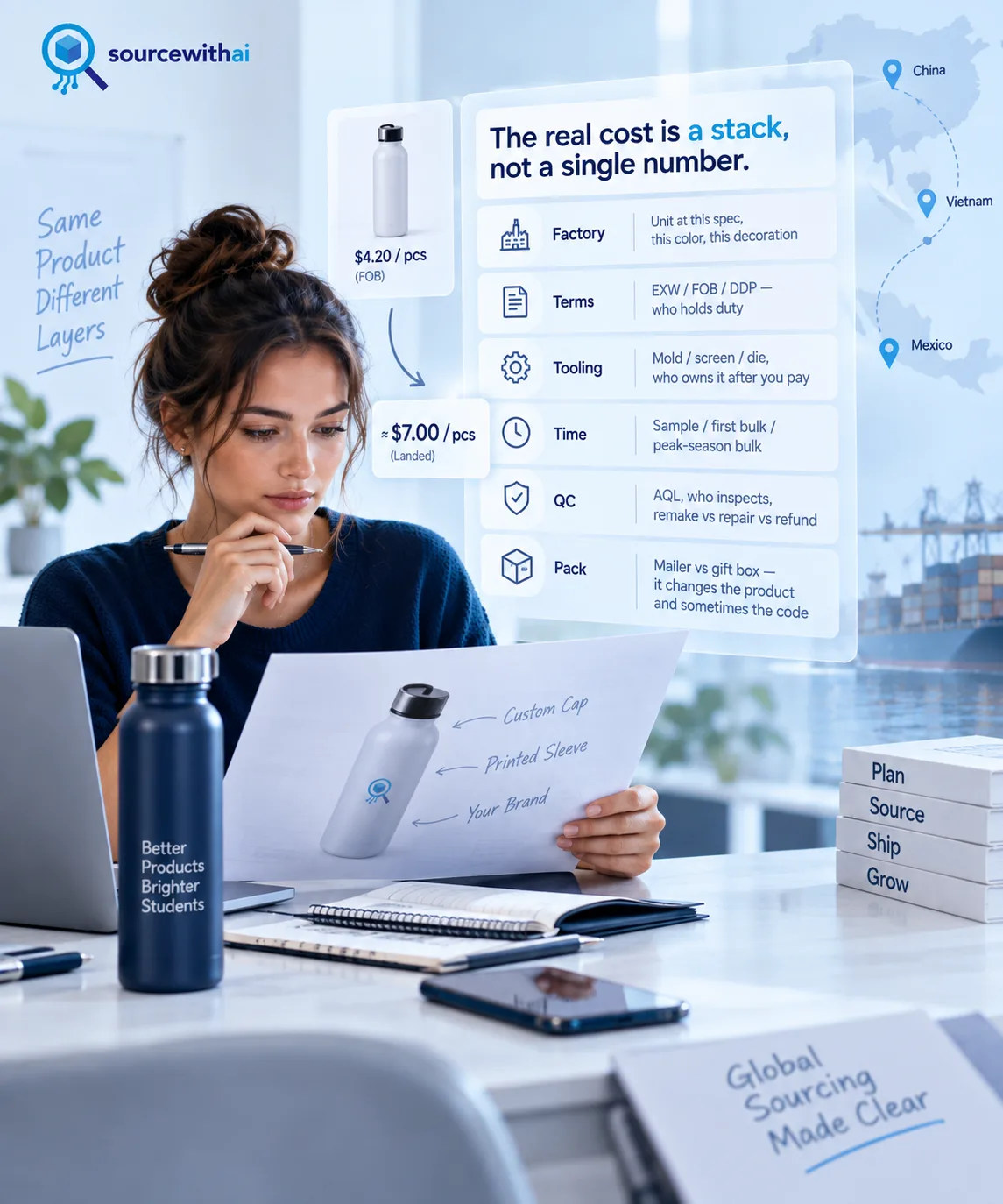
The unit price in the chat is usually FOB or EXW on a stock item.
It is not:
duty on your HS code
ocean or air, and the week the container misses
a third-party inspection
a rigid box instead of a polybag
a Pantone that isn’t in their standard run
the extra weeks when your “15 days” hits a holiday blackout
In 2026 that stack is not a footnote. Tariffs and compliance still sit on the landed cost. Vietnam took a larger share of U.S. apparel value; Mexico is the nearshore default for speed; China is still where tooling and parts often live even when the final sew happens somewhere else. None of that means “exit China.” It means single-country, single-quote thinking is what gets you hurt.
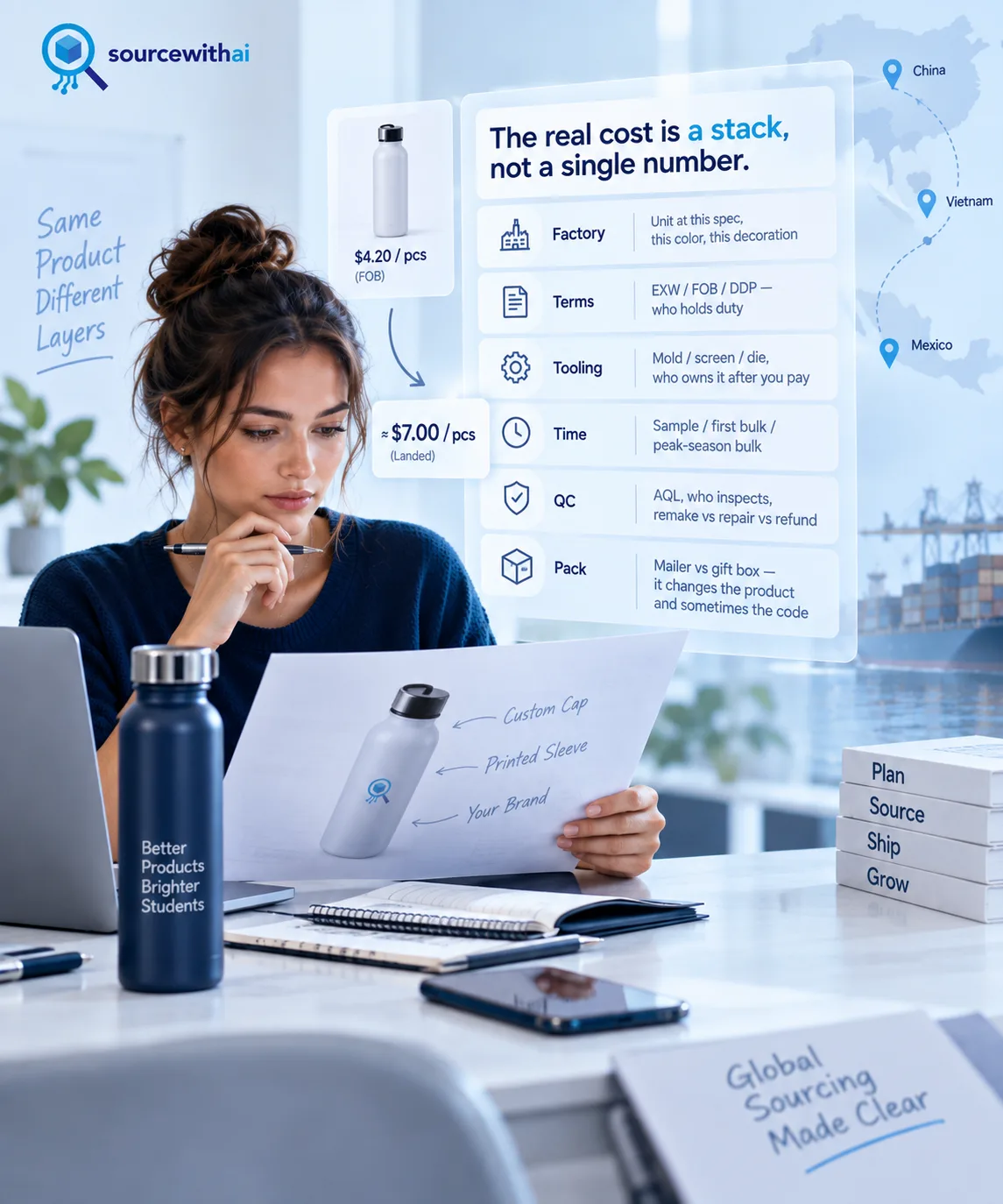
A $4.20 bottle that needs a custom cap, a printed sleeve, and a U.S. inbound can land closer to $7. You did not get lied to. You quoted the wrong layer..
“MOQ 100” is their product. Yours starts when you change a finish
The listing photo is a finished movie. Your logo is a rewrite.
The moment you change color, print, or inner box, you have left the SKU they already run. Their 100-piece MOQ was for the thing in the photo. Yours is a different job: new film, new ink, a carton that doesn’t exist yet.
Traders will still say 100. Factories will often tell you the truth if you ask it in this order:
Are you the factory, or do you place this with someone else?
What is the MOQ for this color, this mark, this pack?
“We work with many factories” is a complete sentence. It means middleman. That can be fine. Don’t pay factory prices for a coordinator, and don’t be surprised when the plant that actually runs the line has a different minimum.
Vague answer, vague product.
“15 days” is not a plan. It is a hope
A pretty sample in ten days means you have a workshop that can sprint. It does not mean 2,000 units leave in the same weather.
Ask for three dates, in writing:
sample
first bulk
bulk if this lands in peak season or around Chinese New Year
Then ask who owns the tooling. If you paid for the mold and you cannot take it to another plant, you did not buy a tool. You rented a relationship.
Brands learn this when they try to leave. Ask it while you still like them.
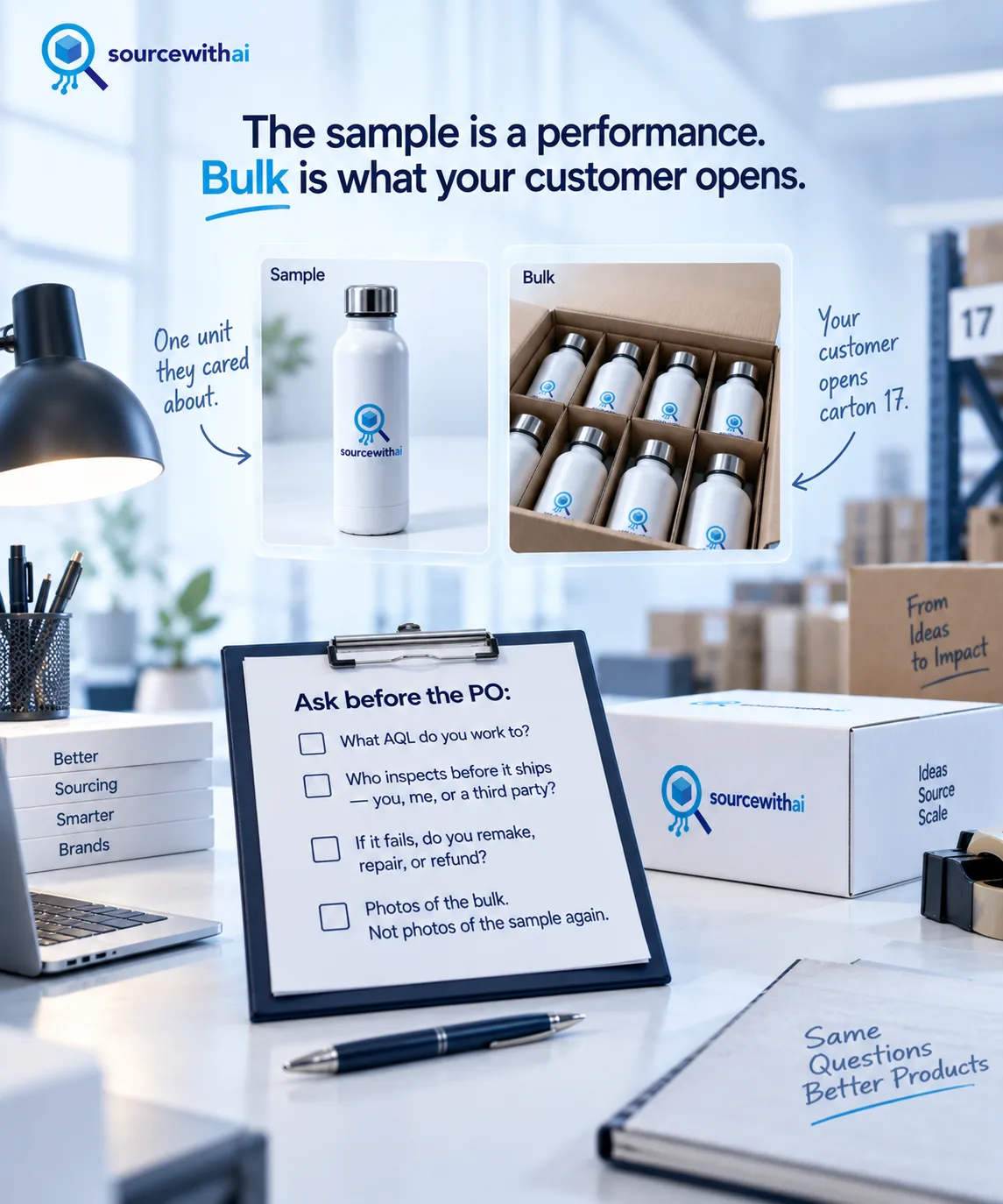
The sample is a performance. Bulk is what your customer opens
You will get a hero sample. Good light, good operator, one unit they cared about.
Your customer opens carton 17.
So ask, before the PO:
What AQL do you work to?
Who inspects before it ships you, me, or a third party?
If it fails, do you remake, repair, or refund?
And then: photos of the bulk. Not photos of the sample again.
If the only quality sentence they have is “don’t worry,” you are buying optimism. Optimism does not survive a chargeback.
You don’t need forty suppliers
Forty chats feel like work. They are usually delay wearing a productivity costume.
You need one counterpart who can say, without theater
factory or trader · real MOQ · real dates · who owns tooling · how bulk gets checked
That list is short on purpose. A factory that cannot answer it will not become clearer after a 30% deposit. They will become more expensive.
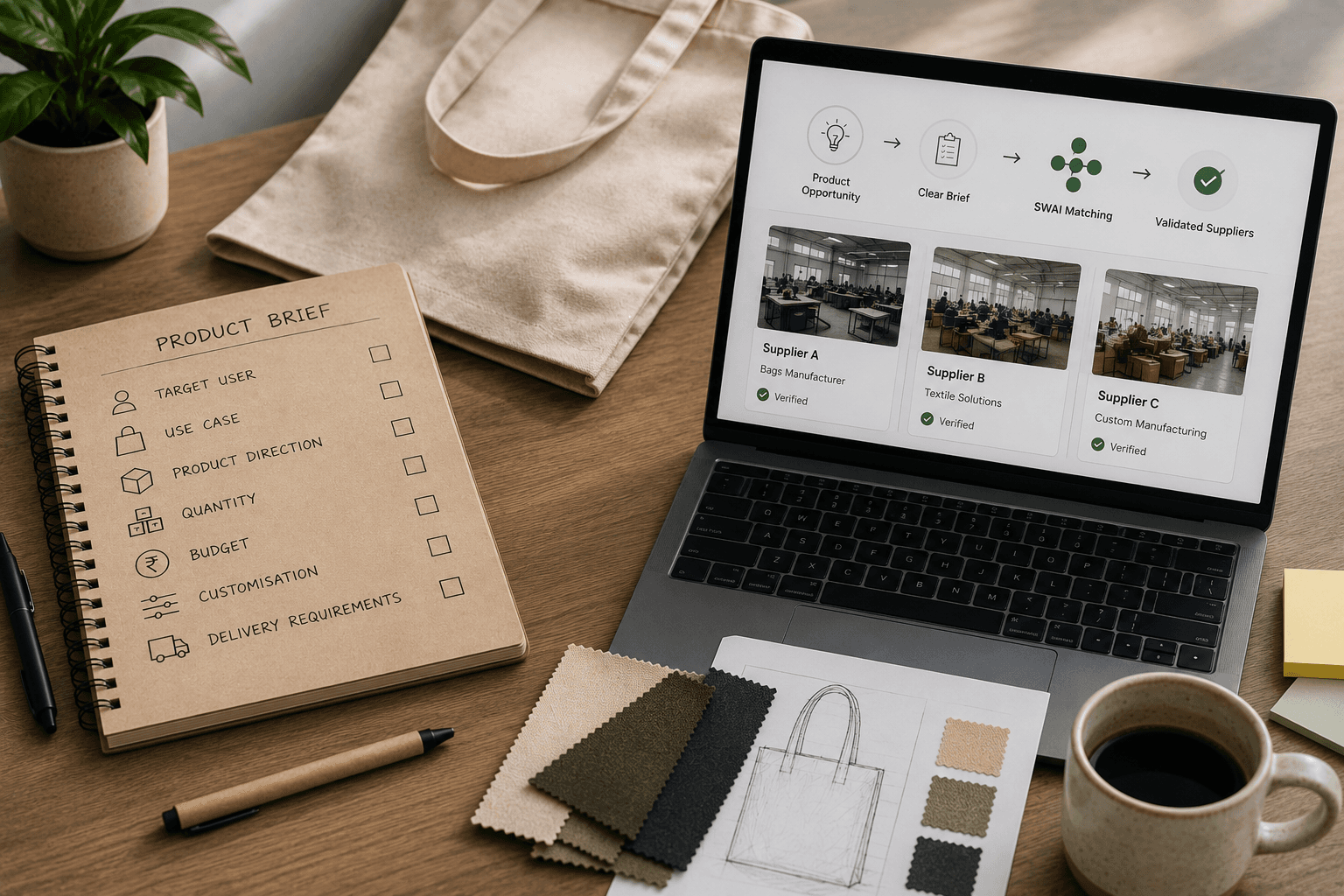
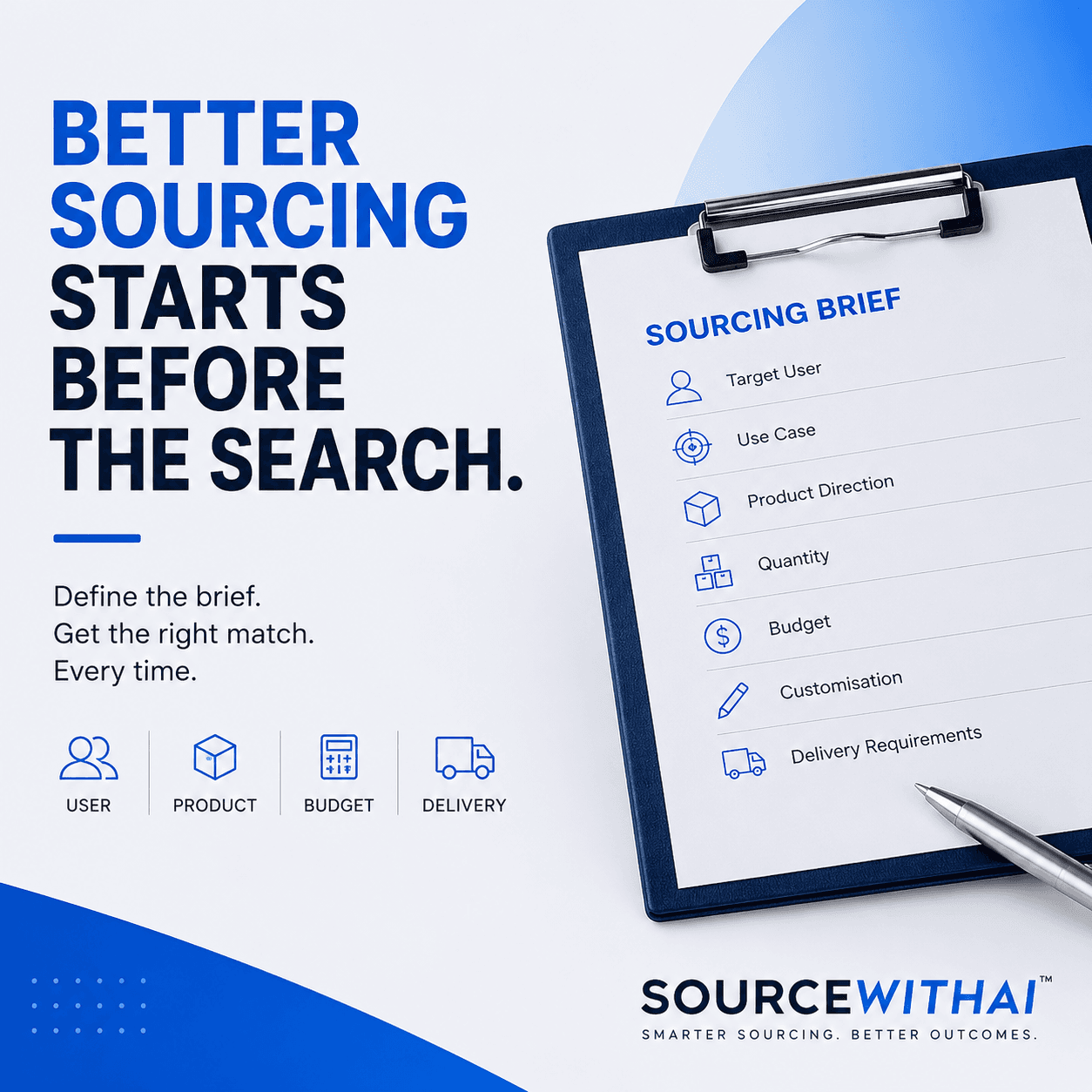
This is also where most “AI sourcing” tools stall. A chatbot that dumps ten blue links is another Alibaba tab. The useful machine is the one that turns a messy idea — “white bottle, our mark, gift box, first run under a thousand, need it before November” into a brief those five answers can sit on.
That is the product before the product.
What to do on the next call
Save this. Use it before the wire, not after the argument.
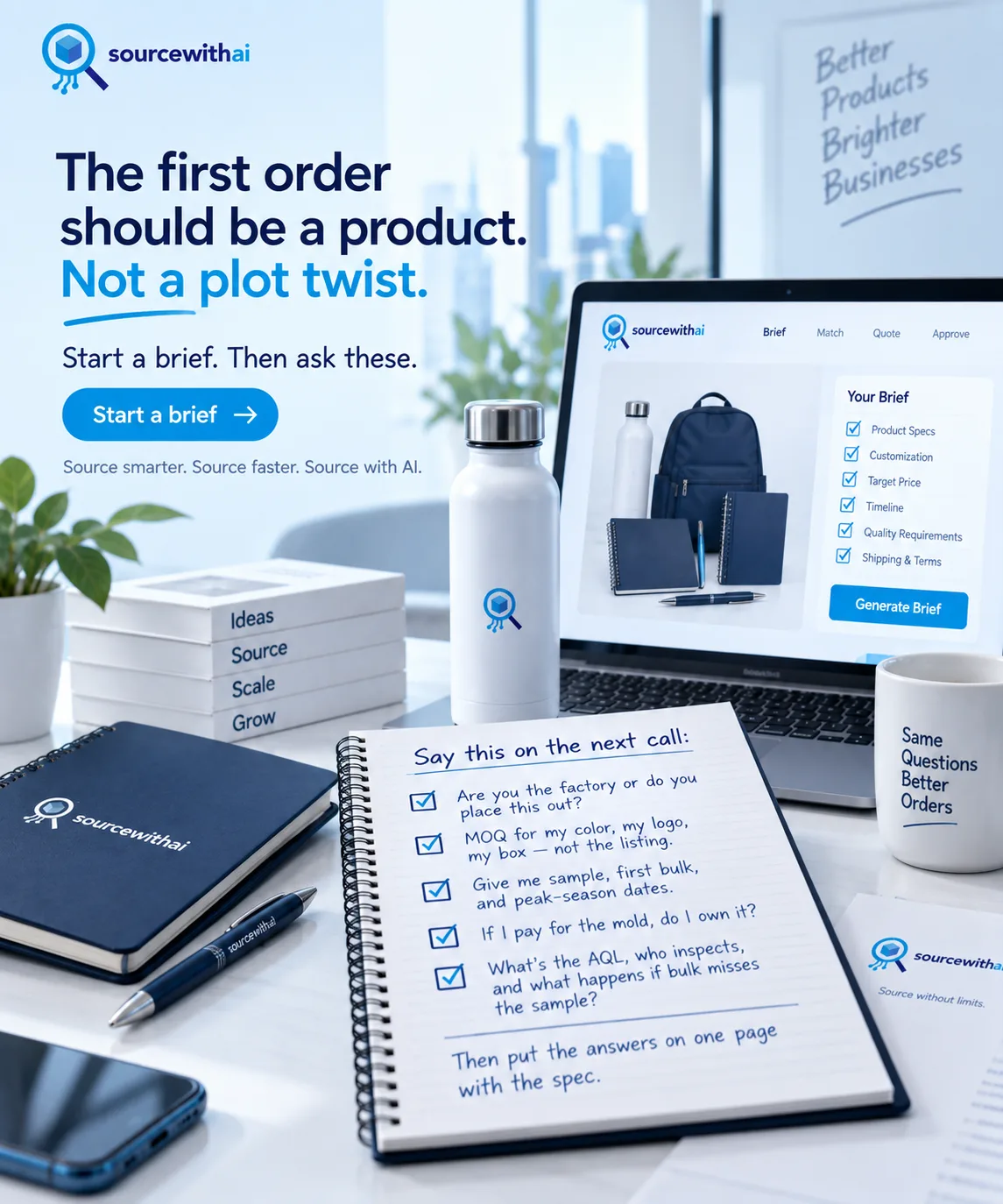
Say this out loud:
“Are you the factory or do you place this out?”
“MOQ for my color, my logo, my box — not the listing.”
“Give me sample, first bulk, and peak-season dates.”
“If I pay for the mold, do I own it?”
“What’s the AQL, who inspects, and what happens if bulk misses the sample?”
Then put the answers on one page with the spec. Not in a chat thread you will lose on Thursday.
SourceWithAI is built for that page: the brief a factory can quote without guessing, and a match you can approve without pretending the first number was the last one.
The first order should be a product.
Not a plot twist.
Start a brief. Then ask these.
Written by
Admin
September 10, 2026 · 5 min read