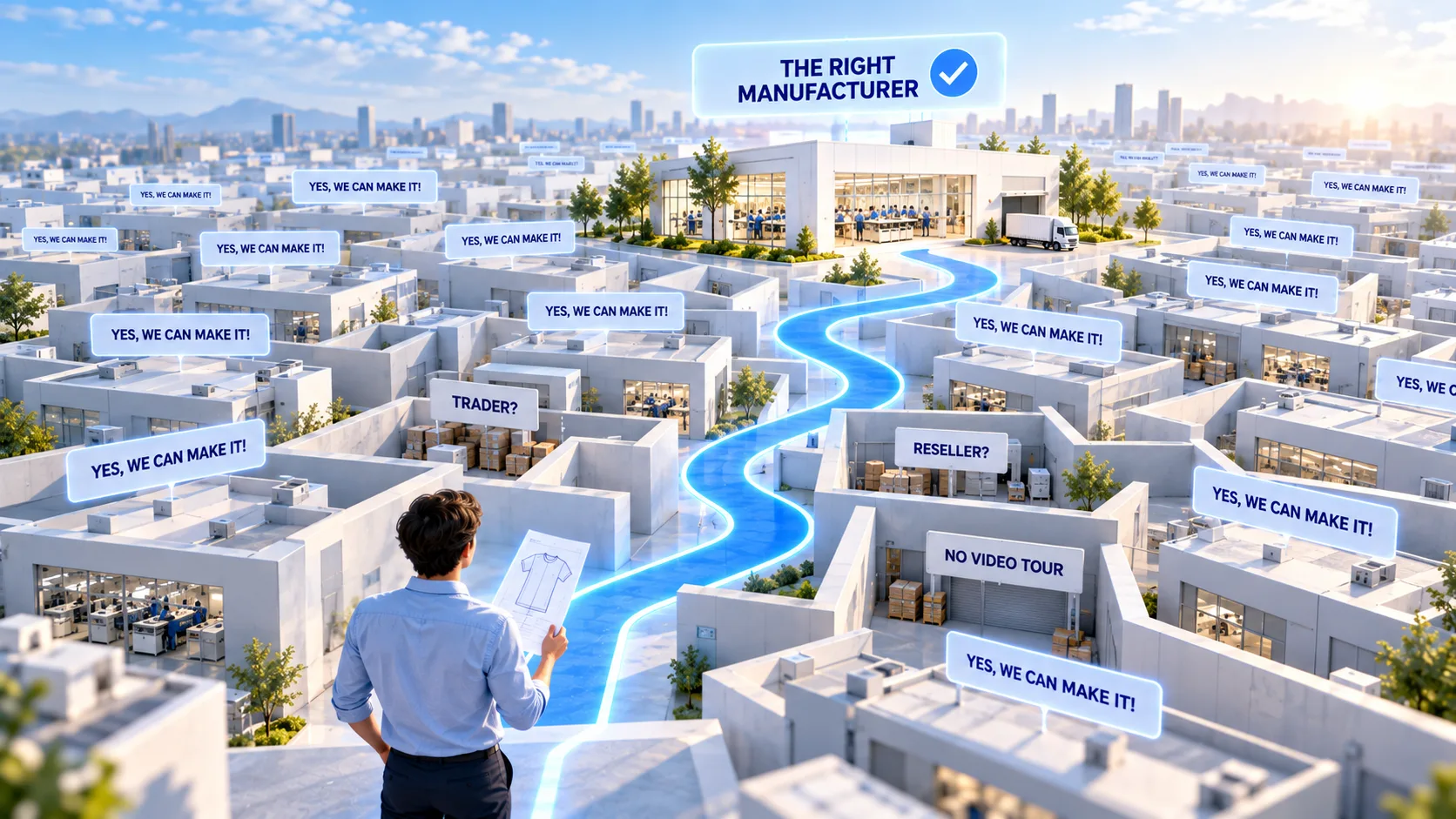
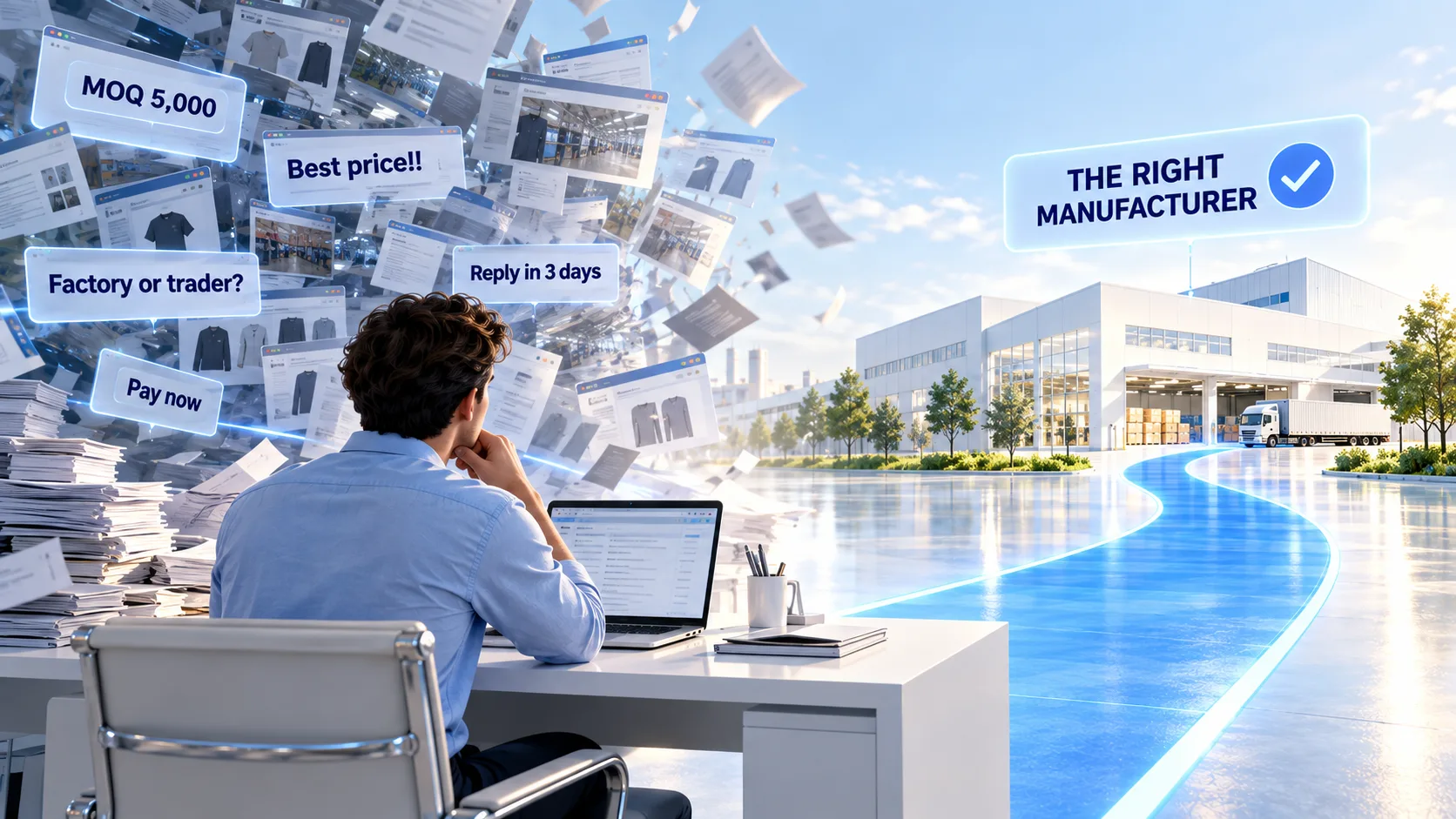
 It usually starts the same way. You have a great product idea. You type "how to find a manufacturer" into Google. Three hours later you have 47 tabs open, 12 suppliers who all replied "yes, we can make it!", and a sinking feeling that at least half of them have never seen a sewing machine.
Finding a manufacturer is not hard because there are too few of them. It's hard because there are too many, and they all look the same online.
Here's the good news: there's a simple order to do it in. Follow these 7 steps and you'll go from tab chaos to one factory you actually trust.
Step 1: Know exactly what you're asking for
Before you contact anyone, write a one-page product brief. Factories quote faster, and more honestly, when they know what they're quoting.
Your brief should cover:
- What it is: a photo, sketch or reference product, plus materials and size.
- How many: your first order quantity, and what you'd reorder if it sells.
- Target price: what you can pay per unit and still make money.
- Branding: logo, colours, packaging, labels.
- Deadline: when you need it in your hands, not when you'd like it.
A vague message like "Can you make water bottles?" gets you vague answers and random prices. A clear brief gets you real quotes you can compare.
Step 2: Decide where it should be made
There is no single "best country". There's the best fit for your product, budget and timeline.
- Making it close to home usually costs more per unit, but you get shorter shipping, easier visits and fewer time-zone headaches. Great for small runs and fast restocks.
- Making it overseas often brings lower unit costs, huge capacity and specialist factory clusters. You trade that for longer lead times, more shipping and more homework on duties.

Step 3: Know where to look
Most people only try one road. The smart move is to try two or three at once.
- Online B2B directories and marketplaces. The fastest way to see lots of options. Also the noisiest, because many listings are traders, not factories.
- Trade shows. You meet people face to face, touch real samples and see who shows up with their own products. Slower and pricier, but you learn a lot in a day.
- Referrals. Ask other founders, your freight forwarder or brands you admire who they use. A warm introduction beats a cold search every time.
- Smarter Google searches. Search like a buyer, not a shopper: the product, the material and words like "manufacturer", "OEM" or "factory". "Custom stainless steel water bottle OEM manufacturer" beats "water bottle supplier".
- A sourcing partner. Someone who already knows which factories make your product well, and does the vetting for you.
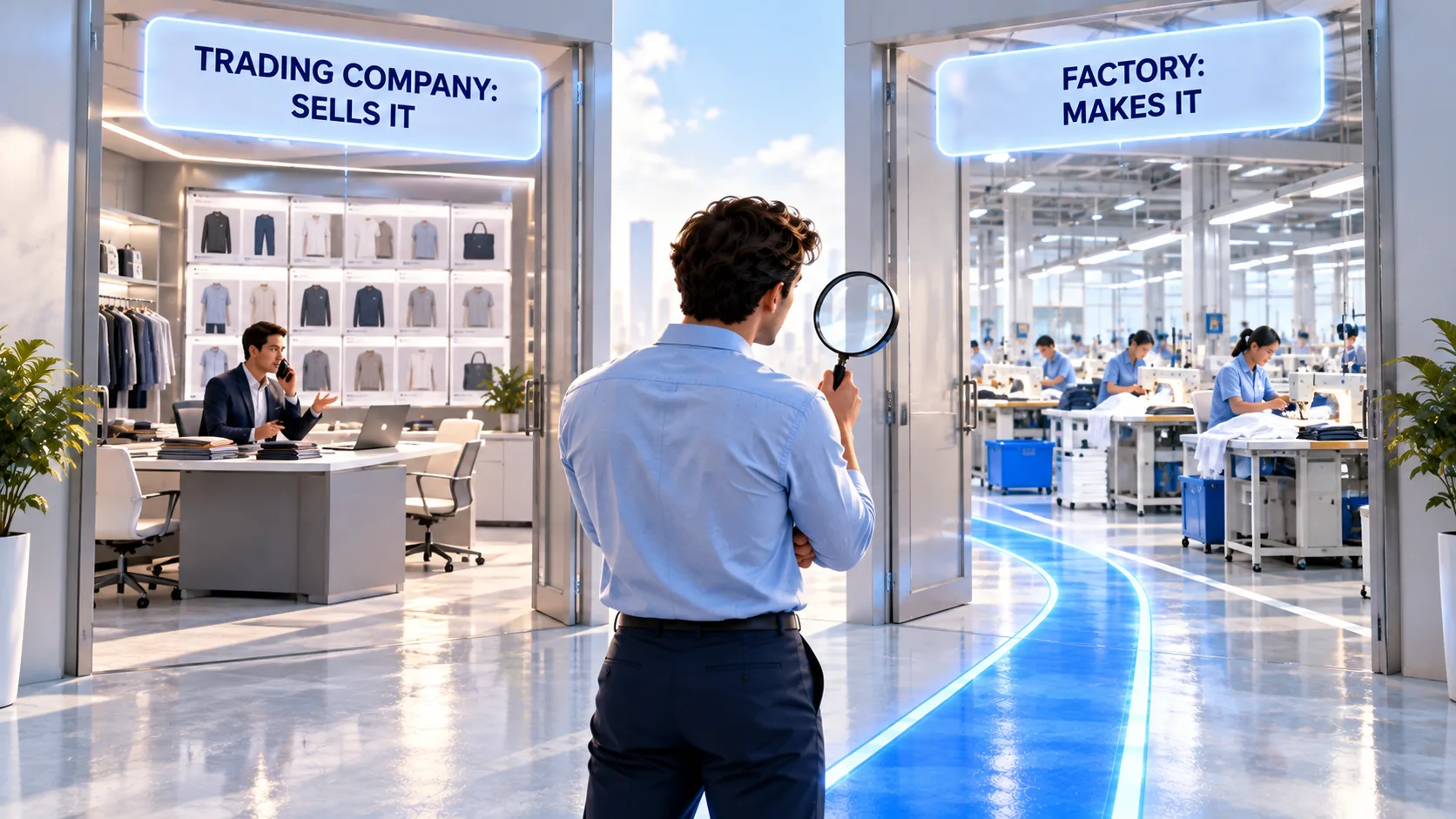
Step 4: Factory or middleman? Find out early
Many "manufacturers" online are actually trading companies. They take your order and pass it to a factory they work with. That isn't always bad. A good trader can save you time. But you should know who you're dealing with, because it affects price, control and who fixes problems.
Ask these questions:
- "Can you show me a live video tour of your production floor?"
- "What machines do you use for this product, and how many?"
- "Which other products do you make in this factory?"
- "Does the name on your business licence match the name on your invoice?"
A real factory answers these easily. A trader often gets vague, or "the factory manager is busy this week."
Step 5: Shortlist 3 to 5 and get comparable quotes
Don't chase 20 suppliers. Pick your best 3 to 5 and send them all the same brief. Ask every one to quote:
- Unit price at your first order quantity, and at a bigger reorder quantity.
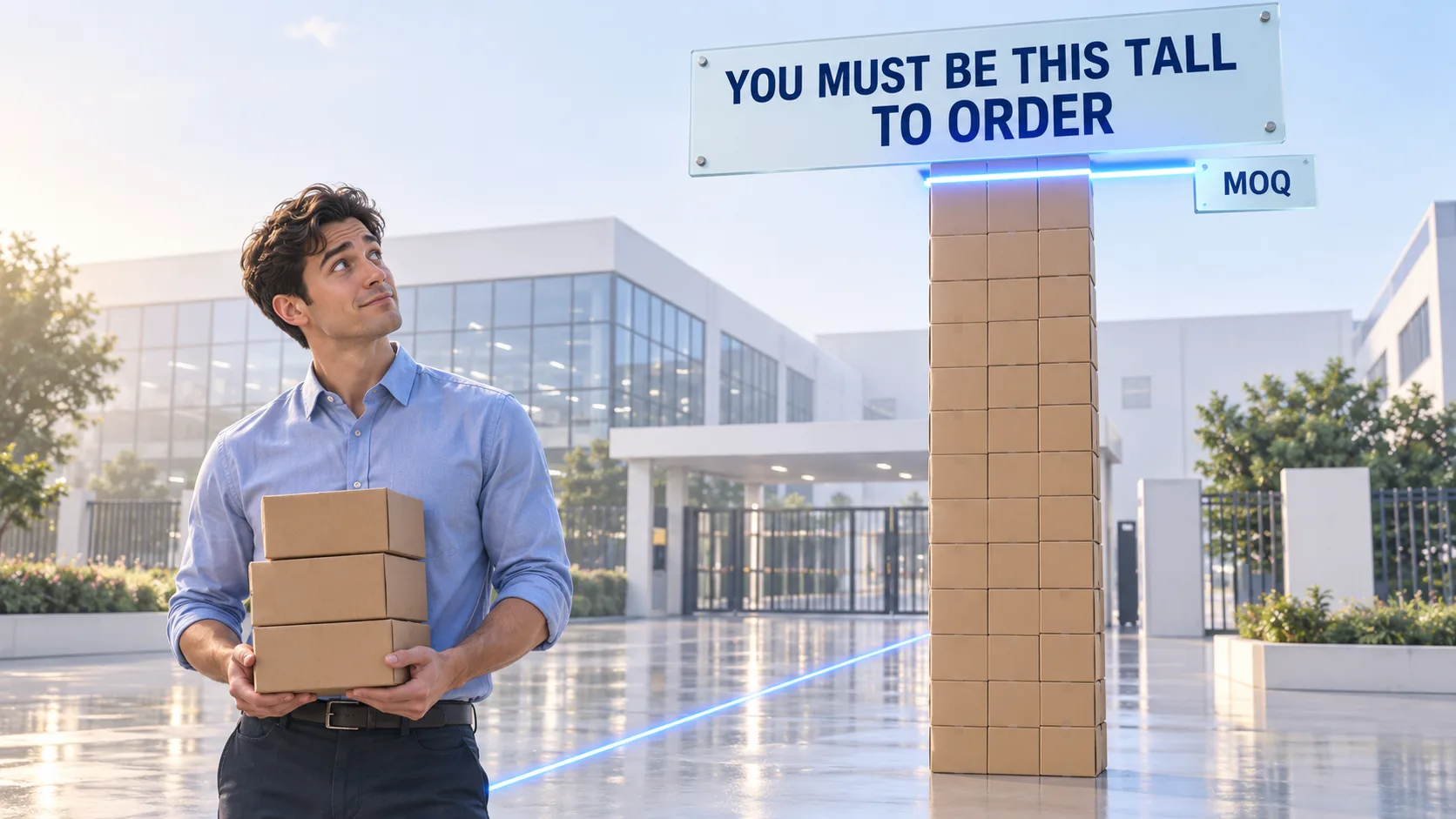
- Minimum order quantity (MOQ) for your version, including your logo and packaging.
- Sample cost and sample lead time.
- Production lead time after sample approval.
- Payment terms and what's included: packaging, labels, delivery to port.
Now you can compare apples with apples. The cheapest unit price is rarely the cheapest.

Step 6: Check them before you pay a cent
This is the step people skip, and the one that saves you the most money. Before any deposit:
- Check the business licence. Does the company name match the one on your quote and invoice?
- Do a live video call from the factory floor. Ask them to show your product category being made, right now.
- Ask for references from customers in your country, and actually contact them.
- Check their export experience. Have they shipped to your market before? Do they know its labelling and safety rules?
- For bigger orders, book a third-party factory audit. An independent check of the factory is cheap compared with a bad order.
Red flags that mean "walk away":
- A price far below everyone else's.
- Pressure to pay fast, "special price only today".
- Asking you to pay a personal bank account, or a different company name than the one on the invoice.
- "Our bank details have changed" emails. Always confirm new payment details by phone or video with someone you know before sending money.
- No video tour, ever, for any reason.
Step 7: Sample first, then start small
Never go straight to a big order.
1. Order samples from your top two. Test them like a picky customer would: wash them, drop them, use them.
2. Approve one "golden sample" in writing. That's the standard the bulk order must match.
3. Start with a small first order, even if the price per unit is a bit higher. You're buying proof, not just products.
4. Check the order before the final payment. A pre-shipment inspection while the goods are still at the factory is your best leverage.
Once that first order lands on time and on spec, you don't just have a supplier. You have a manufacturer.
QUICK ANSWERS TO COMMON QUESTIONS
How do I find a manufacturer for my product idea?
Write a clear product brief, decide where you want it made, then search through B2B directories, trade shows, referrals and targeted Google searches. Shortlist 3 to 5, compare like-for-like quotes, verify the best ones, and test with samples before you order.
How can I tell if a supplier is a real factory?
Ask for a live video tour of the production floor, ask what machines they use, and check that the name on their business licence matches the name on your invoice. Real factories answer these easily.
What is MOQ?
MOQ means minimum order quantity: the smallest order a factory will accept. It often changes when you add custom colours, logos or packaging, so always ask for the MOQ for your version, not the standard one.
Can I find a manufacturer if I only need a small quantity?
Yes, but expect a higher price per unit, and look for factories or partners that work with smaller brands. Being clear about your reorder plans helps, because factories care about where the relationship could go.
What's the biggest mistake first-time buyers make?
Choosing on unit price alone and paying before verifying who they're dealing with. A slightly higher price from a factory you've checked is usually the cheaper choice in the end.
THE BOTTOM LINE
You don't need 47 tabs. You need a clear brief, a short list, a few smart questions and the discipline to check before you pay. Do that and finding a manufacturer stops being a gamble and becomes a process.
Rather skip the tab chaos? Send us your product brief and target quantity, and we'll help you find a manufacturer that fits.
Written by
SourcewithAI
October 14, 2026 · 6 min read