Introduction
Most sourcing journeys start the same way: someone opens a browser, searches for a product category, and starts comparing supplier quotes. It feels productive. It feels like progress. But it's usually the wrong place to start.
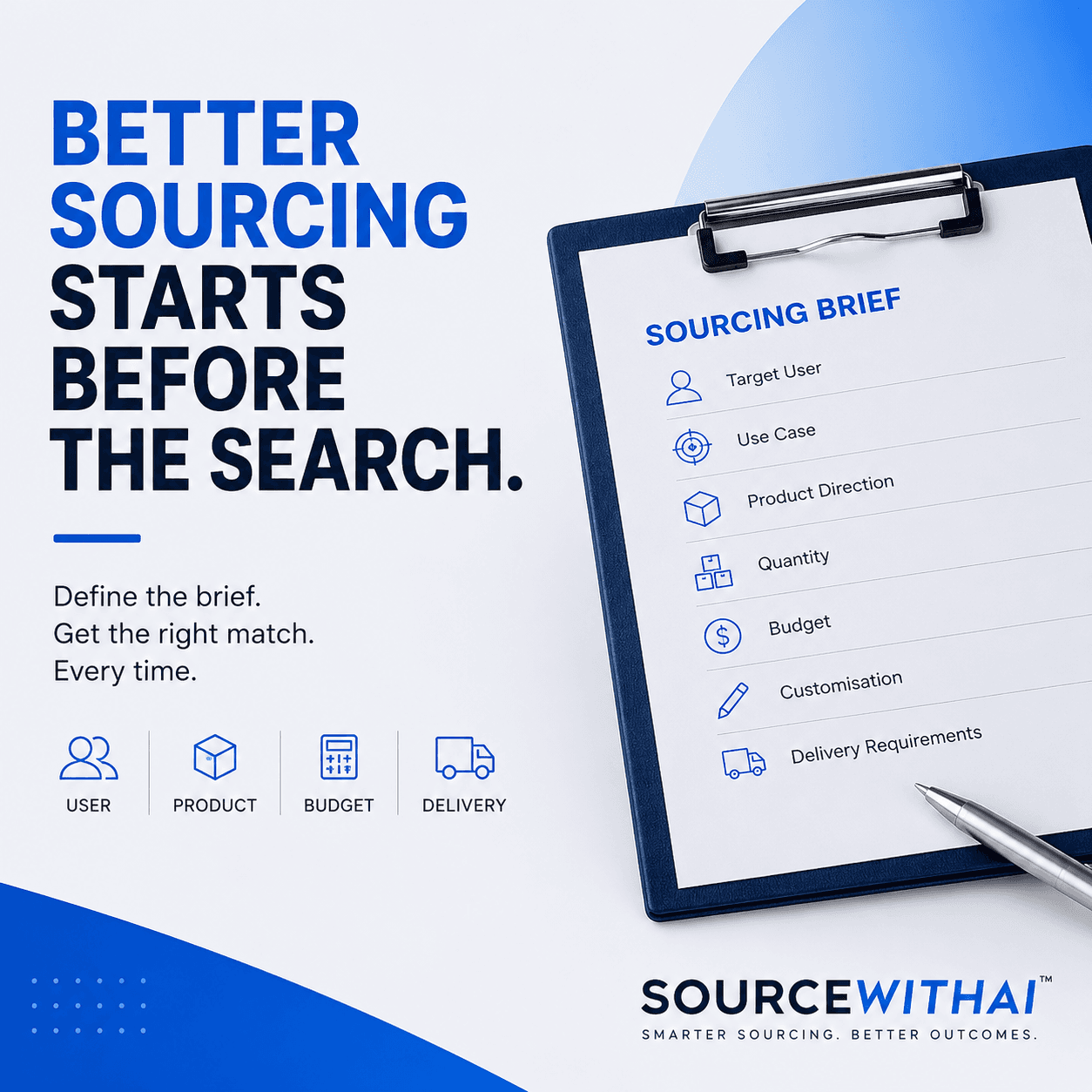
The suppliers you shortlist, the prices you're quoted, and the samples you receive are only ever as good as the brief behind them. If that brief is thin "we need 500 tote bags" the sourcing process becomes a guessing game dressed up as due diligence. Better sourcing doesn't begin with a supplier list. It begins with a clear picture of what you're actually trying to build.

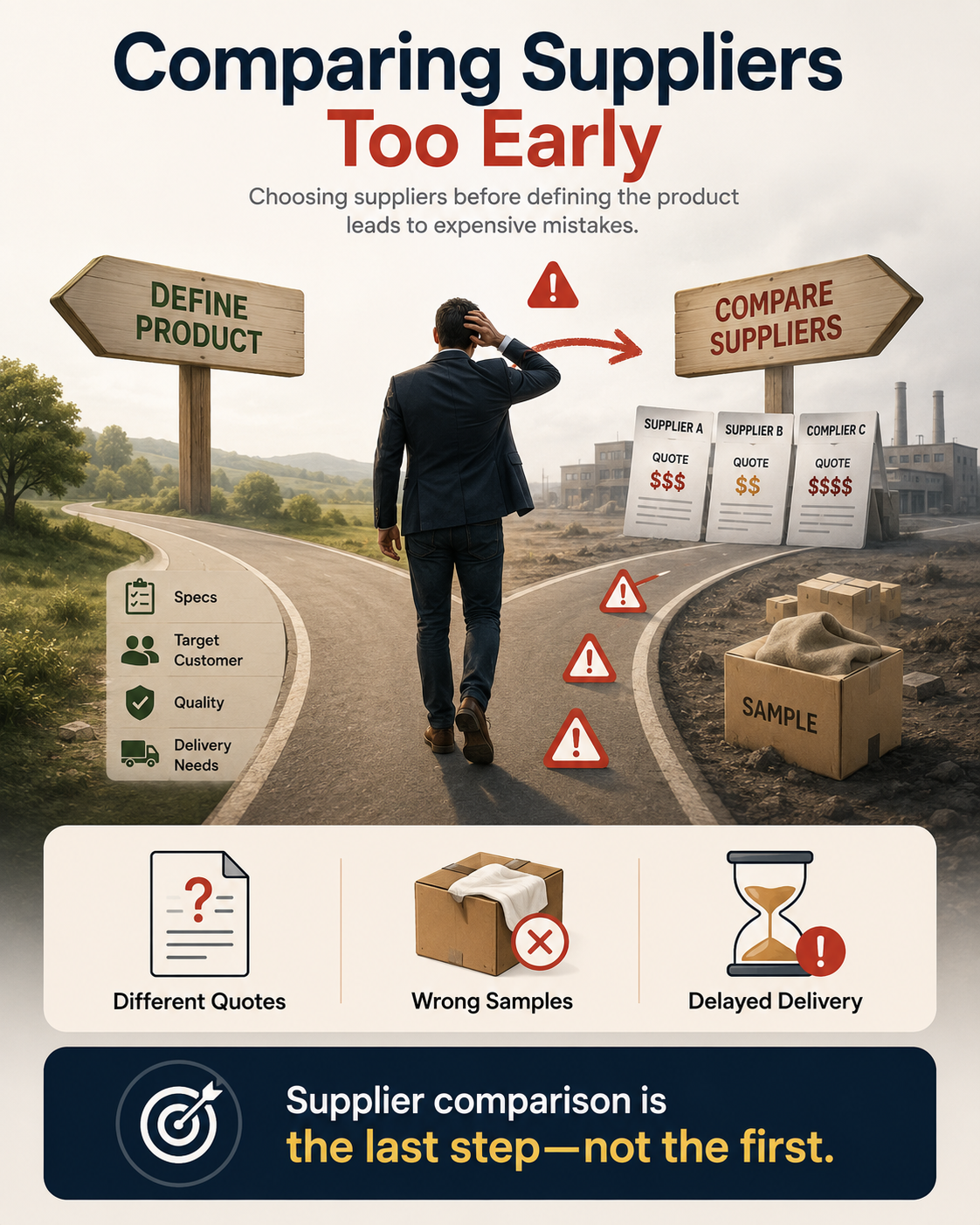
The Problem: Comparing Suppliers Too Early
It's an easy trap to fall into. Price comparisons feel concrete. Supplier catalogs feel like real options. So buyers jump straight to "who can make this" before they've fully answered "what is this, exactly, and who is it for."
The result is predictable: quotes that don't line up because everyone assumed different specs, samples that miss the mark because nobody defined the use case, and timelines that blow out because delivery requirements were an afterthought. None of this is the supplier's fault it's a sequencing problem. Supplier comparison is a downstream decision. It should come after the upstream questions are answered, not before.
What to Define Before You Search for Suppliers
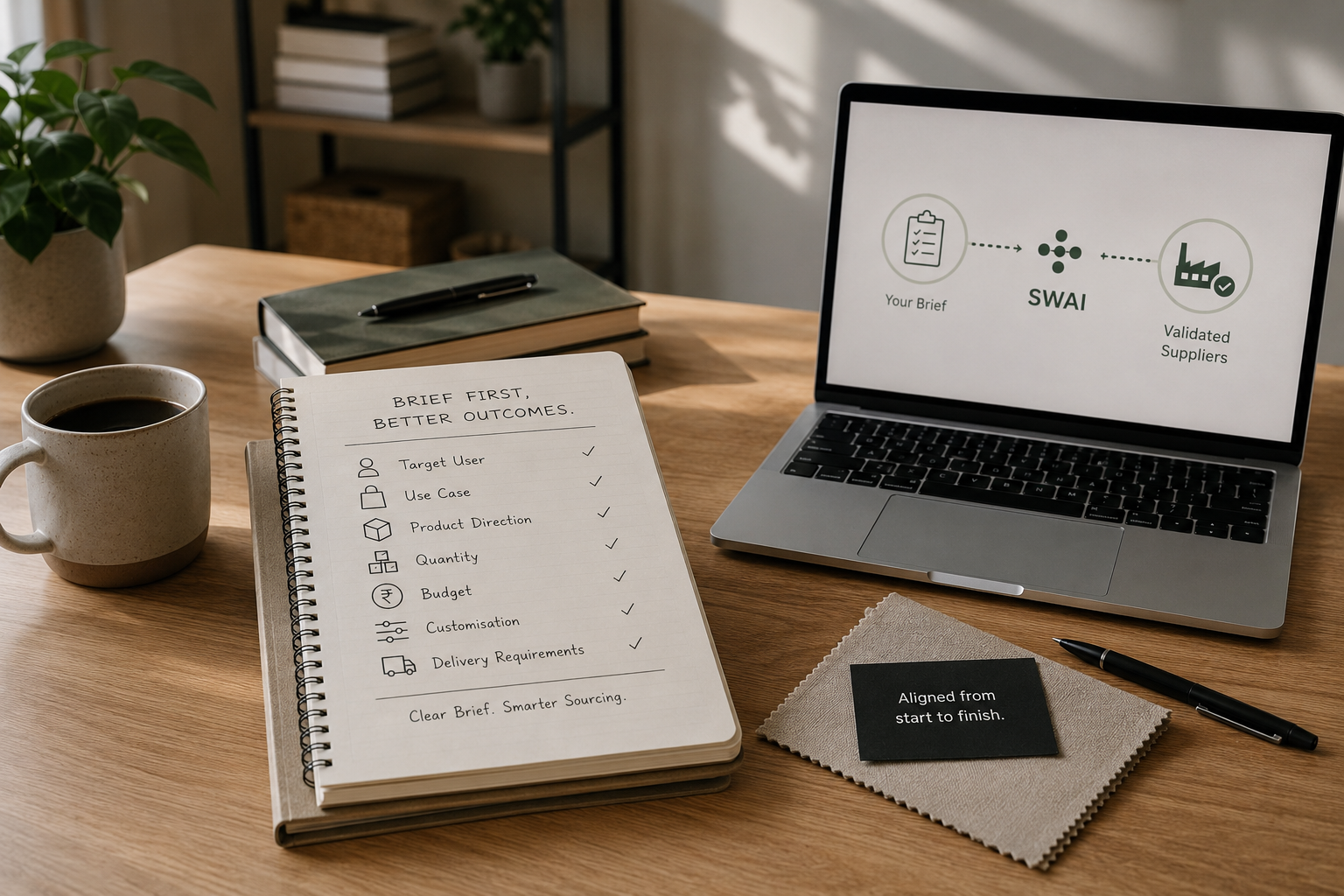
Target User
Who is actually going to use or receive this product? A conference giveaway for enterprise clients has different expectations than a retail product for everyday consumers. The target user shapes material quality, design language, and even packaging long before a supplier ever enters the conversation.
Use Case
How will the product be used, and in what context? A tote bag meant for a single branded event has different durability and cost requirements than one meant for daily retail use. Clarifying the use case early prevents over-engineering and overpaying for a product that only needs to perform once.
Product Direction
Is this a fully custom product, a modified stock item, or an off-the-shelf item with light branding? This single decision affects almost everything downstream including tooling costs, lead times, minimum order quantities, and which supplier categories are even relevant. Deciding this after supplier outreach usually means starting the conversation over.
Quantity
Order volume affects unit economics, but it also determines which suppliers are worth talking to at all. A supplier optimized for large-volume manufacturing may be a poor fit or simply uninterested in a small pilot order, and vice versa.
Budget
The budget isn't just a ceiling; it's a filter. Knowing the target cost per unit before comparing suppliers helps buyers avoid wasting time on quotes that were never going to fit, and helps them ask sharper questions about where the cost is actually going.
Customisation
What can flex, and what can't? Logo placement, color matching, material substitutions, and packaging inserts all carry different cost and time implications. Defining the non-negotiables early prevents rounds of back-and-forth once supplier conversations begin.
Delivery Requirements
When does the product need to arrive, and where? Delivery timelines interact with production capacity, shipping method, and customs and they often eliminate suppliers who would otherwise be a great fit on price or quality. Knowing this upfront avoids a late-stage scramble. Taken together, these seven inputs form the brief. Without them, "compare suppliers" really means "compare incomplete guesses."

How SWAI Moves From Product Opportunity to Supplier Validation
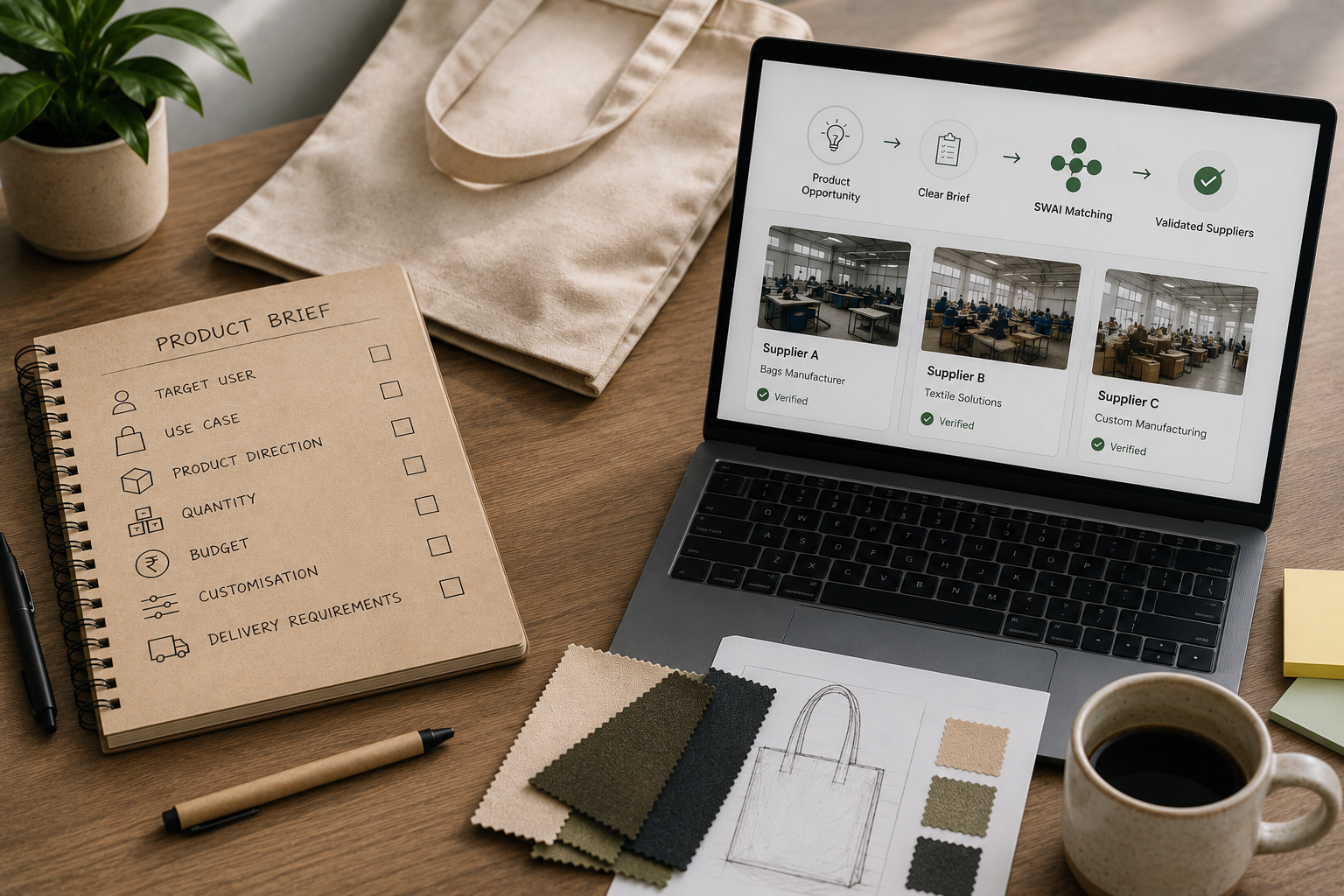
This is exactly the gap SourceWithAI is built to close. Instead of starting with a supplier directory, SWAI starts with the product opportunity itself helping buyers get clear on user, use case, direction, quantity, budget, customisation, and delivery before any supplier is contacted.
From there, that structured brief becomes the basis for supplier validation. Rather than buyers manually vetting each factory's capabilities, certifications, and production history from scratch, SWAI matches the defined requirements against verified supplier data so the suppliers that do surface are already aligned with what the product actually needs, not just what it's called.
The result is a shorter, more accurate sourcing cycle: fewer irrelevant quotes, fewer misaligned samples, and supplier conversations that start from a shared understanding instead of a blank page.
Conclusion
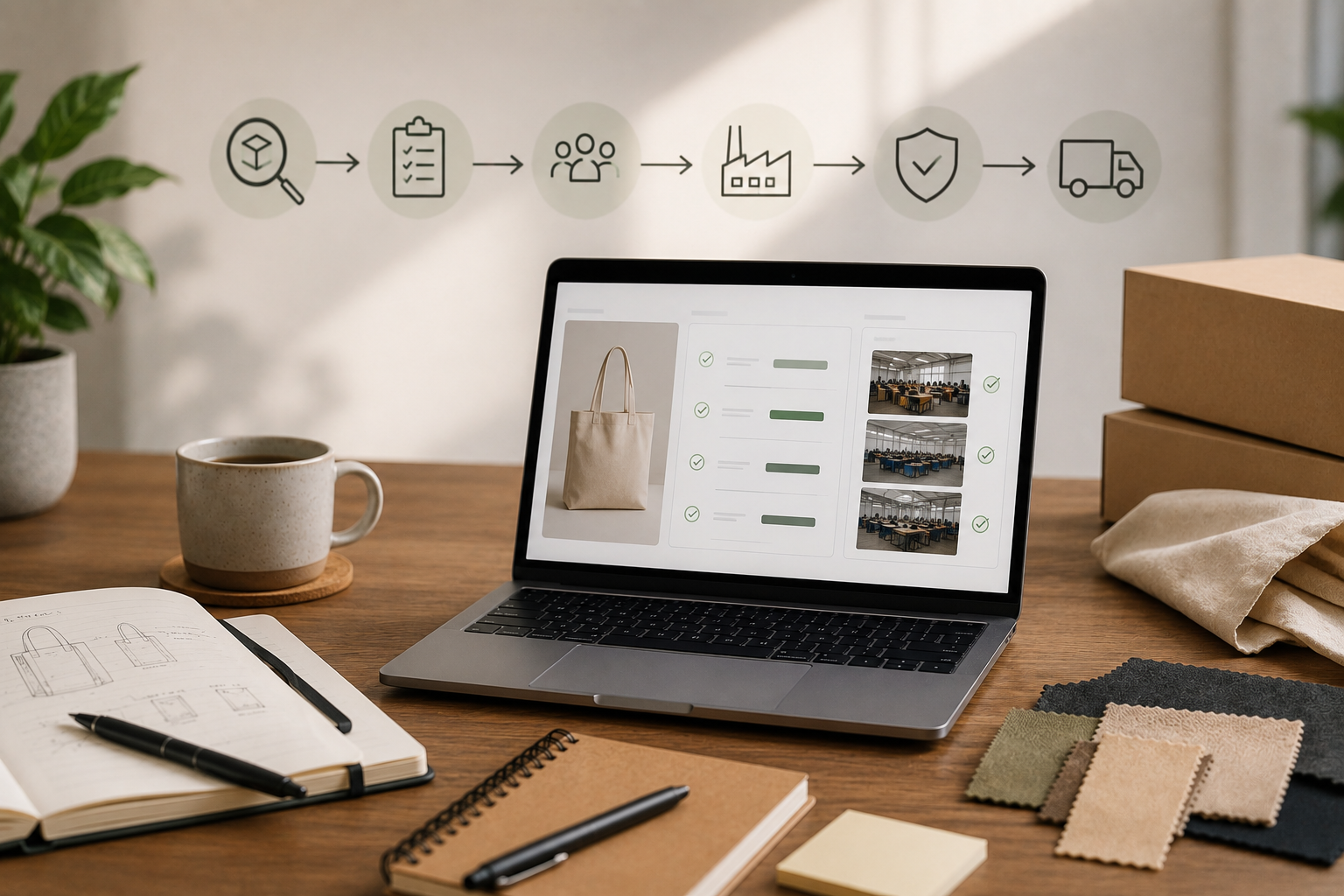
Sourcing isn't slower when you start with the brief it's faster, because every step after that is aligned instead of improvised. The buyers who get the best outcomes aren't the ones who see the most supplier quotes. They're the ones who knew exactly what they needed before they asked for a single one.
Before your next supplier search, build the brief first. Explore how SourceWithAI helps you define the product opportunity and connect with validated suppliers who actually fit visit SourceWithAI to get started
Written by
Admin
July 30, 2026 · 4 min read