Sourcing Products from China: Trading Company vs Factory : What Actually Works Better?
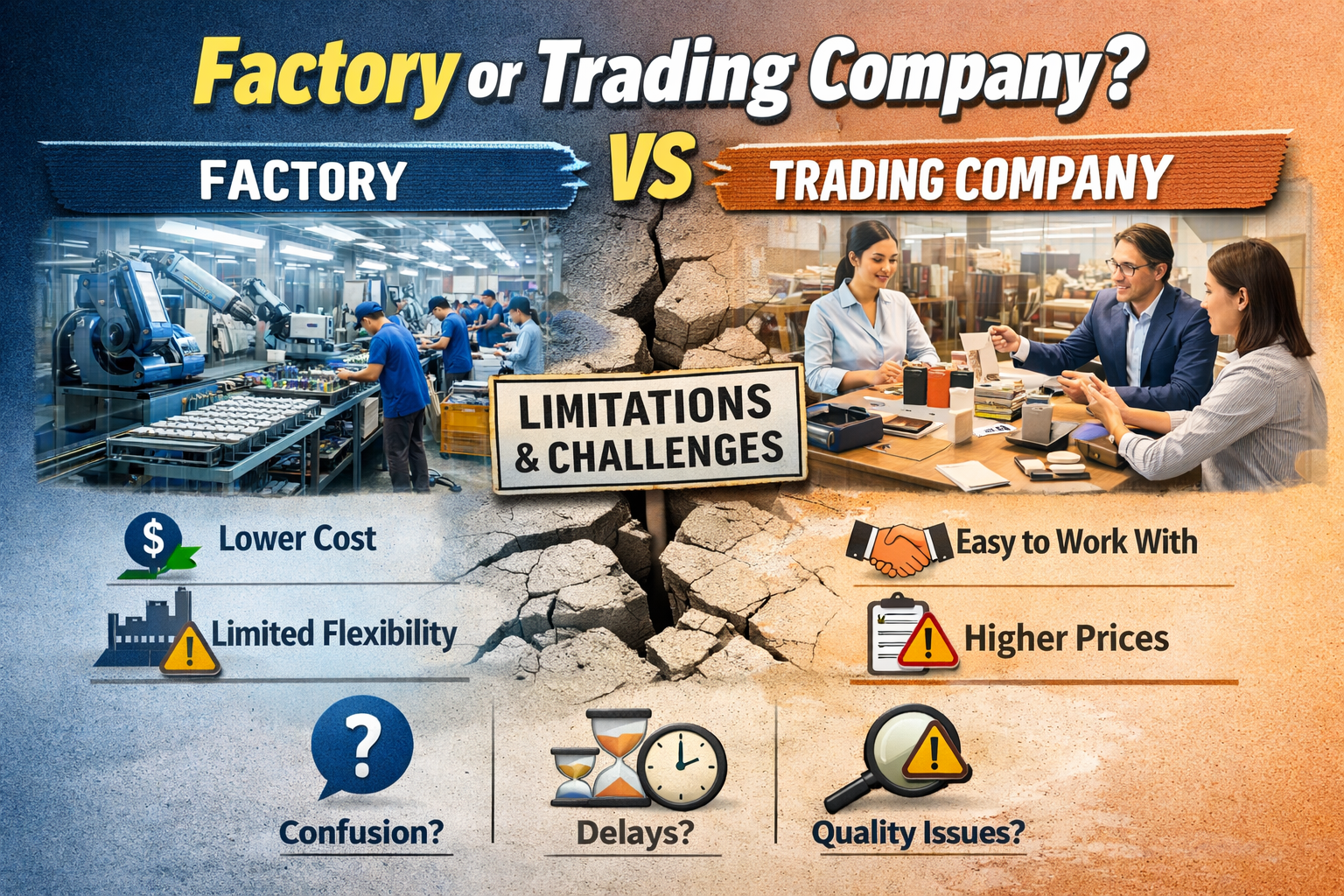
When businesses begin sourcing products from China, one of the first decisions they face is whether to work with a factory or a trading company.
At first, the choice seems straightforward. Factories are assumed to be cheaper, while trading companies are considered easier to work with. But once you start the actual sourcing process, it quickly becomes clear that both options come with their own limitations.
Understanding how each model works is important but more importantly, understanding where they fall short is what helps businesses make better sourcing decisions.
1. Working Directly with Factories
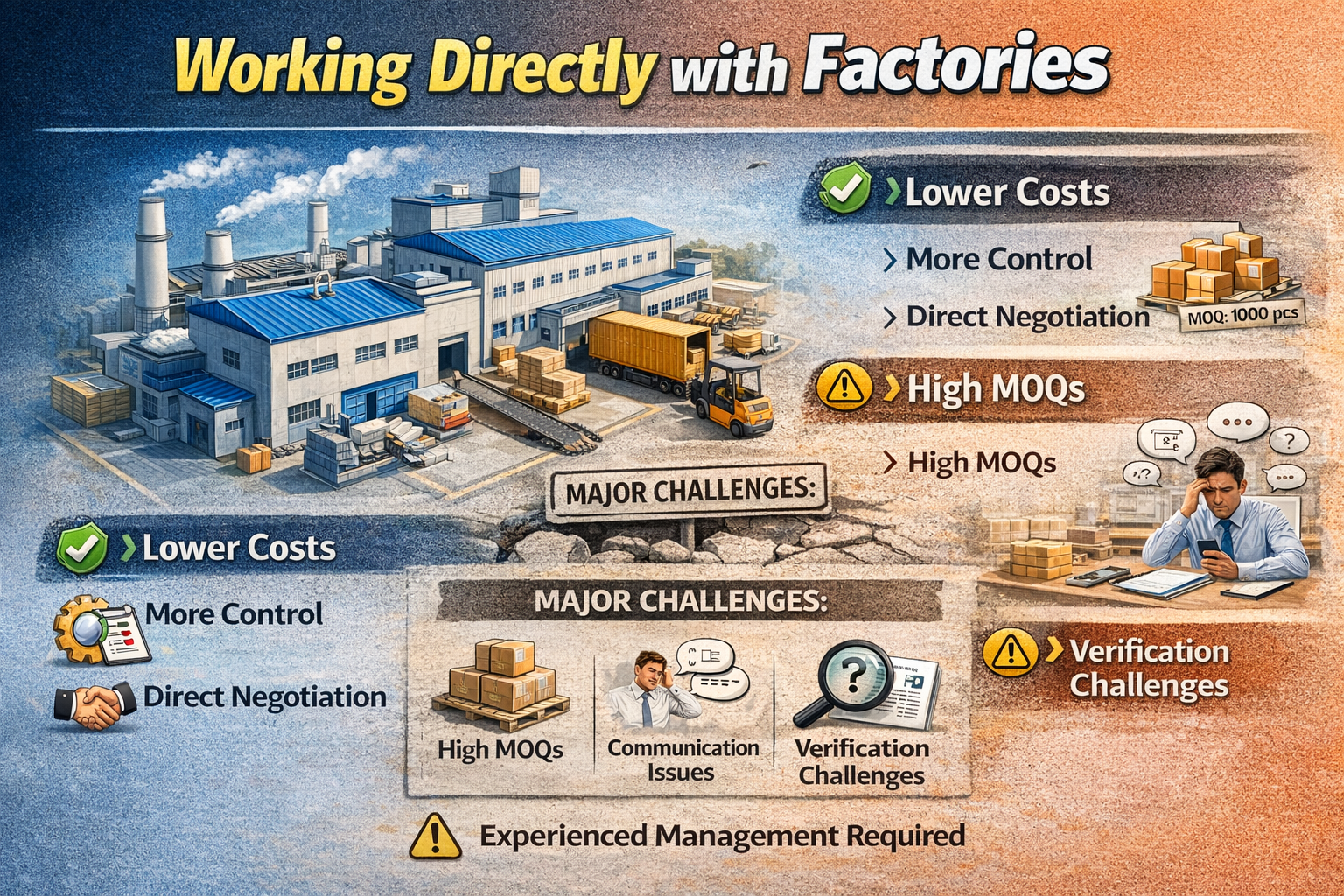
Factories are often the preferred option for businesses looking to reduce costs. By working directly with manufacturers, companies can avoid intermediary margins and negotiate better pricing, especially for large-scale orders.
Factories also provide more control over production. Businesses can directly communicate specifications, request customizations, and monitor manufacturing more closely.
However, this approach is not always as simple as it sounds.
Factories typically operate with high minimum order quantities, which can be challenging for businesses that are still testing products. Communication can also become difficult, particularly when dealing with technical requirements or design changes.
Another major challenge is verification. When trying to source from China China factory, it is not always easy to confirm whether a supplier is genuinely a manufacturer or operating as a middleman.
While factories offer cost advantages, they require experience, time, and consistent involvement to manage effectively.
2. Working with Trading Companies
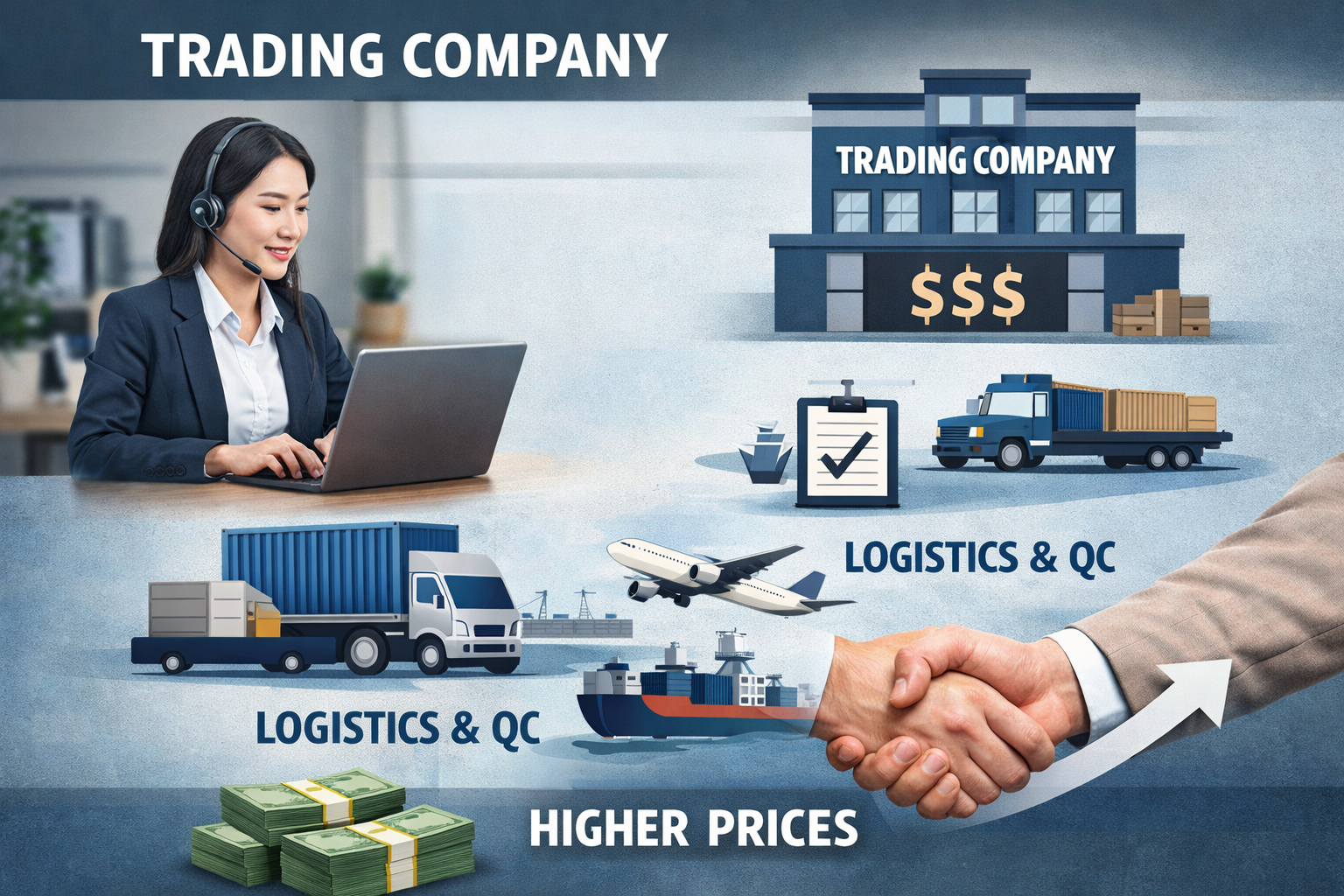
Trading companies act as intermediaries between buyers and manufacturers. They simplify communication, reduce operational complexity, and offer flexibility in order quantities.
This makes them a popular choice for businesses new to sourcing from China or those looking to source multiple products across different categories.
Trading companies also help streamline the sourcing process by handling supplier coordination, basic quality checks, and logistics support.
However, this convenience comes at a cost.
Since trading companies add their own margin, product pricing is usually higher compared to factory-direct sourcing. In addition, businesses often have limited visibility into where and how their products are being manufactured.
This lack of transparency can impact quality consistency and make it harder to resolve issues when they arise.
3. Why the Factory vs Trading Company Debate Falls Short
Most businesses approach sourcing with the assumption that they need to choose between a factory and a trading company.
In reality, both options solve certain problems while creating others.
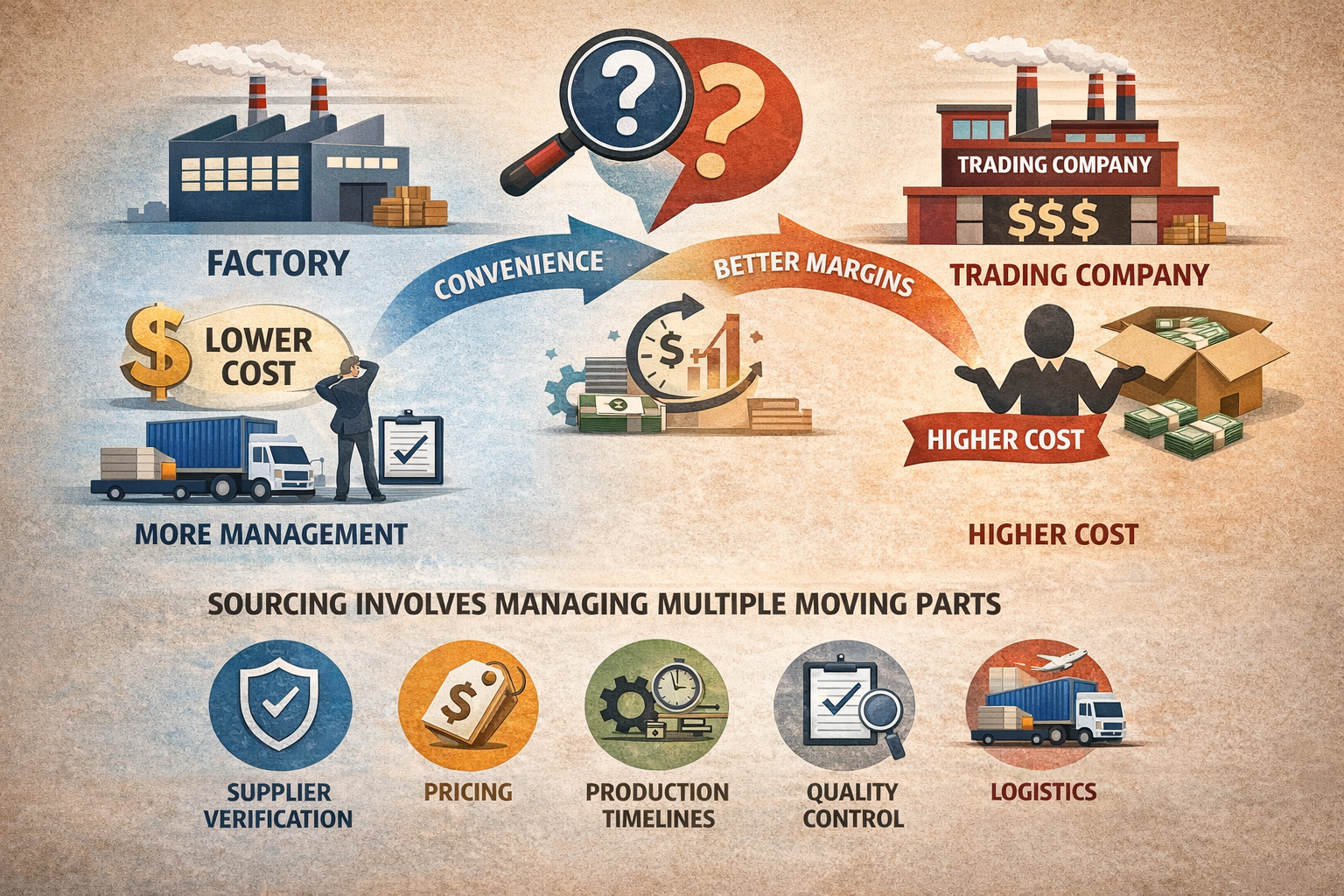
Factories provide better pricing but require hands-on management and expertise. Trading companies make sourcing easier but reduce control and increase costs.
This is why many businesses switch between the two over time starting with trading companies for convenience and later moving to factories to improve margins.
But even then, challenges remain.
Because sourcing today is not just about selecting a supplier. It involves managing multiple moving parts, including supplier verification, pricing, production timelines, quality control, and logistics.
When businesses search for how to source products from China, what they are really looking for is consistency and reliability not just a supplier.
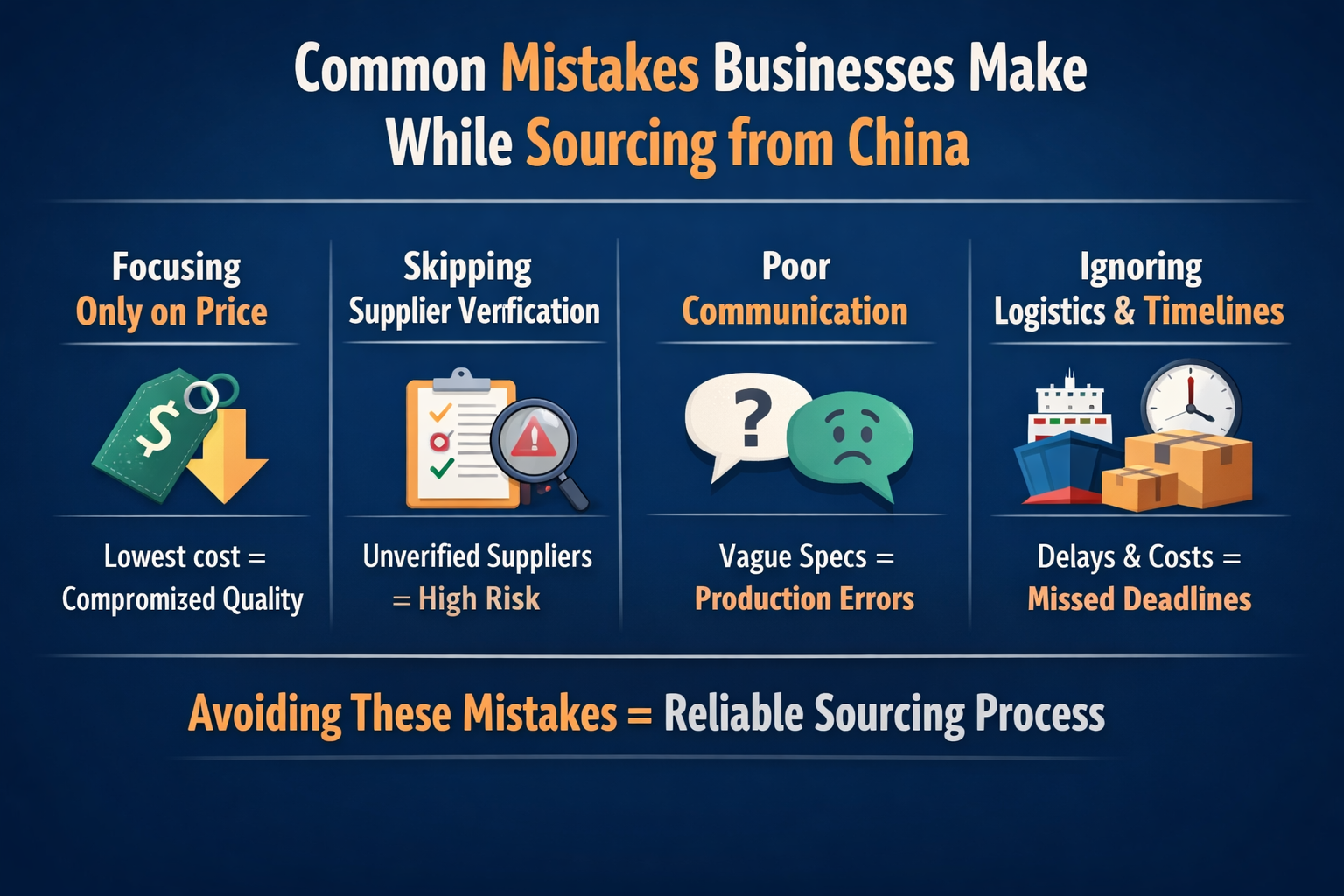
4. Common Mistakes Businesses Make While Sourcing from China
Many sourcing challenges are not caused by factories or trading companies alone, but by how businesses approach the process.
One common mistake is focusing only on price. While cost is important, choosing the lowest quote often leads to compromises in quality, materials, or production standards.
Another mistake is skipping proper supplier verification. Without checking certifications, production capabilities, and past work, businesses risk working with unreliable suppliers.
Communication gaps are also a major issue. Vague product specifications or unclear expectations can lead to incorrect production and costly delays.
Finally, many businesses underestimate logistics and timelines. Production is only one part of sourcing shipping, customs, and delivery timelines are equally important.
Avoiding these mistakes is key to building a reliable sourcing process.
5. Real-World Sourcing Scenario
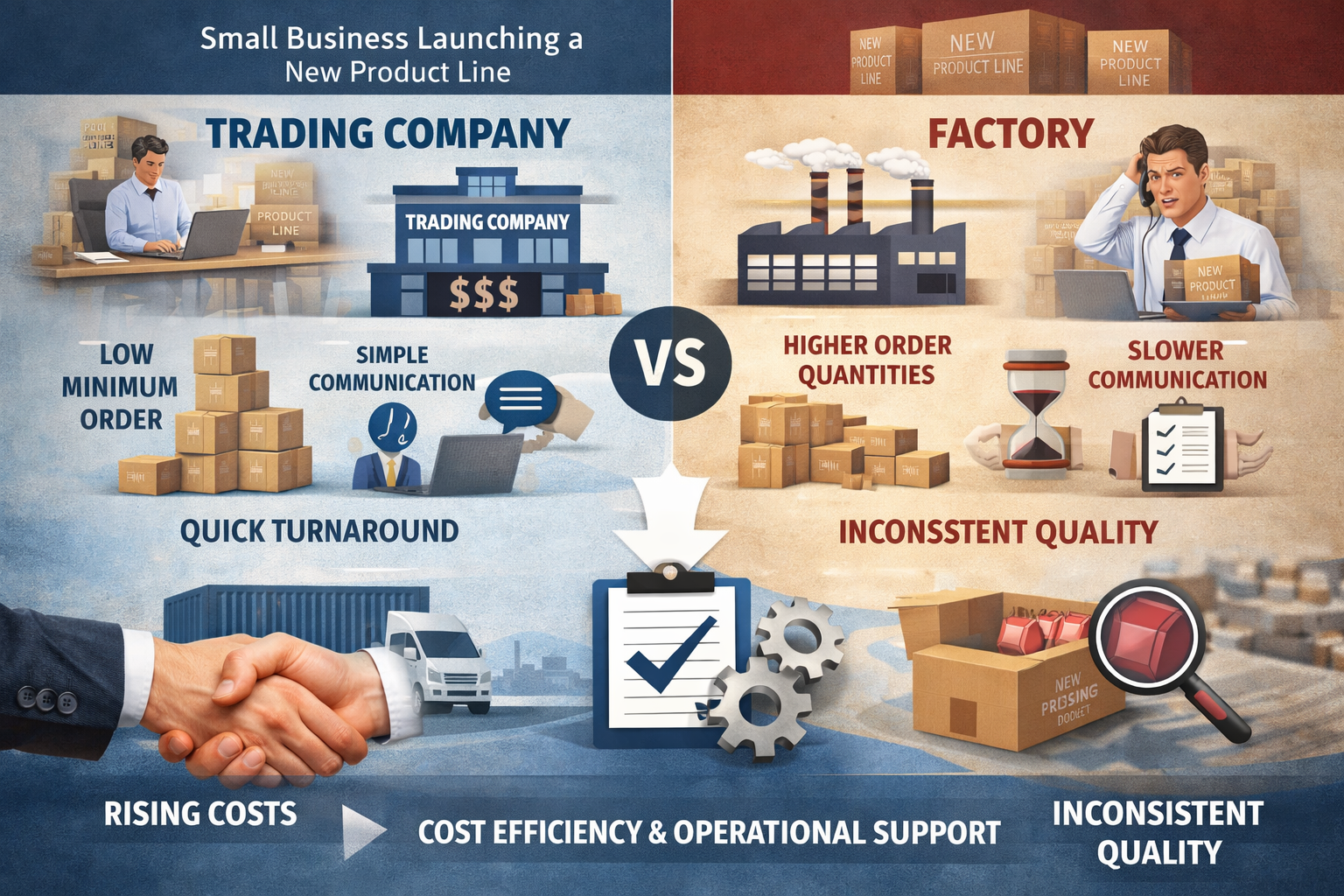
Consider a small business launching a new product line.
They start by working with a trading company because it feels easier. The initial experience is smooth—low minimum orders, simple communication, and quick turnaround. But as the business grows, they notice rising costs and inconsistent quality.
To improve margins, they decide to shift to a factory. While pricing improves, they now face new challenges higher order quantities, slower communication, and difficulty managing production details.
At this point, the business realizes that neither option fully solves their problem.
What they actually need is a sourcing system that provides both cost efficiency and operational support.
This is a common journey for many businesses involved in sourcing products from China.
6. The Need for a More Reliable Sourcing Approach
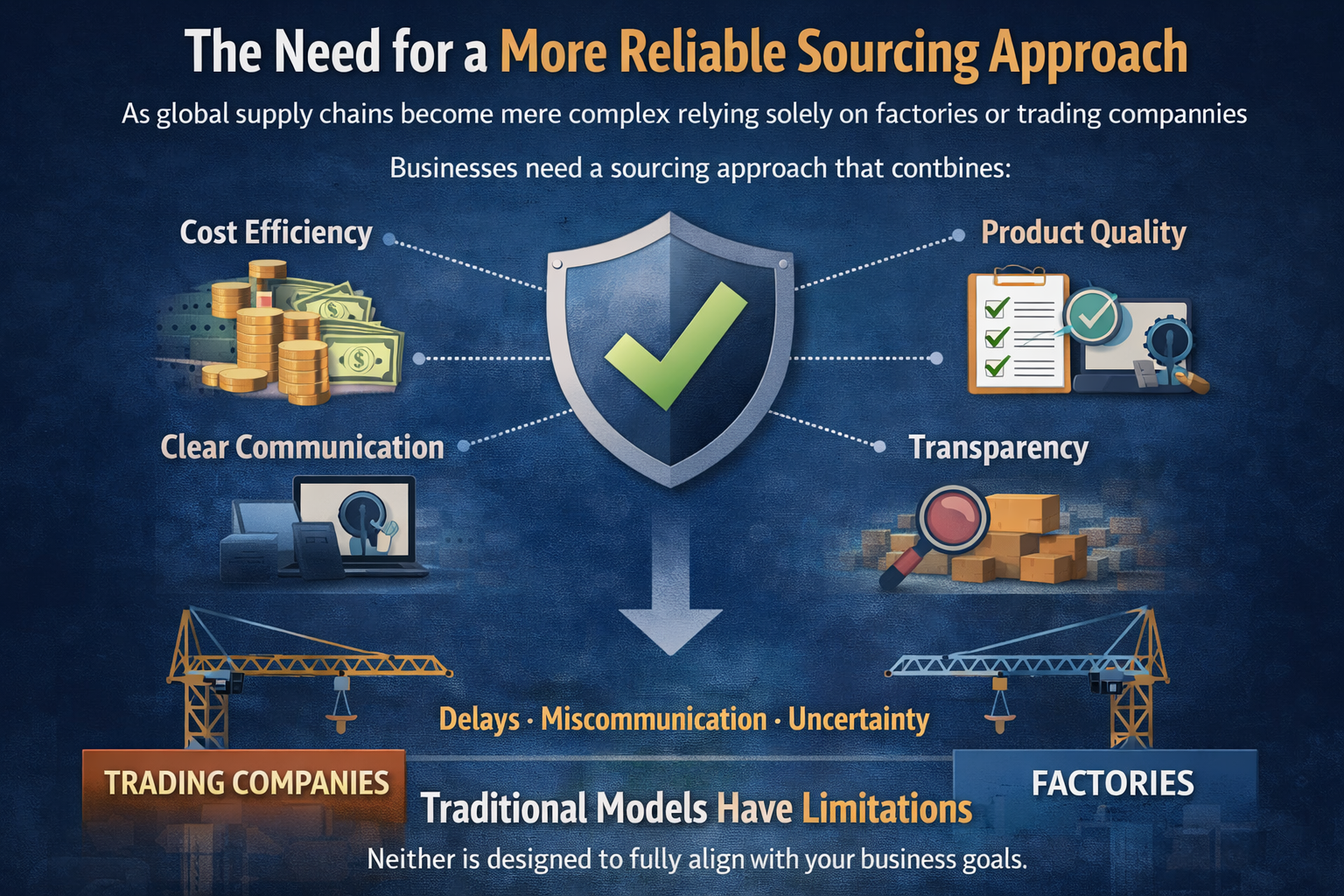
As global supply chains become more complex, relying solely on factories or trading companies is often not enough.
Businesses need a sourcing approach that combines:
Cost efficiency
Clear communication
Product quality consistency
Transparency across the process
At the same time, they need to reduce risks related to delays, miscommunication, and supplier uncertainty.
This is where traditional sourcing models start to show their limitations.
Factories are focused on production, not on managing your end-to-end sourcing needs. Trading companies focus on facilitating transactions, not necessarily optimizing your sourcing strategy.
Neither is designed to fully align with your business goals.
7. A Better Way to Source from China
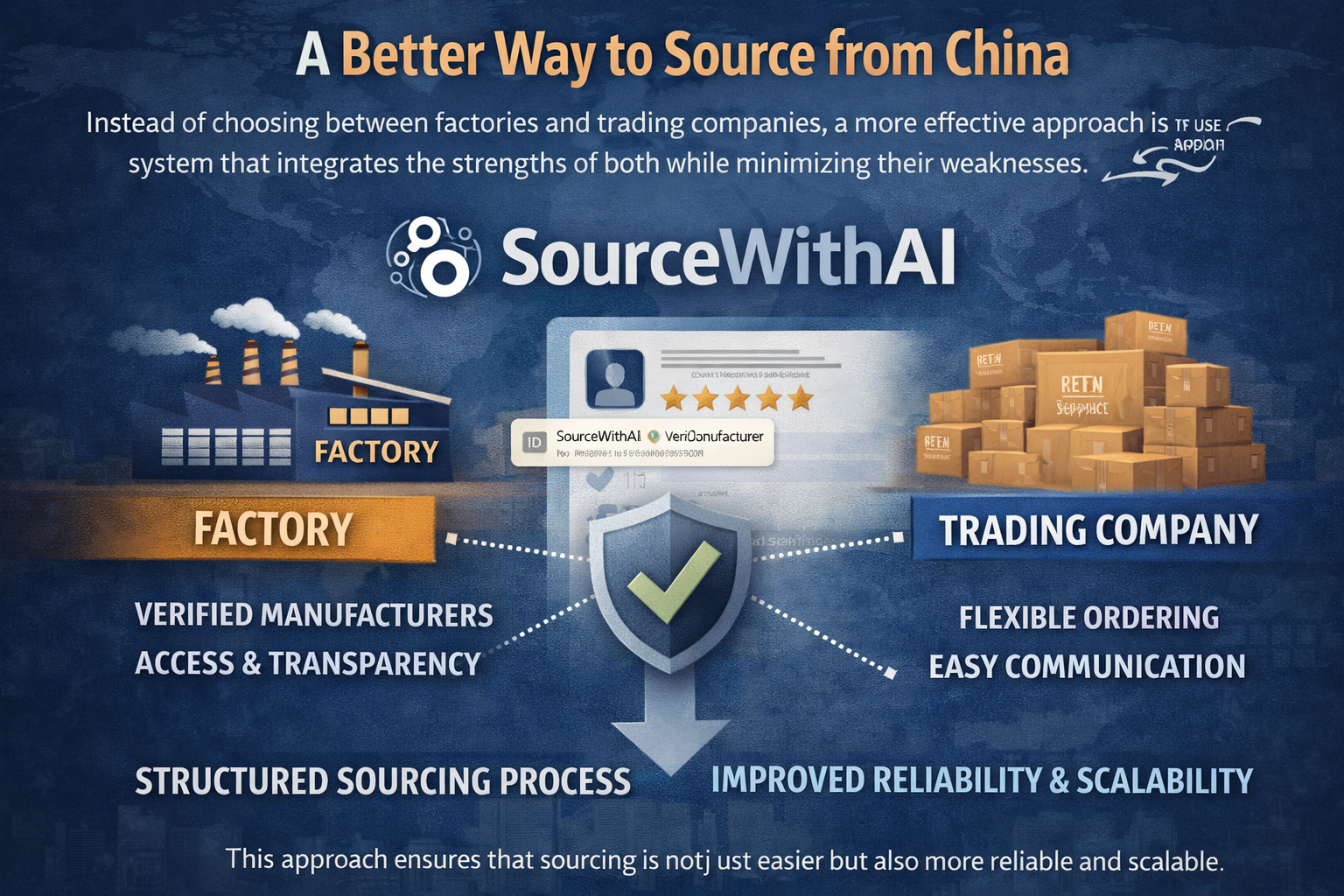
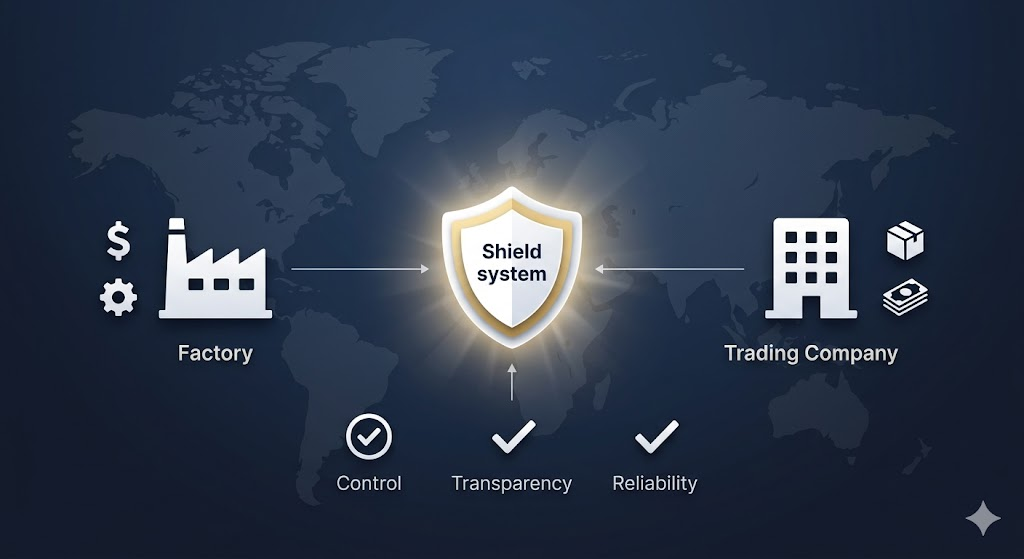
Instead of choosing between factories and trading companies, a more effective approach is to use a system that integrates the strengths of both while minimizing their weaknesses.
At SourceWithAI, the focus is on building a structured sourcing process rather than simply connecting buyers with suppliers.
Businesses still get access to verified manufacturers when they source from China China factory, but without having to manage the complexities independently. At the same time, they benefit from the flexibility typically associated with trading companies, without losing transparency or control.
This approach ensures that sourcing is not just easier but also more reliable and scalable.
Conclusion
For businesses involved in sourcing products from China, the decision is often framed as a choice between factories and trading companies.
However, both options have clear limitations.
Factories can offer better pricing but require significant effort to manage. Trading companies simplify the process but increase costs and reduce visibility.
A more effective solution is to move beyond this binary choice and focus on building a sourcing system that works consistently.
That’s where SourceWithAI stands apart.
Instead of being limited to one model, it provides a solution that helps businesses source from China China factory efficiently while avoiding the common challenges associated with traditional sourcing methods.
Because in today’s market, successful sourcing is not just about where you buy from it’s about how well your entire process works.
Written by
Eva Liu
March 27, 2026 · 5 min read