Ask anyone in the merch business what sells at a World Cup and you'll hear the same three answers: jerseys, scarves, flags. They're not wrong. These are the categories that dominate the conversation, fill the stadium gift shops, and flood every B2B sourcing platform the moment a tournament kicks off.
But here's what the data from World Cup 2026 is actually showing: the brands that are quietly winning this tournament commercially aren't the ones competing on jerseys. They're the ones that found the categories nobody else was looking at the products sitting right next to the obvious choices, serving the same emotionally charged fans, with significantly less competition and often better margins.
This is a look at those categories. The ones that are selling, the ones that are trending, and the ones that smart sourcing teams should have been building inventory on months ago, and for the next major event, definitely will be.
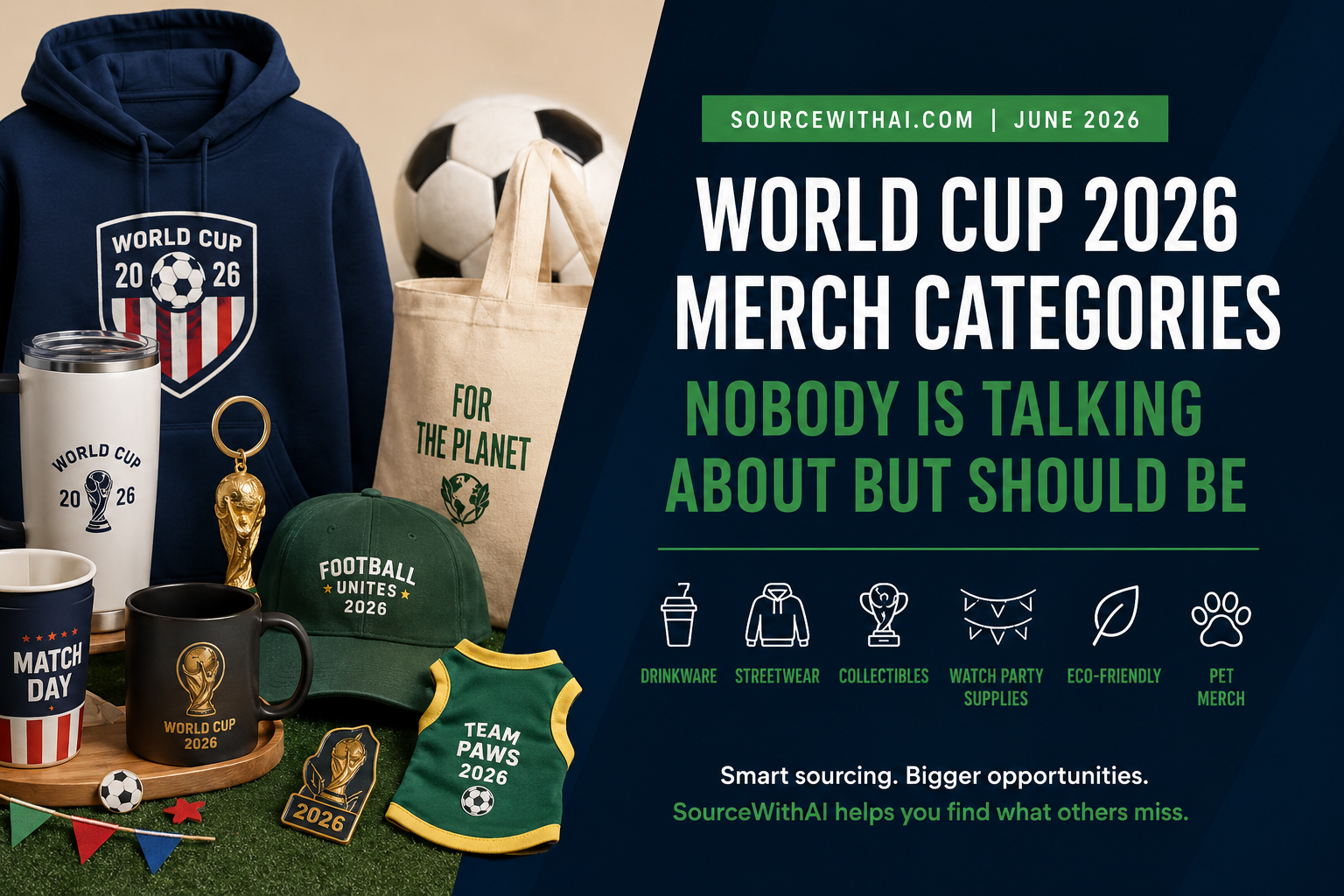
Drinkware: The Category That's Actually Leading
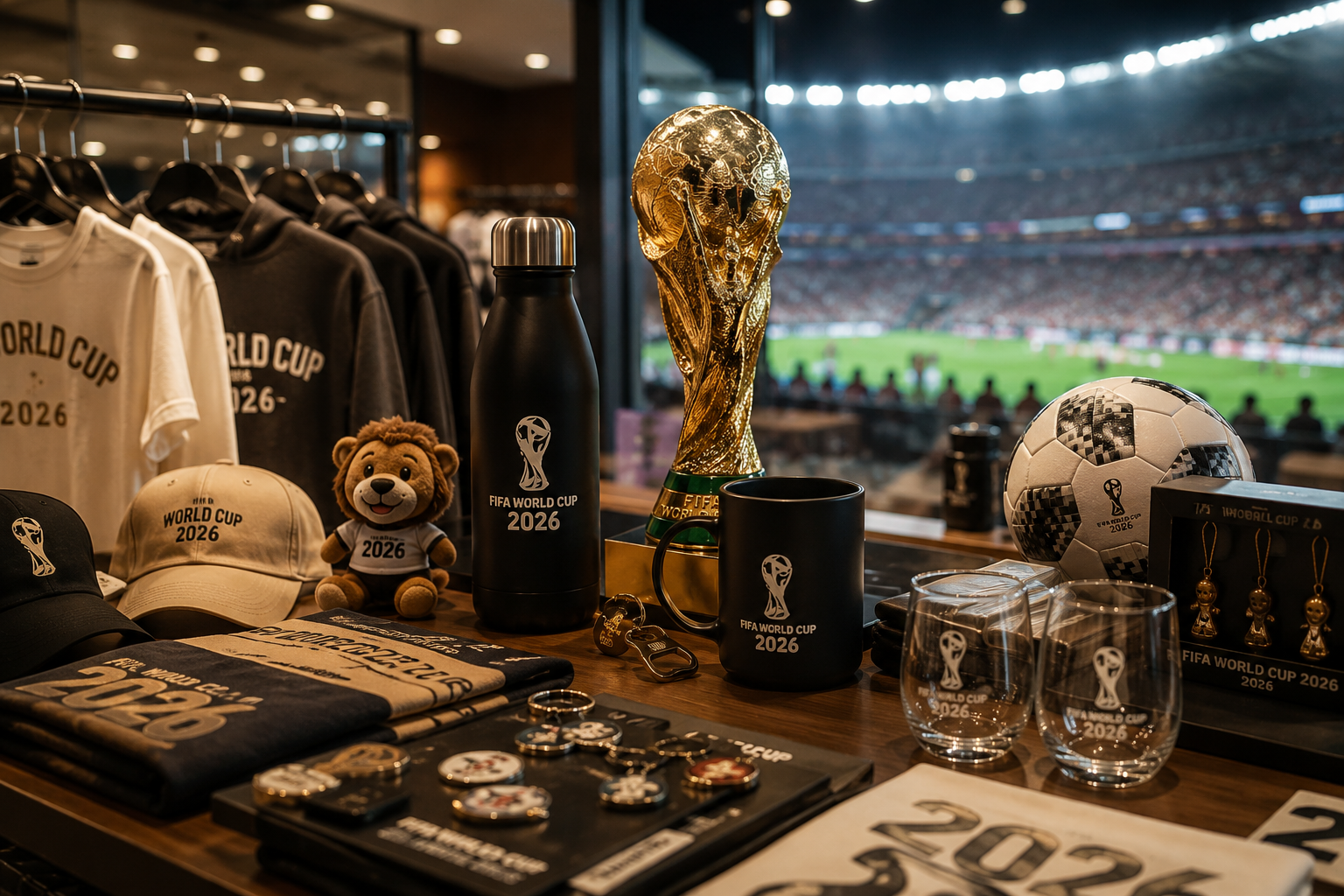
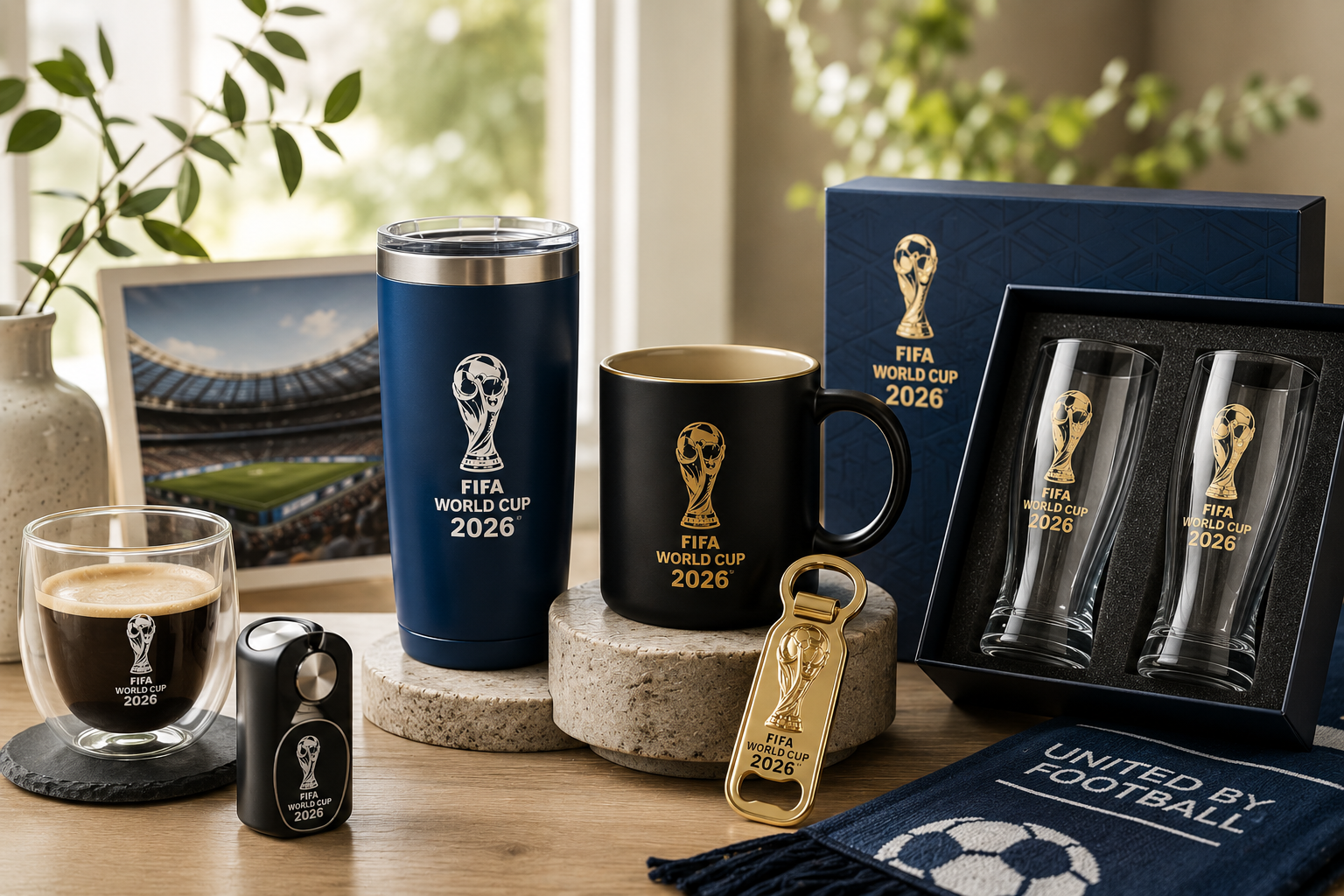
If you looked at TikTok Shop US sales data for the 2026 World Cup and expected jerseys to dominate, you'd be surprised. The single best-performing non-jersey World Cup product on the platform is a FIFA-licensed mug and magnetic gold bottle-opener set, priced at $60, that has generated approximately $97,560 across nearly 2,000 orders. A second drinkware product, an official glassware set with a trophy-emblem double-cup gift box at $39.99, launched in late May and is still accelerating into the knockout rounds.
These numbers matter because they reveal something important about how fans are actually shopping this tournament. Drinkware converts because it frames itself as a gift, not a fan accessory. The $60 mug-and-opener set isn't competing with a $30 jersey. It's competing with Father's Day gift ideas and premium football memorabilia. It occupies a completely different purchase psychology. And 305 creators promoted it through the simple mechanic of the pour-and-clink moment on video, a product that practically scripts its own content.
For sourcing teams, the signal is clear. Branded drinkware, including tumblers, pilsner glasses, bottle openers, and insulated cups, with football tournament theming is not a niche add-on to a World Cup merchandise strategy. It is a primary category in its own right, with strong unit economics, premium price points, and gifting appeal that extends the sales window beyond the tournament itself. And it sources cleanly from Guangdong, where vacuum-insulated drinkware and glassware manufacturing is concentrated, with established export infrastructure and flexible customisation capability.
Lifestyle Streetwear: Beyond the Jersey
The standard fan jersey has a commercial ceiling. It's associated with a specific team, requires a result to maintain relevance, and competes directly with official Nike, Adidas, and Puma product. For independent brands and sourcing-led businesses, that's a tough category to win in.
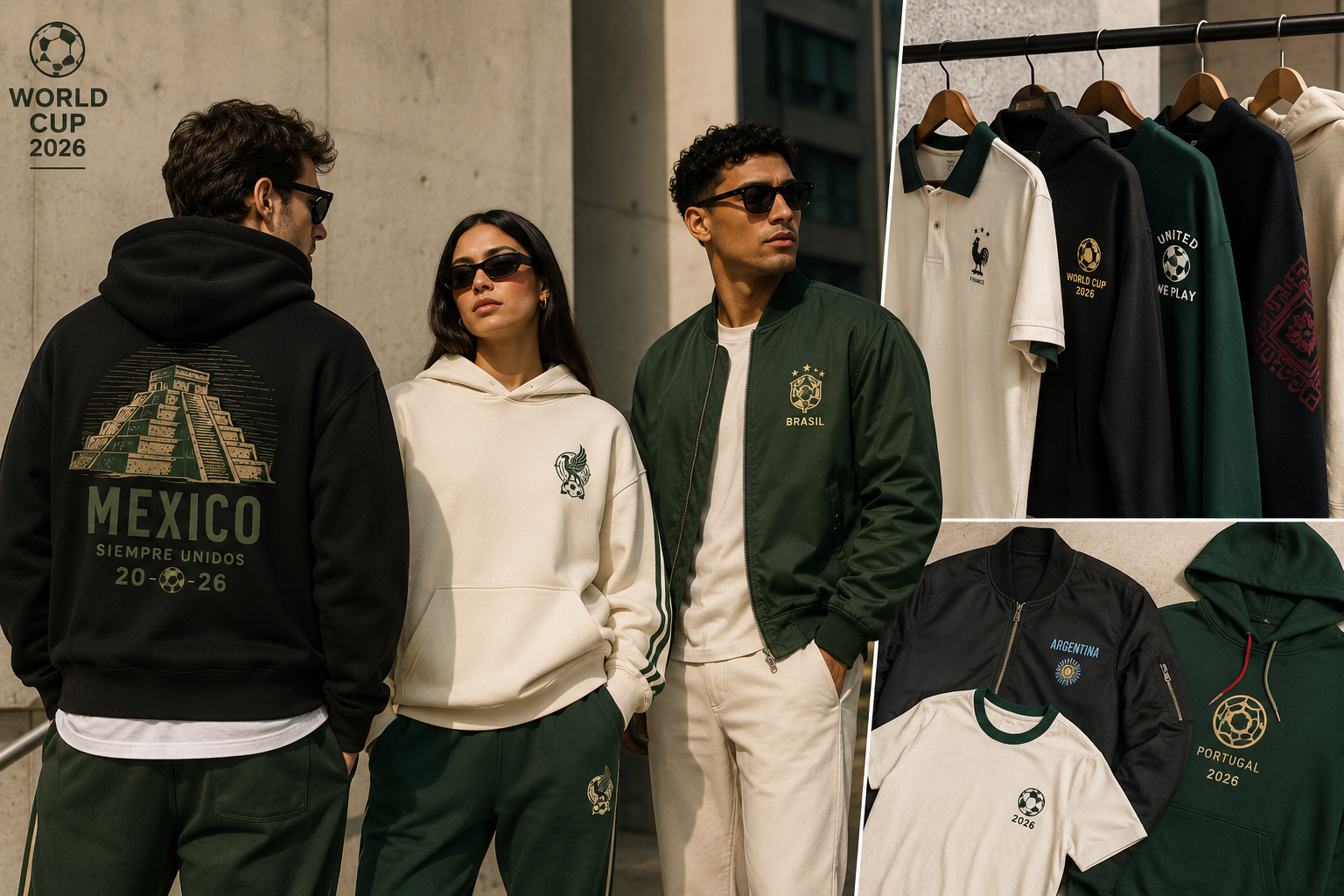
What's growing, and what the 2026 World Cup has accelerated significantly, is the "beyond the jersey" apparel trend. Hoodies, bomber jackets, track pants, and polo shirts featuring stylised national crests, minimalist tournament graphics, or culturally inspired designs are performing strongly because they target a broader audience than hardcore football fans. Fashion-conscious consumers who want to express national pride or tournament affiliation without wearing a full kit are buying these products, and they represent a meaningfully larger market than the dedicated fan merchandise buyer.
The commercial insight here is that unofficial, culturally-inspired designs outperform generic fan merchandise in this category. A single Mexico "Chichén Itzá" design did approximately $151,000 in a week on TikTok Shop US, not because it referenced the tournament directly, but because it connected cultural identity with the football moment in a way that felt personal rather than promotional.
Women's cuts, youth sets, and demographic-specific designs are also substantially underserved in the current World Cup merchandise landscape. A retailer who builds an assortment that tells a complete wardrobe story, not just a single jersey option captures spend that most tournament merchandise programs leave on the table entirely.
Collectibles and Limited Editions: The Market That Holds Its Value
The collectibles category for World Cup 2026 is more commercially sophisticated than it has been for any previous tournament, and most sourcing teams are not paying enough attention to it.
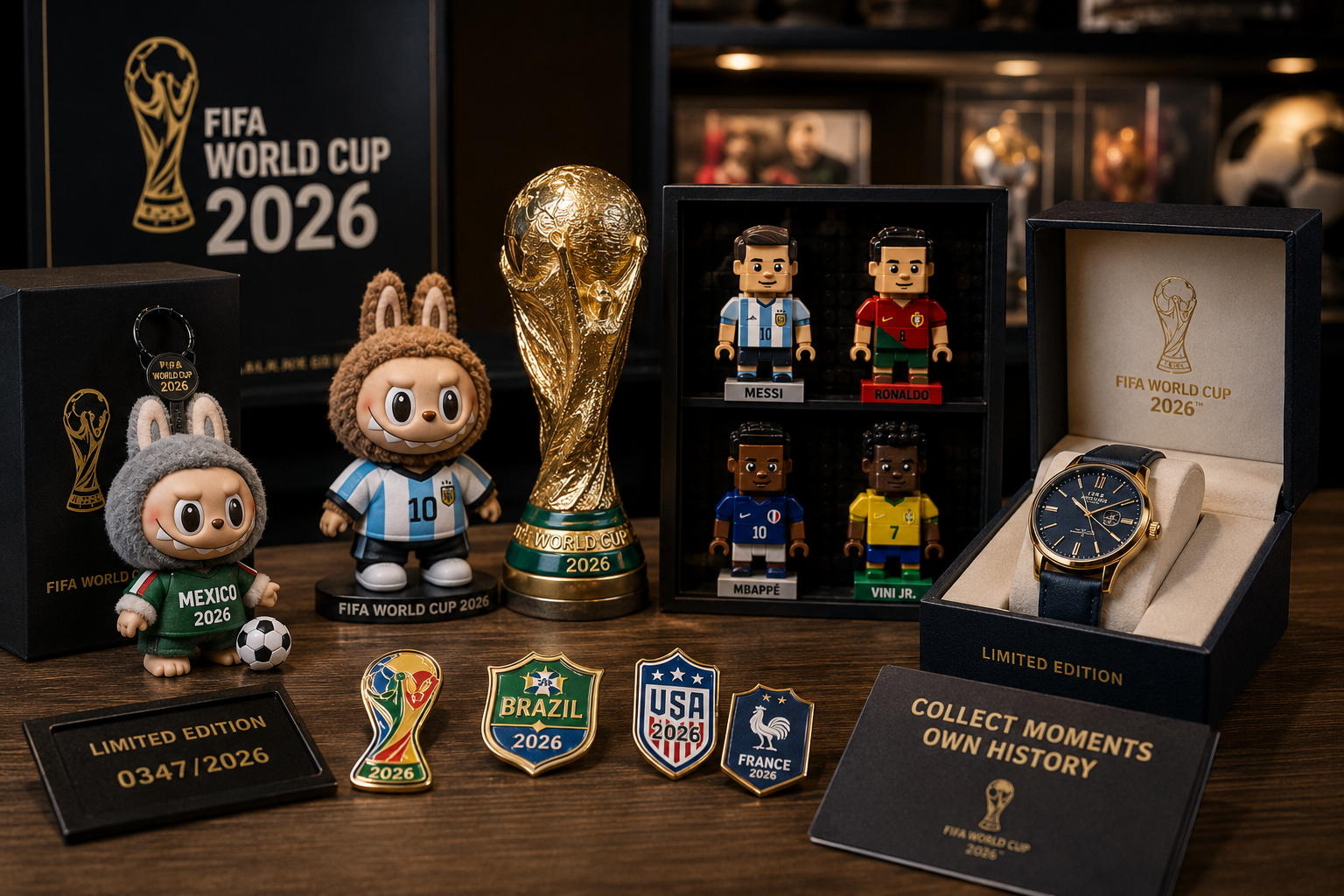
LABUBU, the viral designer toy phenomenon from Pop Mart, has launched a FIFA World Cup 2026 collection including vinyl plush pendants, keychains, and dolls. LEGO has released sets featuring Messi, Ronaldo, Mbappé, and Vinícius Júnior as collectible builds. Axia Time has launched a collection of officially licensed timepieces, with a new country-themed drop each week of the tournament.
These are not impulse buys. They are intentional purchases by fans who want something they'll keep: products with display value, potential resale value, and a connection to a specific tournament moment that makes them more than ordinary merchandise.
For brands and sourcing teams, this signals an important category opportunity: World Cup collectibles that aren't officially licensed can still perform strongly when they offer genuine design quality, cultural specificity, and limited availability. Mascot figurines, enamel pins, trophy replicas, retro-inspired badge sets, and numbered limited editions all sit in this space. The key is quality because this category is unforgiving of cheap execution. But for brands willing to invest in the design and manufacturing quality that collectibles demand, the margin and longevity profile is significantly better than most commodity fan merchandise.
Watch Party Supplies: The Home Category Nobody Sources for Events
Here's a category that's hiding in plain sight. Over 6 million fans are projected to attend matches in person at World Cup 2026. But billions more are watching from living rooms, sports bars, fan zones, and office watch parties. And the commercial behaviour of that audience is different from the stadium fan.
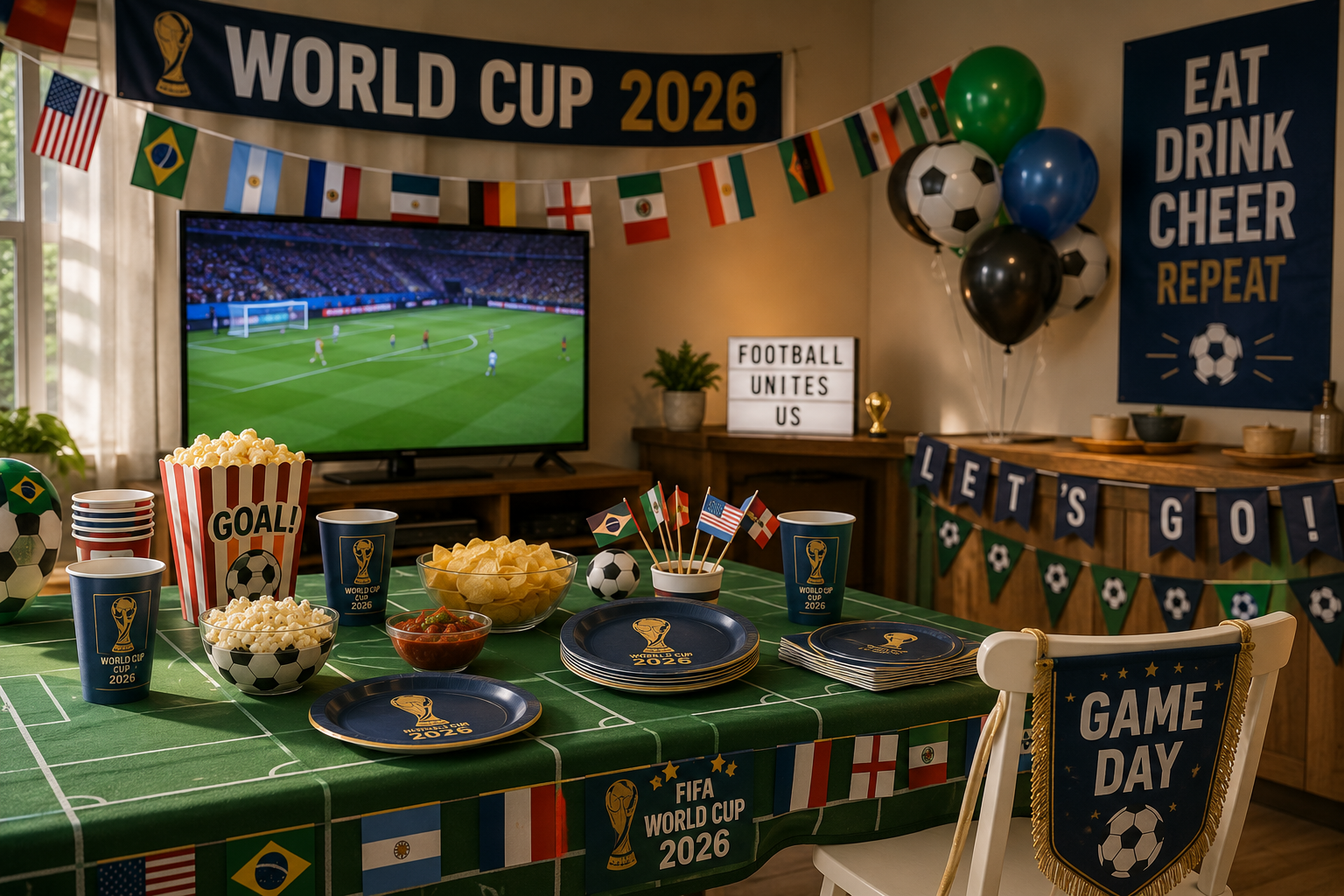
They're decorating. They're buying matching accessories for their group. They're setting up home entertainment environments for games that matter to them. They're hosting, and hosts buy things that stadium-goers don't: tablecloths, cups, plates, banners, balloons, centrepieces, and themed décor that turns an ordinary living room into a match-day experience.
Industry analysis projects that the 2026 tournament will drive growth not just in sports merchandise but across home, lifestyle, and accessories categories as fans engage with football as a cultural moment. This is a category that under-indexed significantly in previous World Cups because soccer's audience in the US was smaller. In 2026, with eleven host cities across the United States and a domestic fandom that has expanded dramatically through MLS growth and the Lionel Messi effect the watch party supplies market is substantially larger than it has ever been for a football tournament.
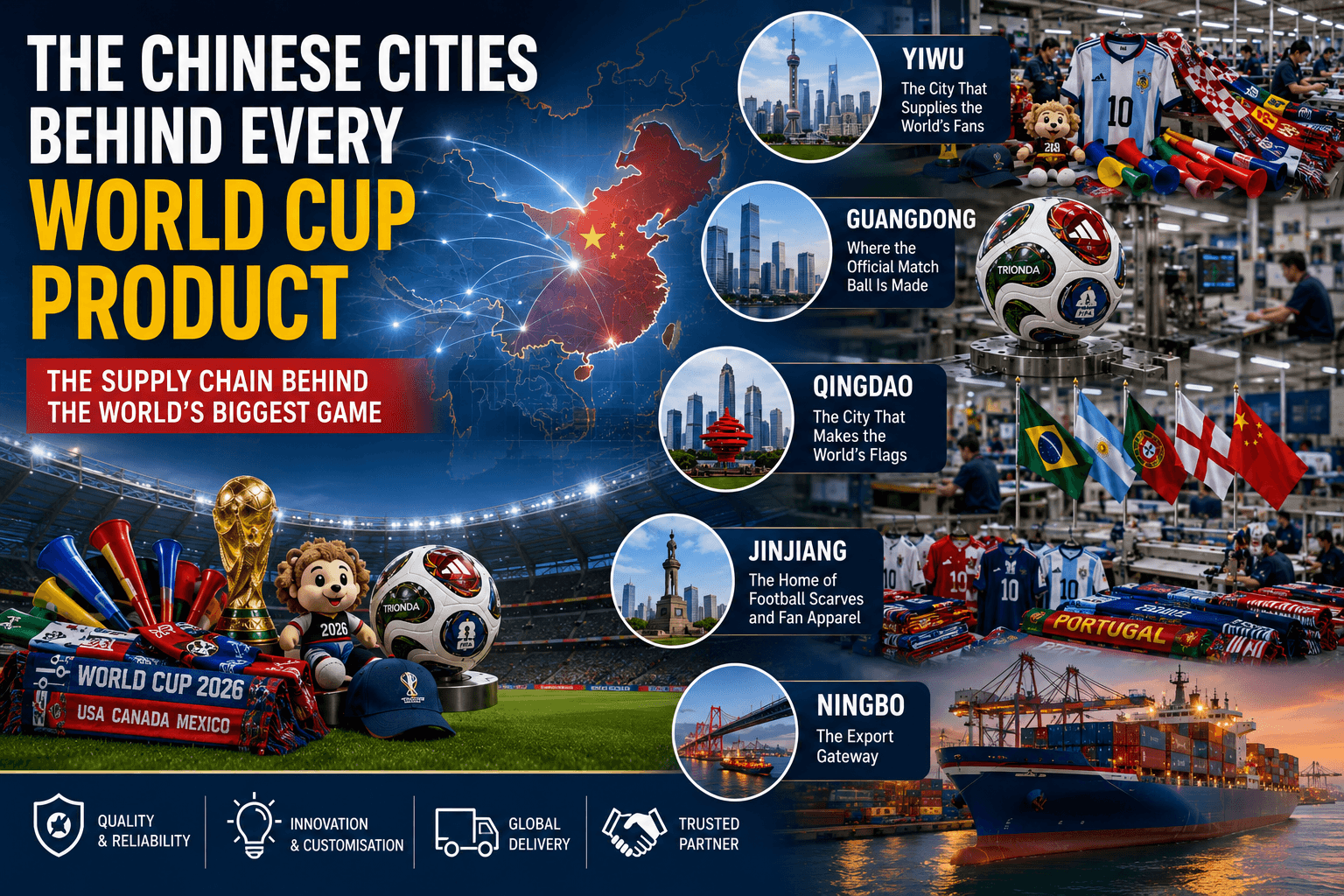
Sourcing for this category is relatively straightforward. Most watch party supplies, including themed tableware, paper goods, balloon sets, hanging decorations, and banners, come from Yiwu, where the small commodity manufacturing ecosystem is already producing these products at scale for the tournament. The customisation options are extensive, MOQs are manageable, and lead times are shorter than most fan apparel categories.
Eco-Friendly Merchandise: The Differentiator That's Becoming a Requirement
Sustainability is no longer a niche positioning for World Cup merchandise. It is increasingly a purchasing criterion, particularly in European and North American markets where retail buyers and end consumers are asking about material sourcing, recycled content, and environmental credentials before purchase decisions are made.
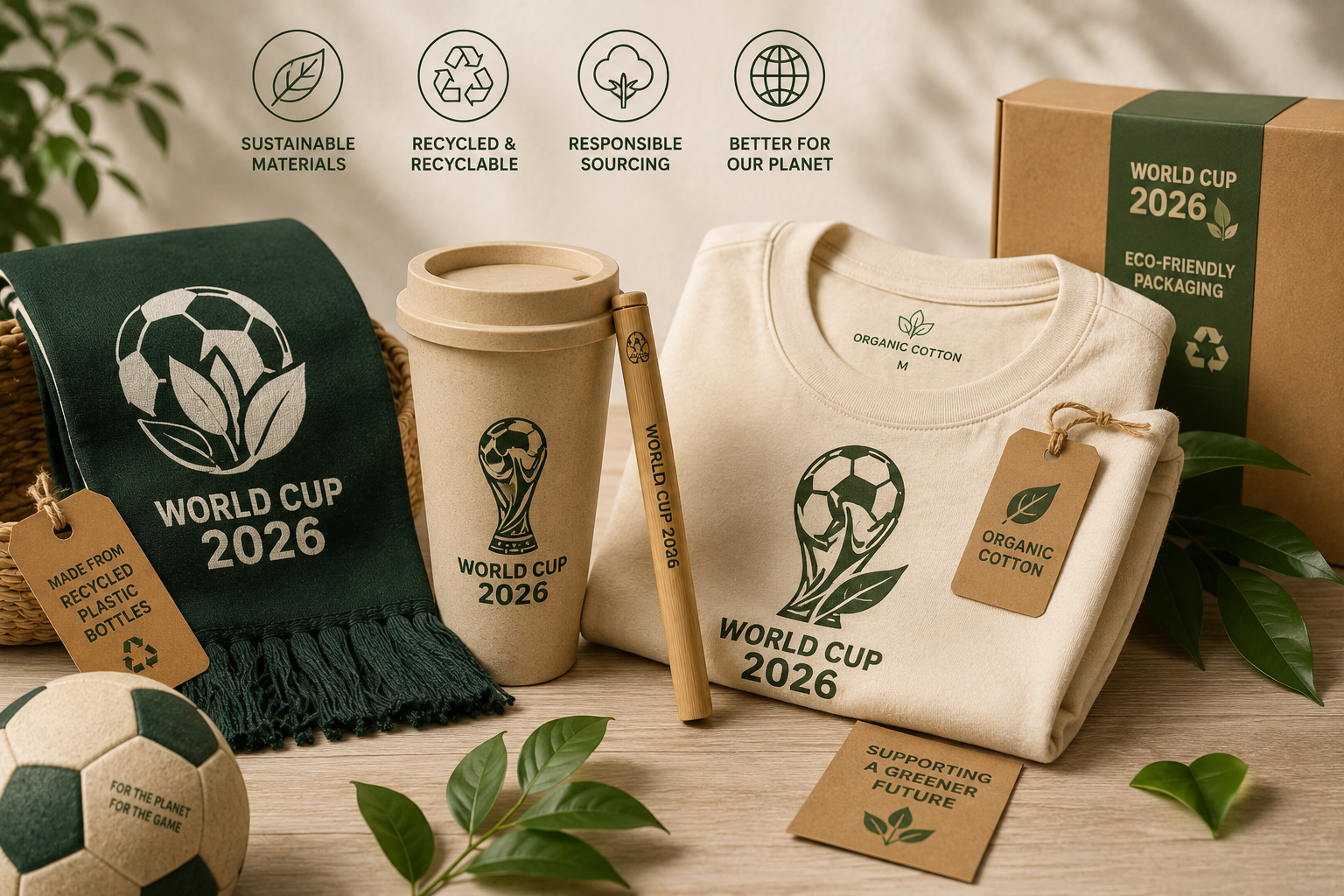
For the 2026 World Cup, eco-friendly merchandise represents one of the clearest differentiation opportunities available to independent brands. The mass-market merchandise ecosystem, including jersey manufacturers, scarf producers, and flag printers, is largely not investing in sustainable materials at the commodity tier. Which means that a brand offering recycled polyester scarves, bamboo drinkware accessories, organic cotton fan tees, or paper-based packaging on their kit products is occupying a distinct and largely uncontested position.
The commercial case is real. Eco-friendly products typically command a price premium of 15–30% over equivalent conventional merchandise. They generate stronger brand loyalty among the consumer segments that prioritise sustainability segments that tend to have higher average order values and repeat purchase rates. And in markets where extended producer responsibility legislation is tightening, sustainable product positioning is shifting from optional to expected.
Chinese manufacturers have invested significantly in eco-friendly material capability, including recycled polyester from Zhejiang, bamboo products from Sichuan and Hunan, organic cotton from Xinjiang (with appropriate certification for ESG-sensitive markets). Sourcing sustainable World Cup merchandise from China is practical and increasingly cost-competitive; what it requires is knowing which manufacturers have genuine certification and which are greenwashing.
Pet Merchandise: Small Market, Outsized Opportunity
This one sounds niche. It isn't.
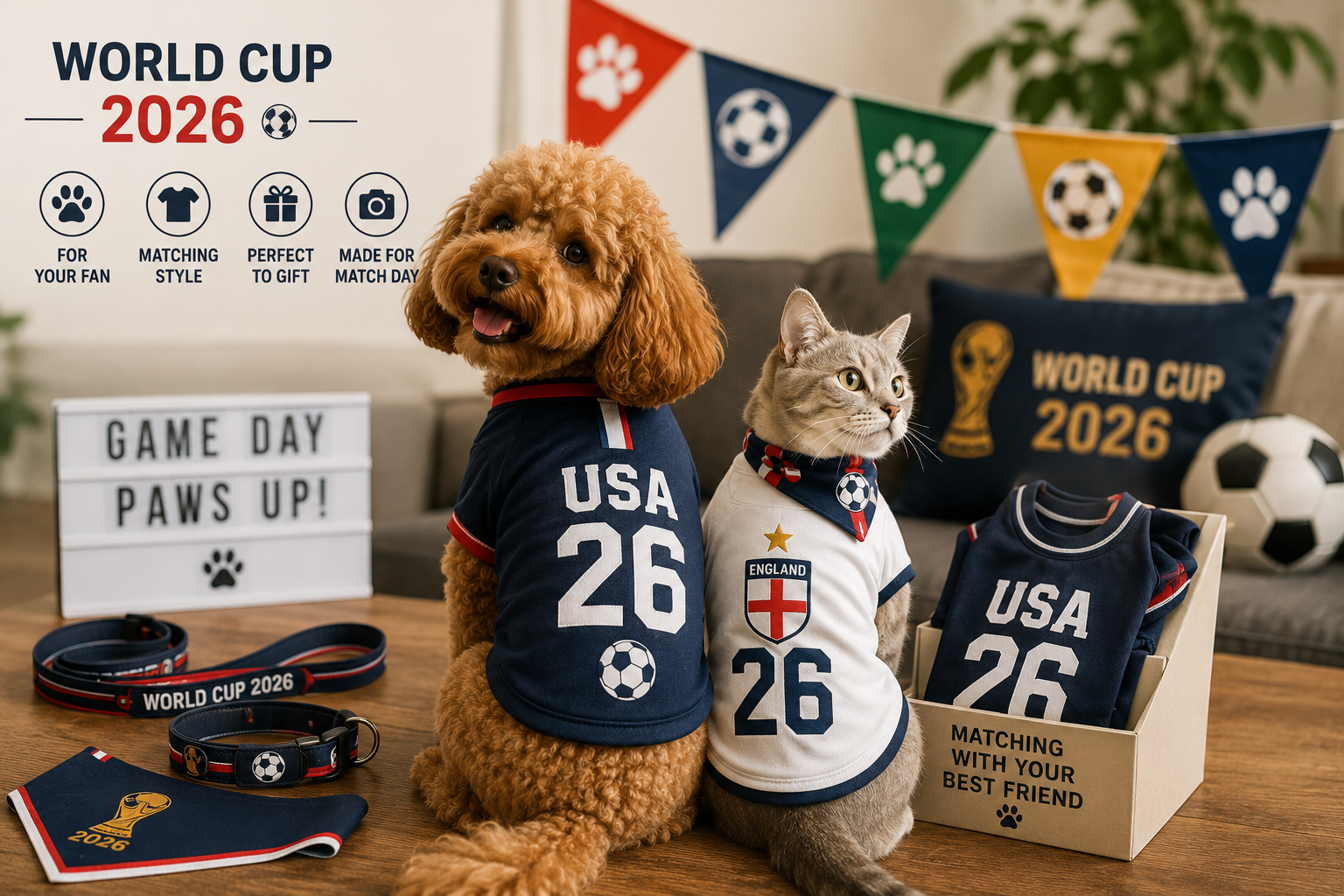
Pet merchandise, including branded pet jerseys, bandanas, collars, leads, and matching owner-and-pet sets, is one of the fastest-growing segments in event merchandise globally. For World Cup 2026, Yiwu manufacturers report that football-themed pet jersey orders are already flowing from US and European buyers, reflecting a trend that has been building across sporting events for several years.
The commercial logic is simple: pet owners who are also football fans represent a passionate crossover audience that is both emotionally motivated and underserved by mainstream merchandise programmes. A pet jersey in national team colours, especially one that matches an owner's own kit, is an inherently social product. It gets photographed, shared, gifted, and talked about in a way that a standard scarf or flag simply doesn't.
The sourcing story is equally appealing. Pet merchandise is a relatively low-complexity category with fabric, basic construction, and simple customisation, offering manageable MOQs and good margin potential. It sources cleanly from the same Yiwu ecosystem that handles other fan merchandise categories, and it doesn't require the technical manufacturing capabilities that more complex products demand.
For brands looking to add a high-engagement, socially shareable product to a World Cup merchandise range without significant sourcing complexity, pet merchandise is one of the most underrated options available right now.
The Pattern Behind the Categories
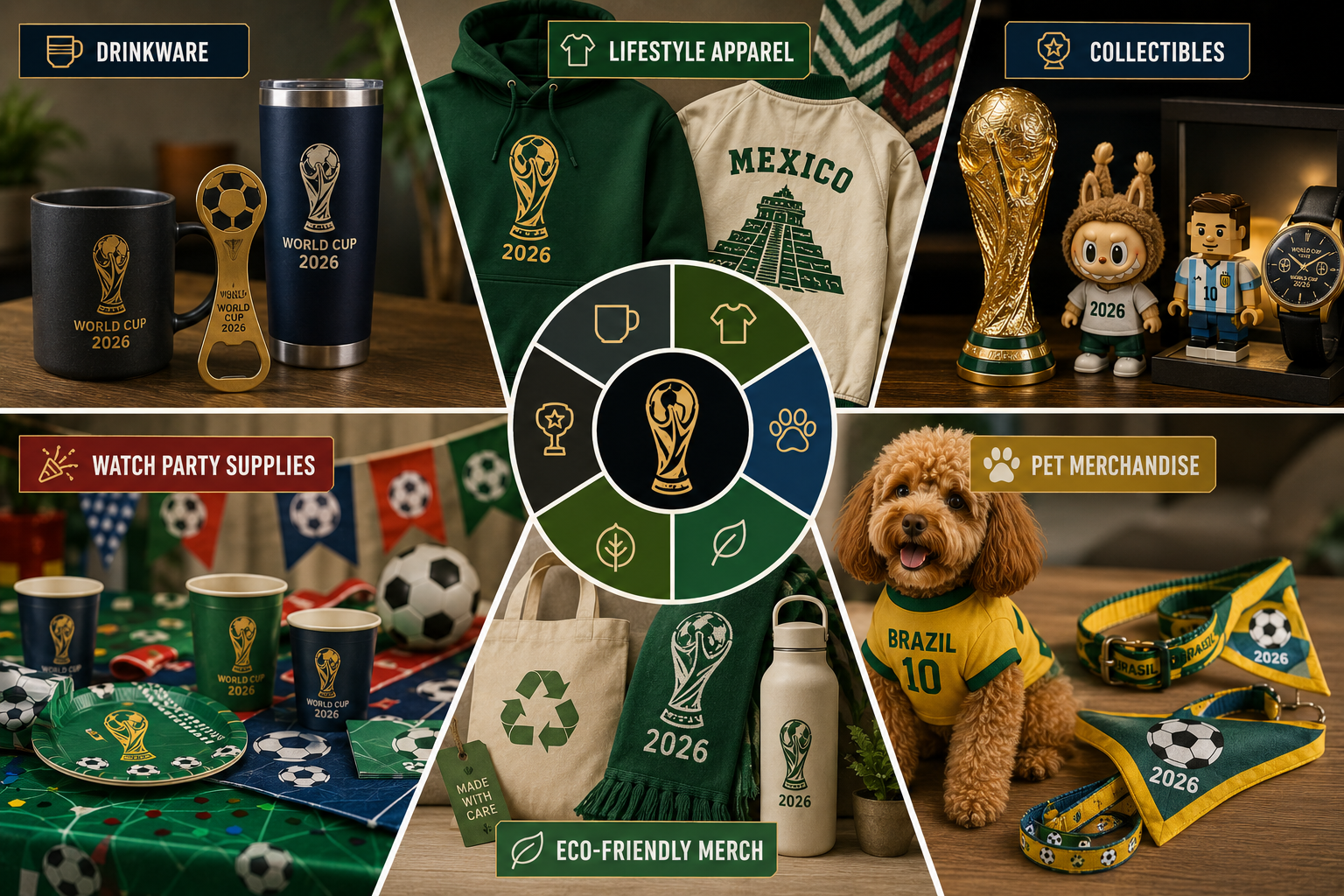
Looking across these six categories, a clear pattern emerges. The World Cup merchandise opportunities that are performing best in 2026, and that remain underserved despite that performance, share three characteristics.
They serve fans in contexts beyond the stadium. Drinkware, watch party supplies, and home décor serve the billions watching from home. Pet merchandise and lifestyle streetwear serve fans expressing affiliation in everyday life. These aren't tournament-day products; they're products that extend the commercial window of the tournament into daily consumer behaviour.
They target purchase motivations beyond fan loyalty. The $60 drinkware set sells because it's a gift. The collectibles sell because they hold value. The eco-friendly merchandise sells because it aligns with values. None of these are purely about supporting a team, and that makes them accessible to a much wider audience than core fan merchandise ever reaches.
And they're significantly less competitively crowded than the obvious categories. Every sourcing team in the world is competing on jerseys and scarves. The brands that identified drinkware, collectibles, and watch party supplies six months ago are selling today against very little competition from brands that had the same idea.
The window for World Cup 2026 is narrowing fast. But the lessons from these categories don't expire with the tournament. The next major sporting event, whether the next World Cup, the next Olympics, or the next continental championship, will present the same opportunity for the sourcing teams that are paying attention now.
How SourceWithAI Helps You Source the Categories Others Miss
Identifying the opportunity is the first step. Finding the right manufacturers for non-obvious categories, including drinkware specialists in Guangdong, collectible figurine producers that deliver genuine quality, and eco-certified textile manufacturers with verifiable sustainability credentials, is where most sourcing teams run into difficulty.
At SourceWithAI, our supplier discovery and matching service connects buyers with verified manufacturers across China's full merchandise ecosystem, not just the obvious categories and factories but also the specialists in the emerging and underserved product spaces where the real opportunity often lives.
Our sourcing consultation service helps brands build merchandise strategies around events like the World Cup by identifying the categories with the best commercial profile for their specific market, customer base, and sourcing capability, and mapping a practical path from product concept to inventory in market.
The brands that win the next major event commercially are the ones that started asking different questions about which products to source. We help you ask the right ones.
SourceWithAI.com helps global buyers source smarter from China with verified suppliers, expert consultation, and on-the-ground expertise that buyers can trust.
Written by
Eva Liu
July 3, 2026 · 9 min read