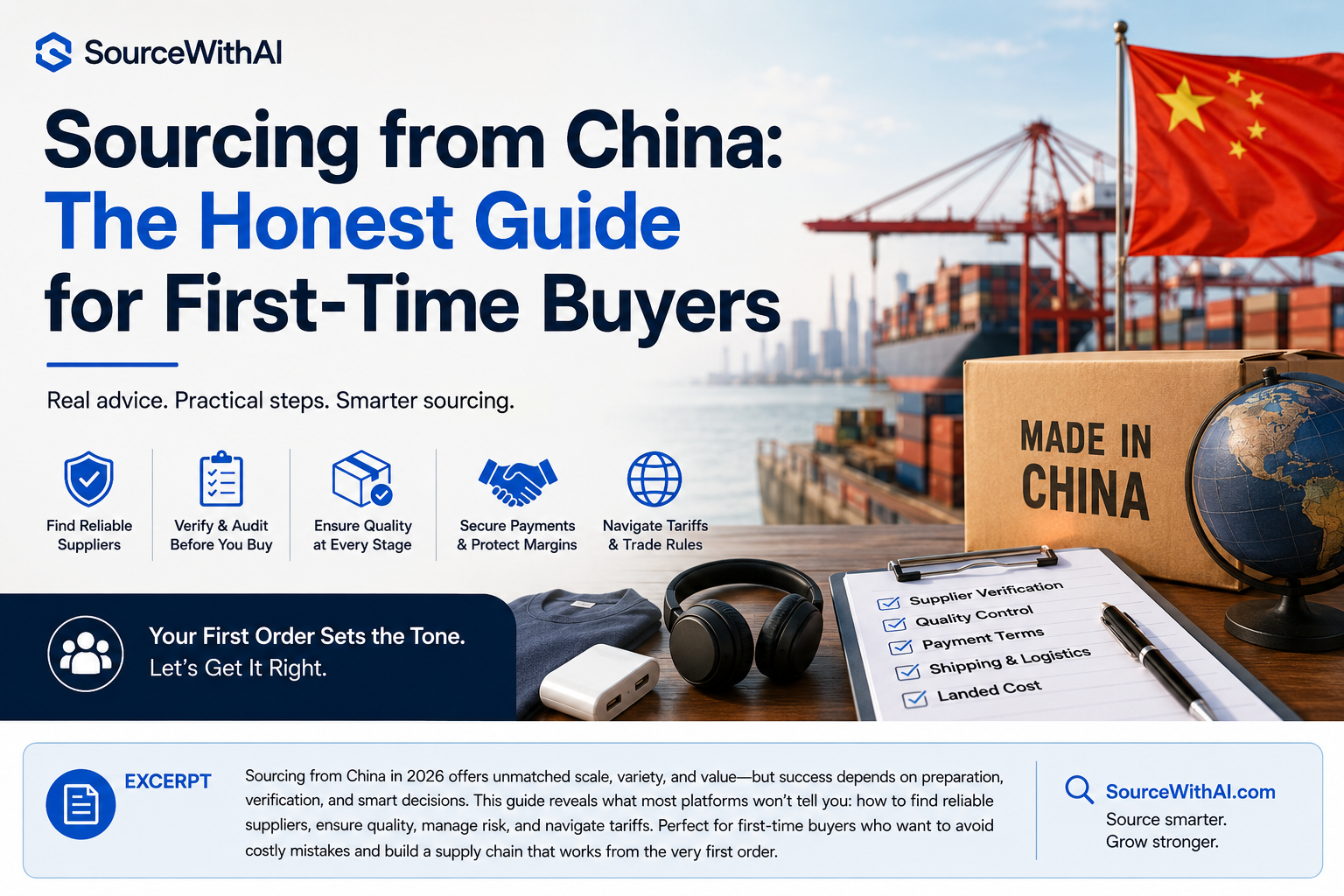
Everyone has an opinion about sourcing from China in 2026. Some say it's riskier than ever tariffs, geopolitical tension, rising labour costs. Others say it's still the only game in town for any buyer who needs scale, variety, and competitive pricing. The truth, as it usually is, sits somewhere more nuanced than either headline suggests.
What's undeniable is this: China still accounts for roughly 14% of global merchandise exports and remains the world's most comprehensive manufacturing base for consumer goods, electronics, industrial components, and apparel. For most global buyers, the real question isn't whether to source from China it's how to do it right. And for first-time buyers especially, the gap between doing it right and doing it poorly is the difference between a supply chain that works and an expensive education in what not to do.
This is the honest guide the one that tells you what the glossy platform brochures leave out.
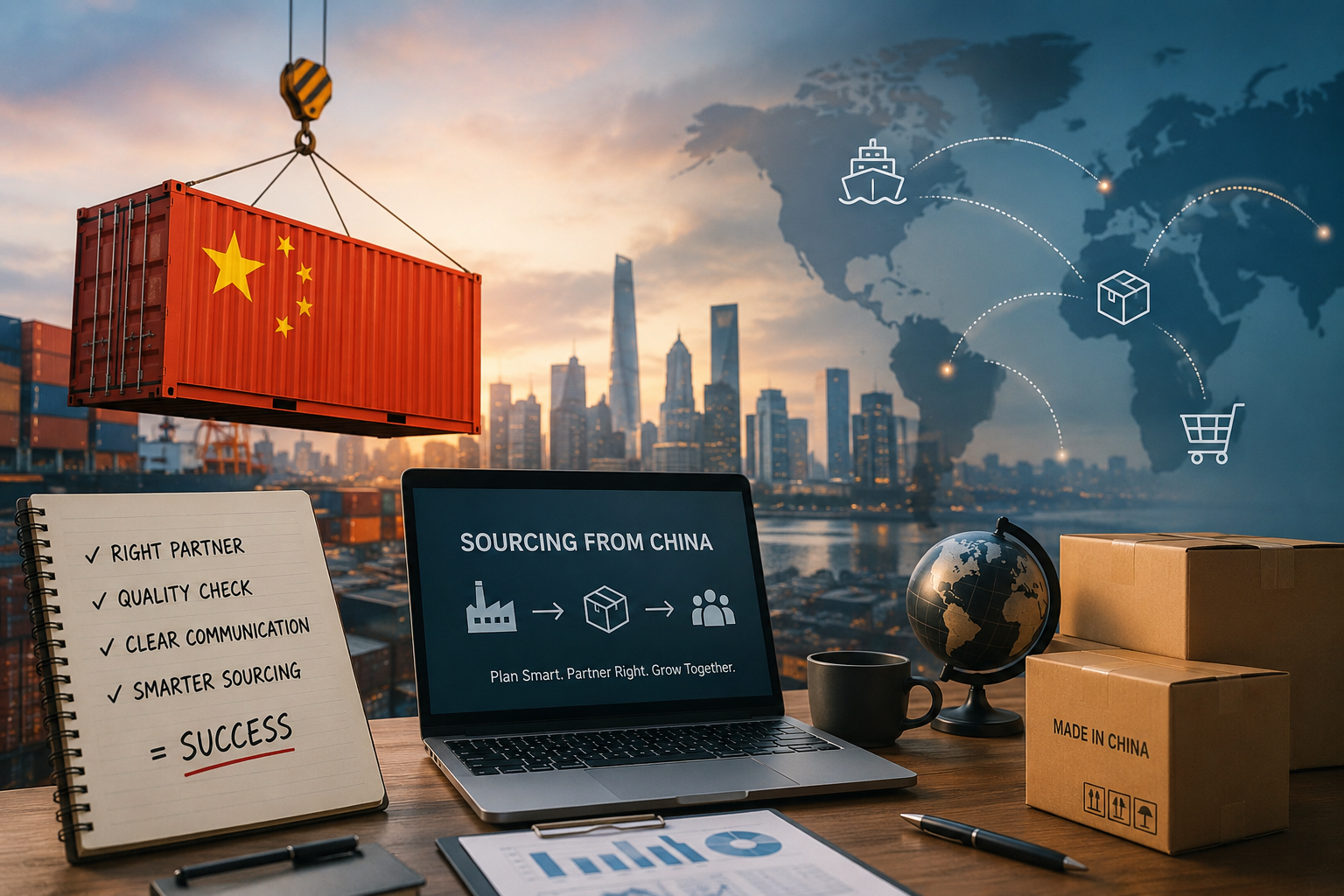
Why China Still Makes Sense for Most First-Time Buyers
Let's address the elephant in the room. With all the talk of nearshoring, Vietnam, and supply chain diversification, is China still the right starting point for a new buyer?
For most product categories, yes and for straightforward reasons.
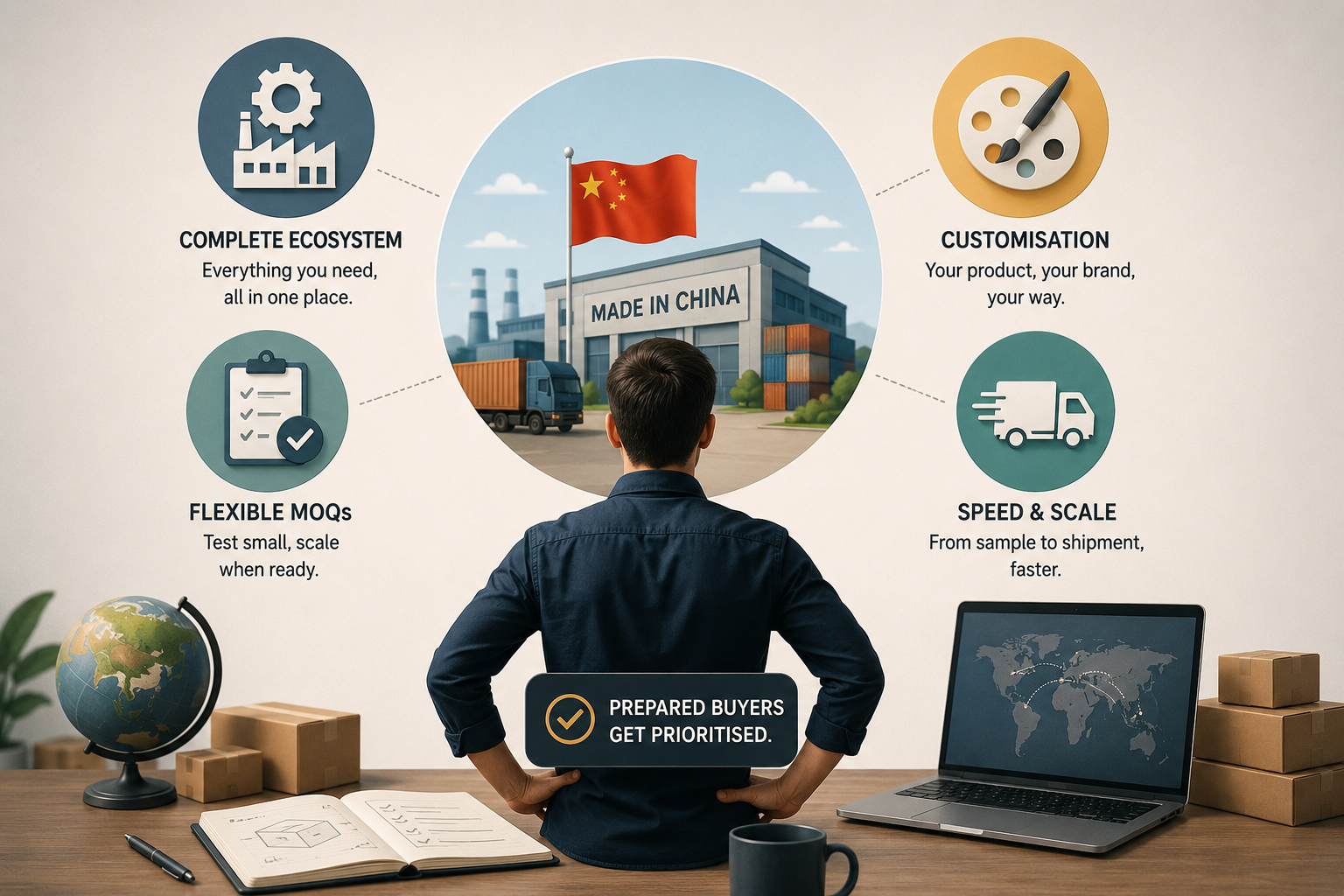
China remains the world's most powerful sourcing hub because of its unmatched manufacturing ecosystem, flexibility, speed, and customisation capabilities. From small test orders to large-scale private label brands, China offers opportunities at every stage of business growth.
What this means practically for a first-time buyer is that China gives you options. You can test a product with a small order before committing to volume. You can customise packaging, labelling, and product specifications without the minimum order requirements that constrain you in other markets. You can find a manufacturer for almost any product category in a single country, with an established logistics infrastructure built around getting goods to international buyers efficiently.
The challenge isn't access. In 2026, China sourcing is less about access and more about readiness. Factories today assume that serious buyers arrive prepared. They expect finalised specifications, realistic timelines, and an understanding of how production risk works. Buyers who come in "to explore options" are often deprioritised not rejected which creates the illusion that suppliers are unresponsive, when in reality they're filtering.
That's the first honest truth: China's manufacturing ecosystem is open to you, but it rewards buyers who show up prepared.
The Supplier Discovery Trap Most First-Time Buyers Fall Into
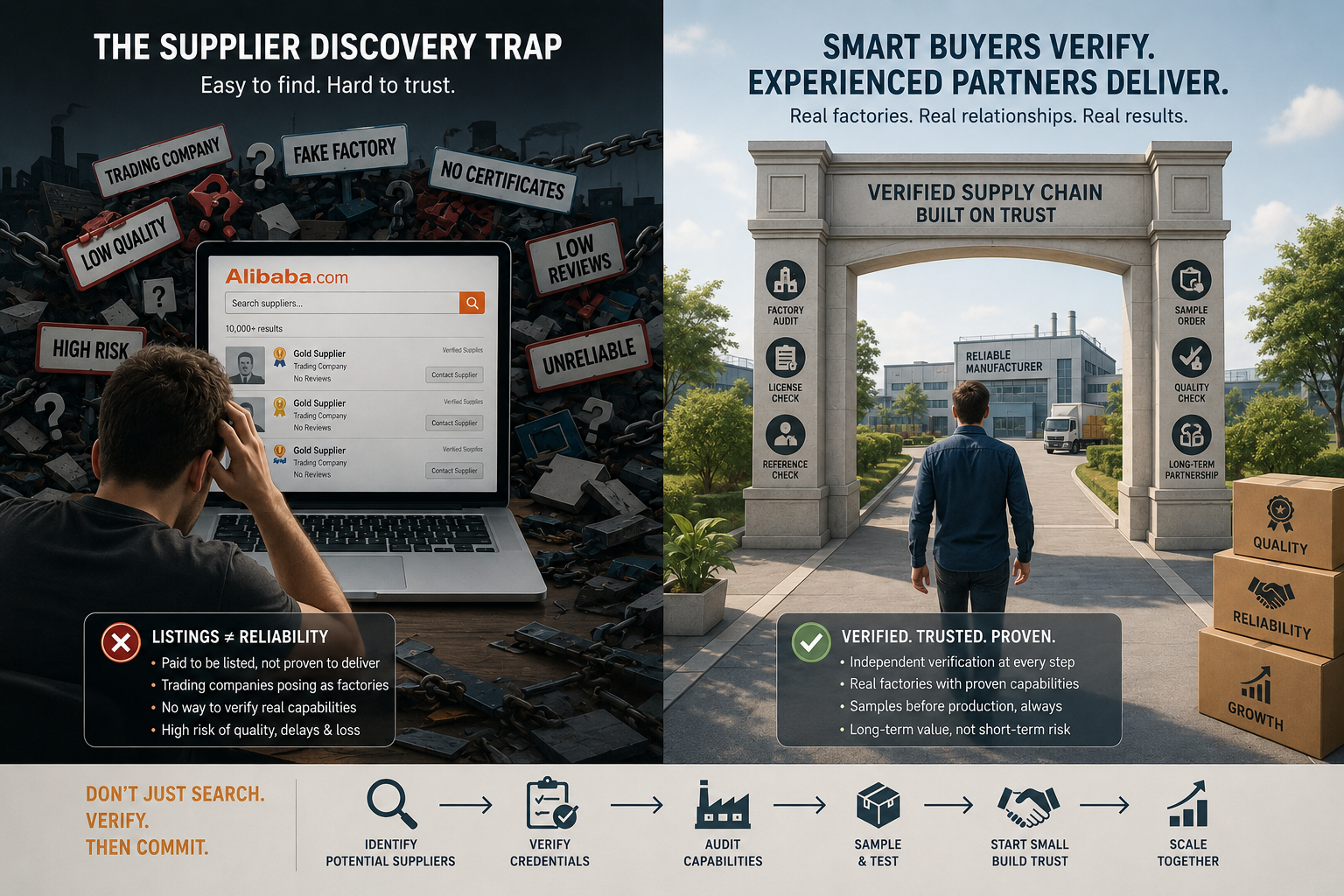
The natural starting point for most new buyers is Alibaba. It's the world's largest international B2B platform, it's in English, and it has millions of listed suppliers. For a first-time buyer, it feels like the whole answer.
It isn't.
Finding a supplier is easy. Finding a reliable supplier the kind that delivers consistent quality, fair pricing, and on-time production is where most sellers struggle. Alibaba's listings include everyone from verified manufacturers with decades of export experience to trading companies masquerading as factories, and everything in between. A Gold Supplier badge tells you that a company has paid for a listing not that they're capable of producing your product to your standard.
For many manufacturers, Alibaba has become a branding and lead-generation channel, while 1688 is where serious production relationships are built. Experienced buyers increasingly use Alibaba to identify candidates and then move the relationship off-platform verifying capabilities directly before committing to any order.
The practical implication for first-time buyers is this: treat Alibaba as a starting directory, not a vetted supplier list. Every supplier you find there requires independent verification factory audit, business licence check, reference calls with existing buyers, and a sample order before any production commitment.
Over 95% of qualified Chinese manufacturers especially those serving top brands or requiring small MOQ flexibility operate outside the reach of most international buyers due to regional, linguistic, and relationship barriers. This is the part most guides don't tell you: the best factories in China are often not the ones that appear first in a search result. They're the ones that experienced sourcing partners have cultivated relationships with over years.
What Supplier Verification Actually Looks Like
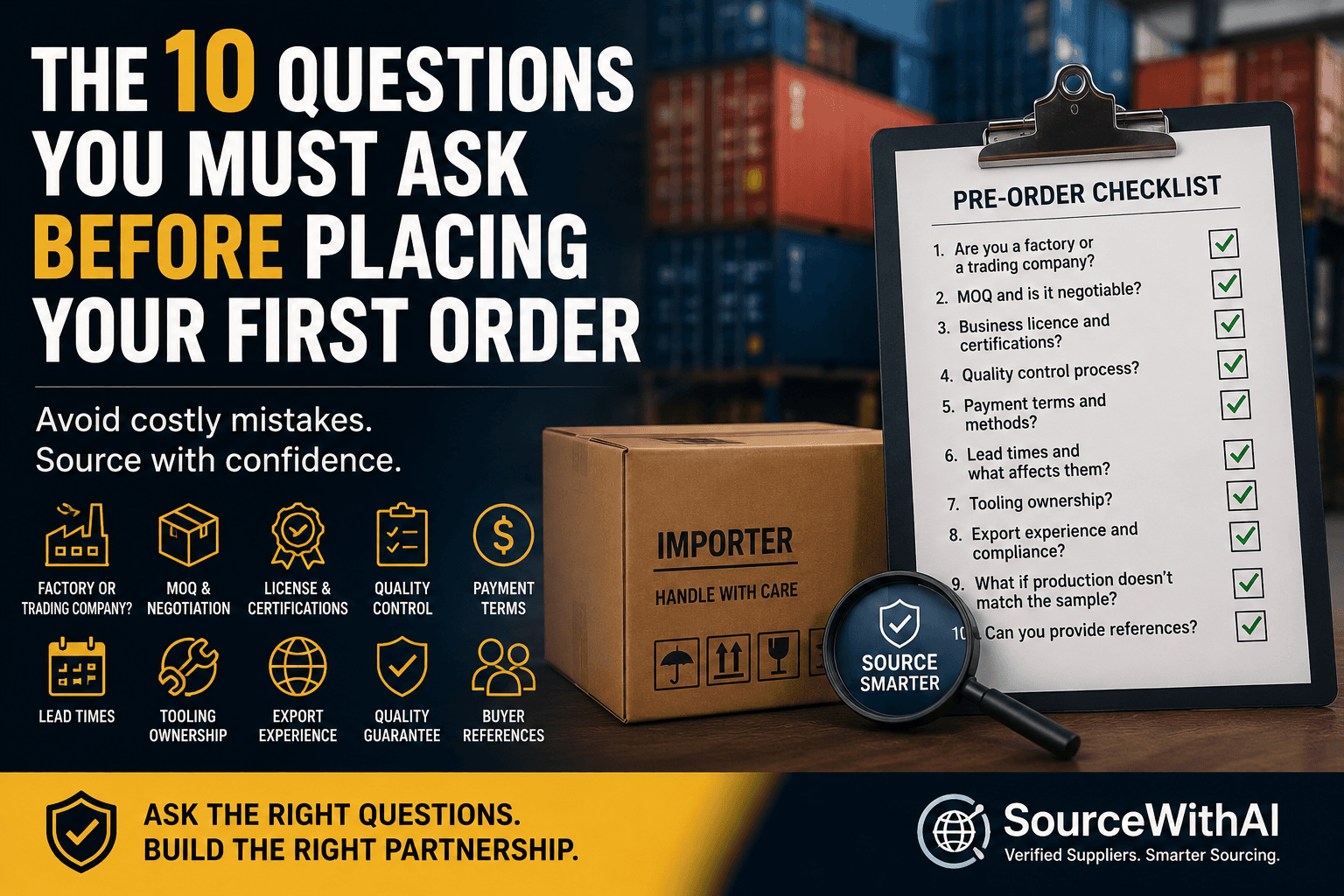
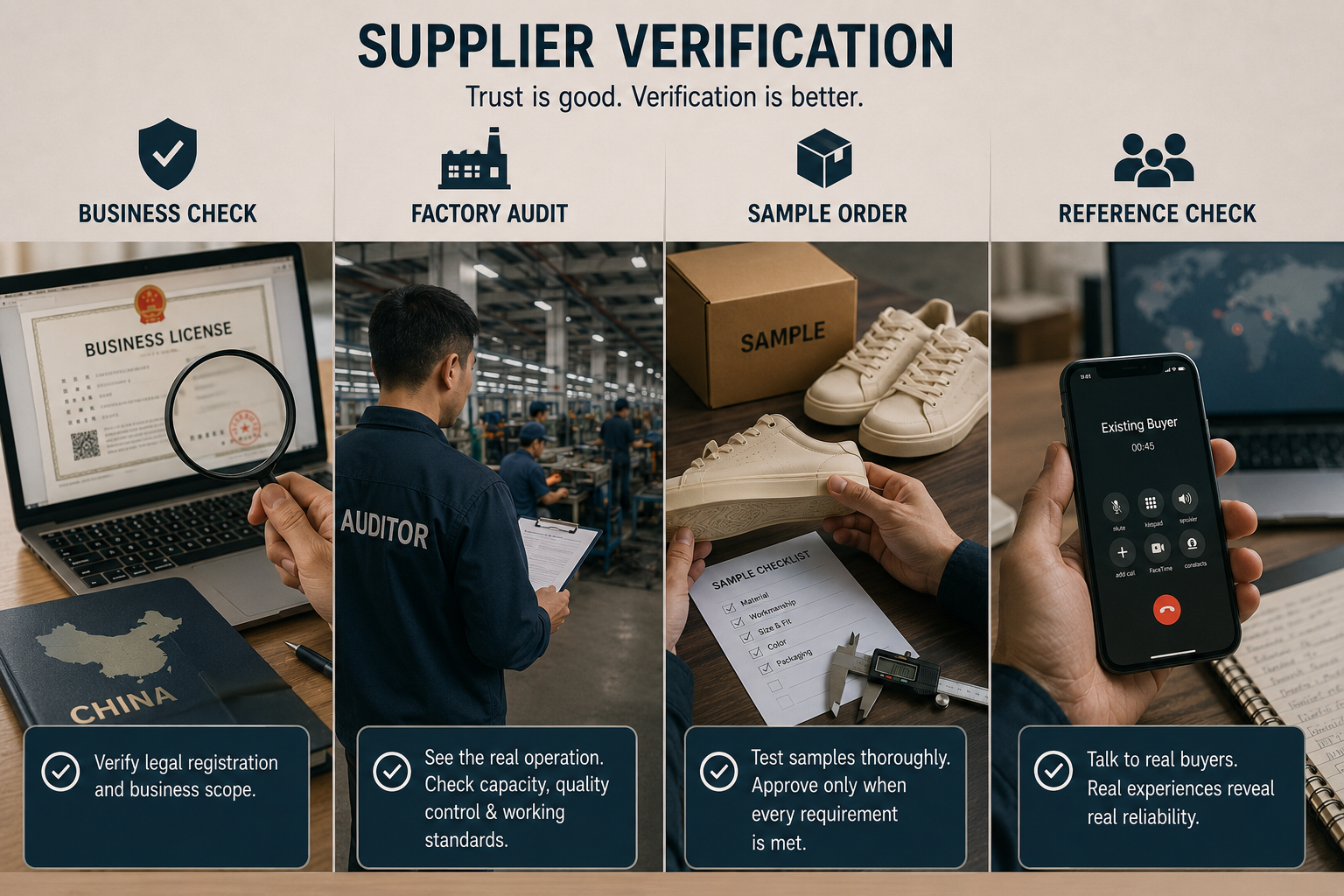
Supplier verification is one of the most critical stages of sourcing and is often underestimated by importers. Verification ensures that supplier claims align with actual production capability rather than marketing promises or online profiles.
For a first-time buyer, verification means several things in practice.
Business registration check. Confirm the supplier is a legally registered entity in China, with a valid business licence that covers manufacturing or trading in your product category. This information is publicly available through Chinese government databases and any reputable sourcing partner can pull it for you.
Factory audit. Whether you visit in person or commission a third-party audit, seeing the factory before placing a production order is non-negotiable for significant purchases. An audit tells you whether the stated production capacity is real, whether quality control processes exist, and whether the working conditions meet your standards including any ESG or ethical sourcing requirements your customers or regulators expect.
Sample order. Before any bulk production, order samples. This sounds obvious, but first-time buyers frequently skip or rush this stage under pressure to move quickly. A sample order is not a formality it is your only reliable way to verify that the product you receive matches the specification you agreed. Request multiple samples across different colourways, sizes, or configurations if relevant. Test them properly. Only approve bulk production when the sample passes every requirement.
Reference check. Ask for contact details of existing international buyers and call them. A supplier who refuses or deflects this request is a supplier worth questioning. A supplier who connects you with three satisfied buyers in your market is demonstrating something that no platform badge can replicate.
The Honest Reality of Quality Control
India's manufacturing ecosystem is uniquely characterised by its diversity and the same is true of China's. The landscape ranges from large, automated facilities serving global brands to smaller, specialised workshops. Your quality control approach must be scaled accordingly.
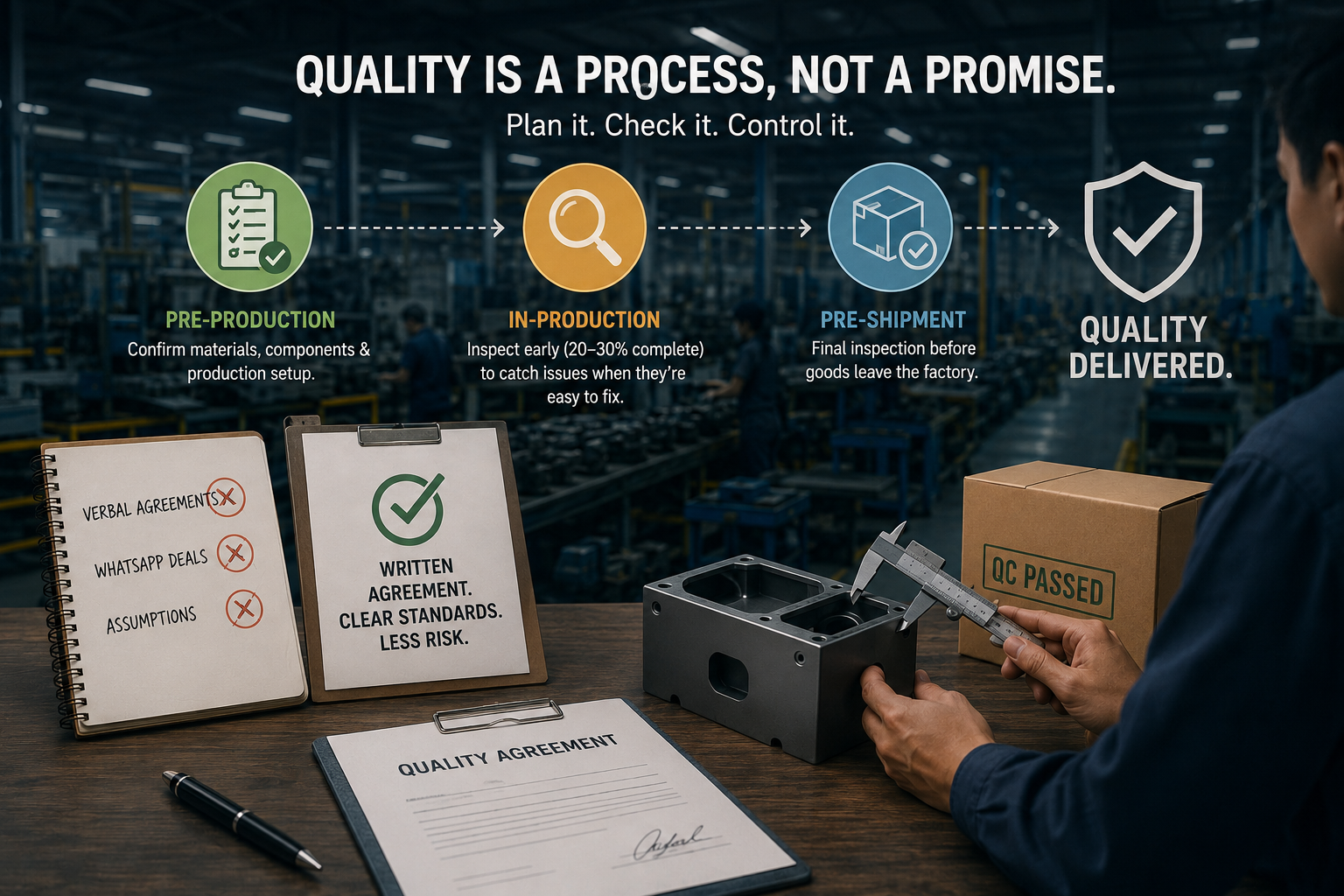
Quality failures in China sourcing are rarely the result of deliberate dishonesty. They are usually the result of unclear specifications, inadequate sampling, absent in-production checks, and the assumption that what was agreed verbally or over WhatsApp carries the same weight as a written, signed specification document.
Some buyers rely on verbal agreements and trust informal WhatsApp and email discussions. This backfires when any dispute or quality failure happens. Drafting and signing a formal, clear, written agreement outlining terms and quality standards is essential.
Your quality control framework should cover three stages: pre-production (confirming materials, components, and production setup match your specification before manufacturing begins), in-production (an inspection at roughly the 20-30% completion mark to catch deviations early, when they are still cheap to correct), and pre-shipment (a final inspection before goods leave the factory). Skipping any of these stages doesn't save time it transfers the risk from the supplier to you.
Payment Terms: Protecting Yourself Without Alienating Suppliers
Payment is one of the most anxiety-inducing parts of sourcing from China for first-time buyers — and one of the most important to get right.
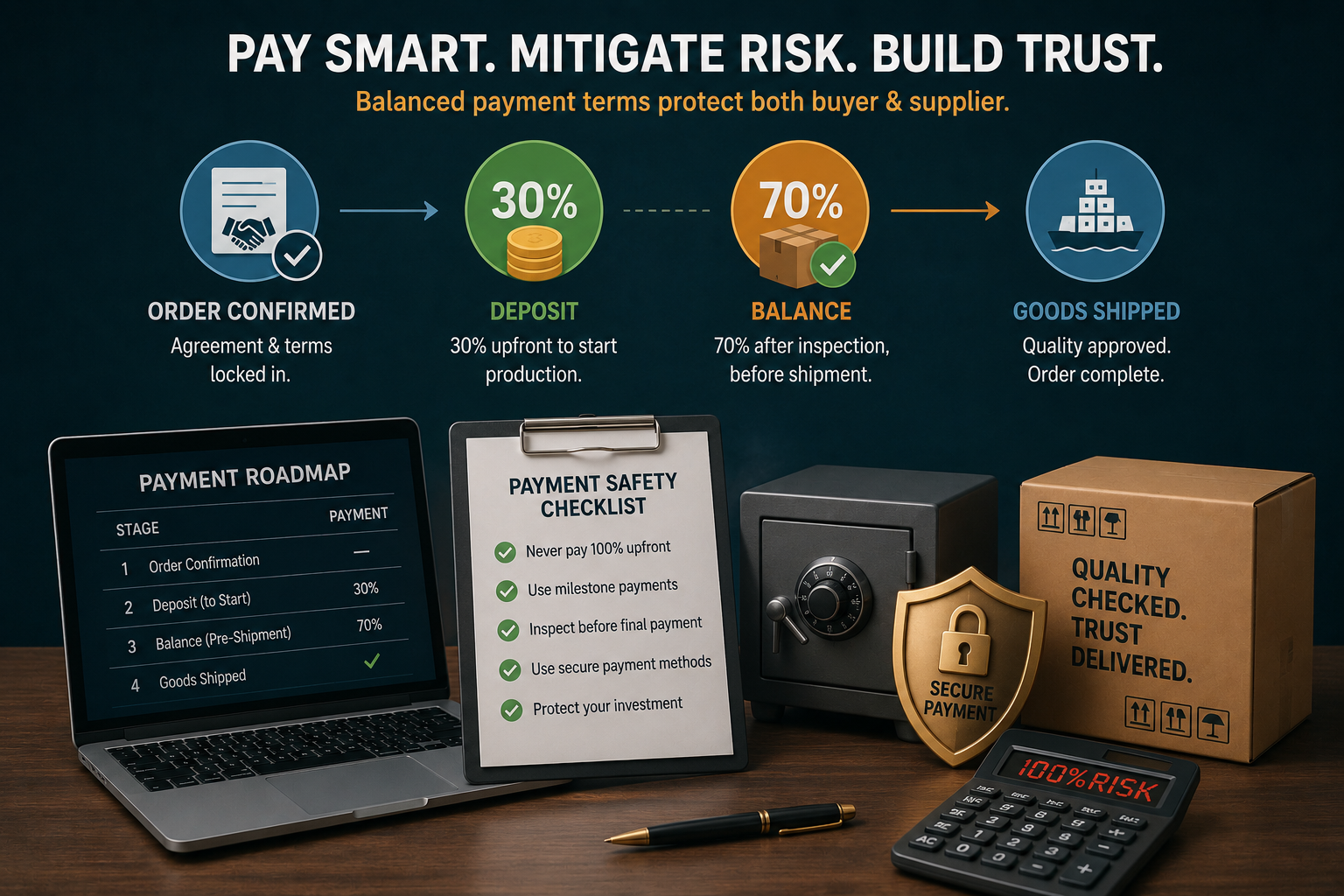
The standard structure for a first order is a 30% deposit on order confirmation and 70% balance before shipment. This protects both parties: the supplier has commitment from you before investing in production, and you retain leverage until goods are ready and inspected.
Split payments reduce financial exposure for first-time buyers. The safest payment method for beginners involves structured milestone payments rather than paying in full upfront. Wire transfer (T/T) is the most common method for established relationships, but for a first order with an unverified supplier, consider using a platform with escrow protection where funds are held and only released when you confirm receipt of goods meeting specification.
One warning that experienced sourcing professionals consistently give: never pay 100% upfront to a supplier you haven't worked with before, regardless of how compelling the price is or how urgent the timeline feels. It is the single most common mistake first-time buyers make and the hardest one to recover from.
Navigating Tariffs and Trade Complexity in 2026
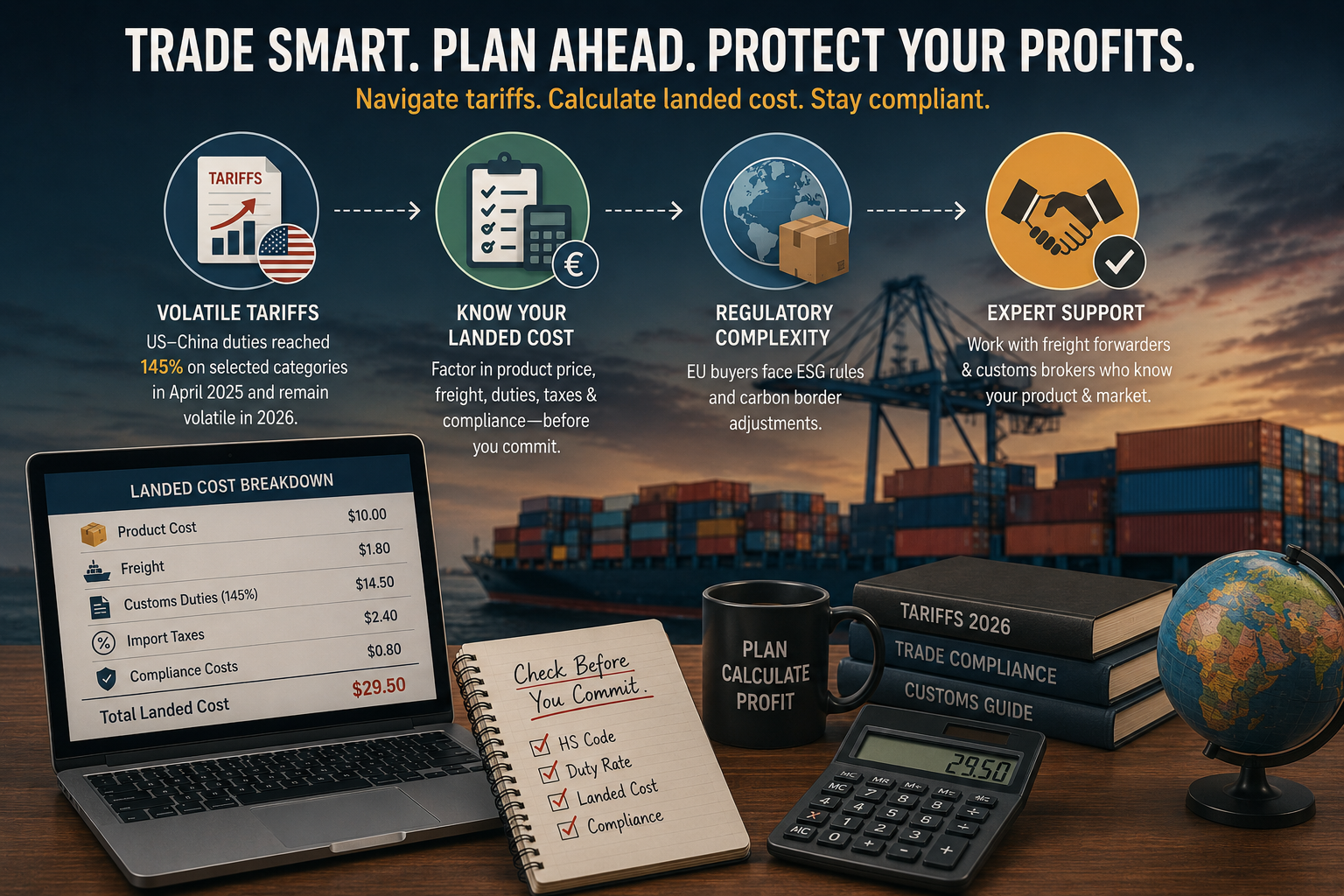
The tariff environment between the US and China has been volatile. Combined US duties on China-origin goods reached 145% on selected categories in April 2025 and have remained volatile into 2026. For European buyers, the picture is different but not without its own regulatory complexity, particularly around ESG disclosure and carbon border adjustments.
For first-time buyers, the practical message is this: understand the landed cost of your product before you commit to a supplier relationship, not after. Landed cost includes the product price, freight, customs duties, import taxes, and any compliance costs specific to your market. A product that looks attractively priced at the factory gate can look very different once duties are applied.
Work with a freight forwarder or customs broker who knows your product category before you place your first order. This is not an area to figure out as you go a customs classification error or an unexpected duty rate on your first shipment can turn a profitable order into a loss.
The One Decision That Changes Everything
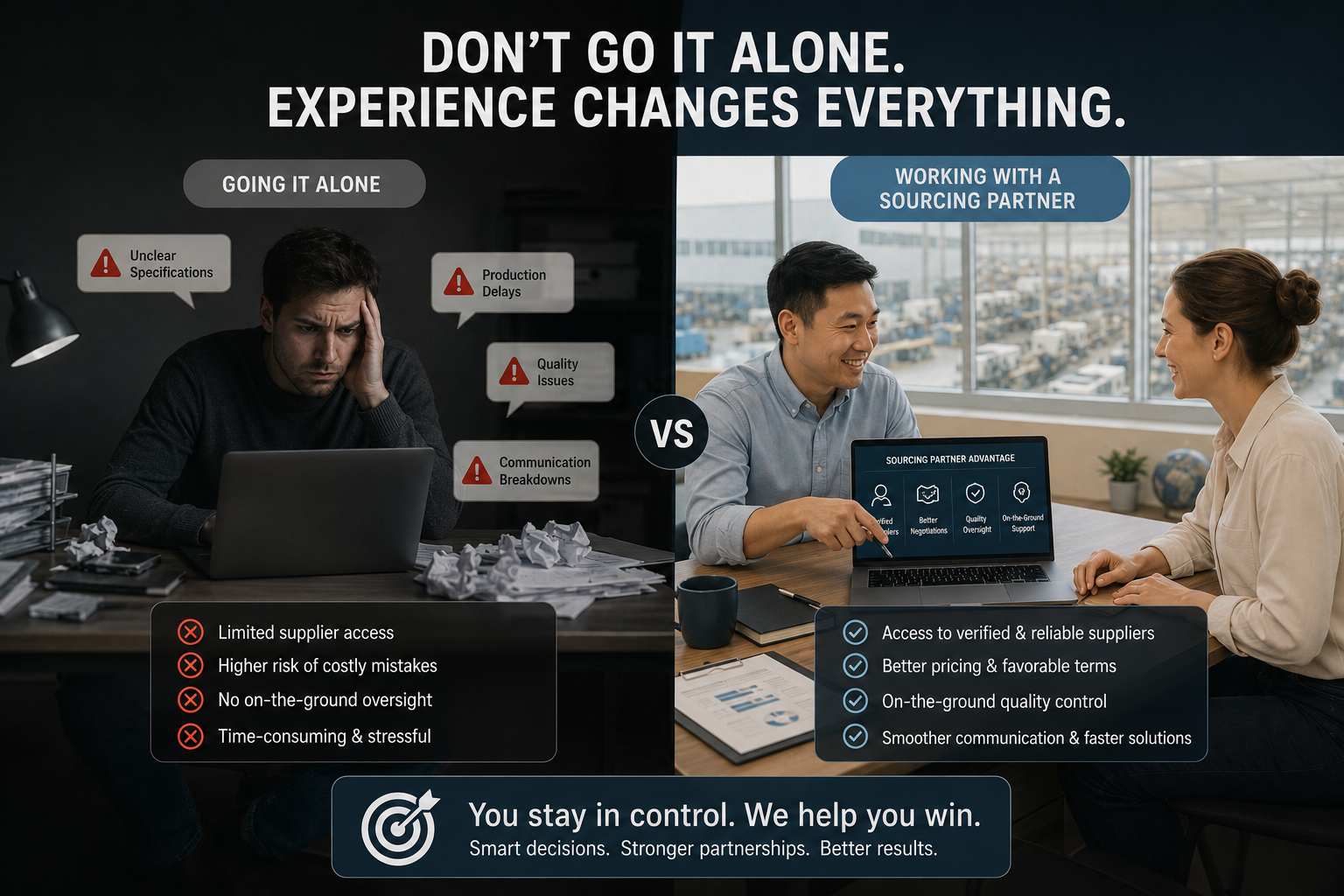
Here is the most honest advice this guide can offer: for a first-time buyer sourcing from China, the single decision that most determines your outcome isn't which supplier you choose or which platform you use. It's whether you navigate the process alone or with experienced support on the ground.
Many first-time importers assume that contacting a factory through an online marketplace is enough to start production. In practice, global procurement rarely works that smoothly. Miscommunication about product specifications, unclear production timelines, and inconsistent quality control can quickly lead to expensive problems.
A sourcing partner with established factory relationships, local knowledge, and quality oversight capability changes the risk profile of your first order entirely. They give you access to verified suppliers you wouldn't find independently, negotiate in the local context with cultural and commercial fluency that no first-time buyer can replicate, and monitor production with the kind of on-the-ground visibility that remote oversight simply cannot provide.
This isn't an argument for outsourcing the thinking understanding your supply chain remains your responsibility. It's an argument for recognising where experience matters, and building it into your process from the start.
How SourceWithAI Makes Your First China Sourcing Experience the Right One
At SourceWithAI, we've built our platform and services specifically for the moment you're in right now ready to source from China, clear on what you want, but navigating a market that rewards experience and punishes gaps in knowledge.
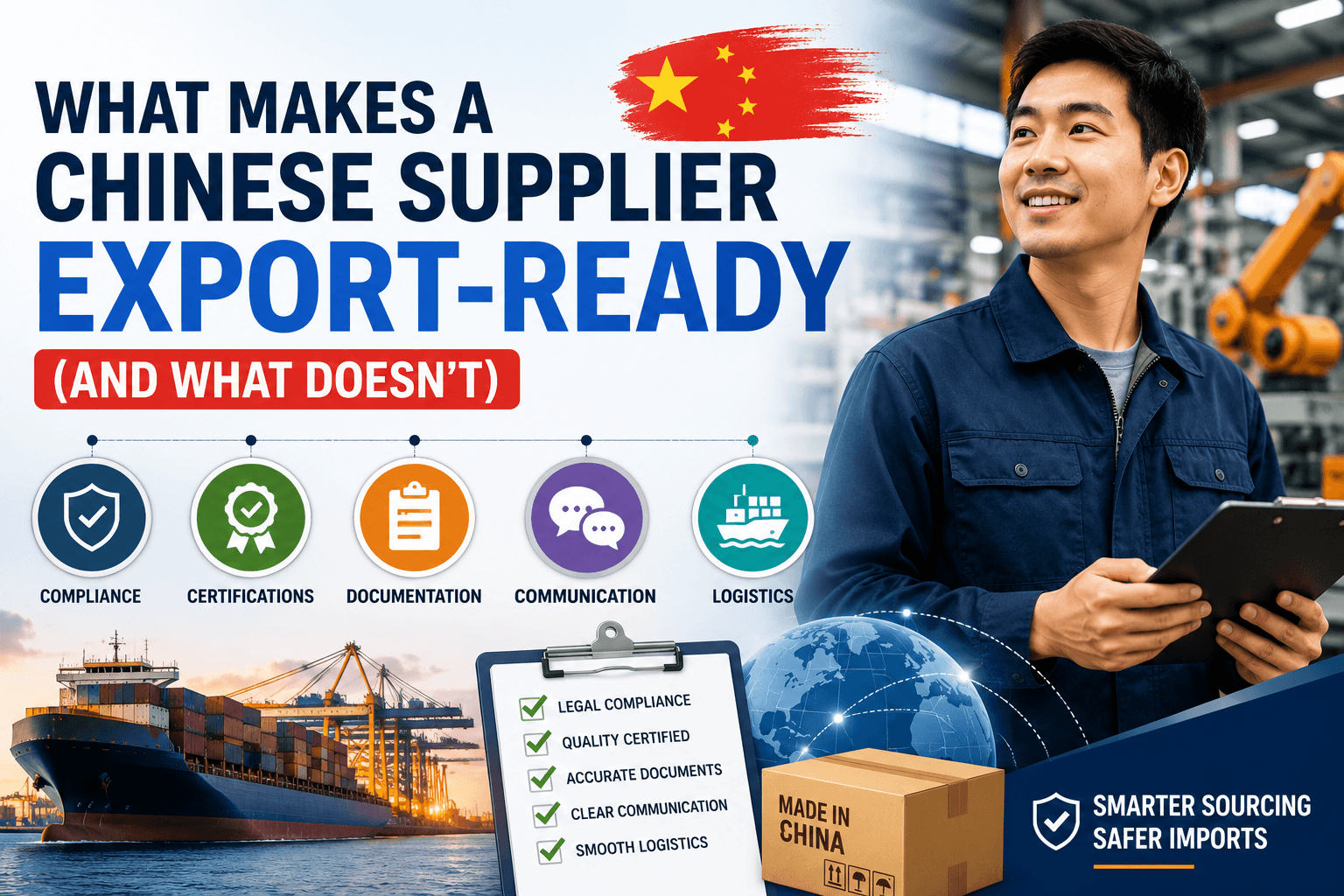
Our supplier discovery and matching service connects you with pre-verified, export-ready Chinese manufacturers in your category not the first names that appear on a public platform, but the suppliers our team has assessed, audited, and worked with directly. We cut through the noise so your first conversation is with a factory that can actually deliver what you need, at the volume and quality standard you require.
Our sourcing consultation service is designed for exactly the decisions first-time buyers find hardest how to structure your specification, what payment terms to negotiate, how to build a quality control process that protects you without slowing down your supplier relationship, and how to calculate your true landed cost before committing to an order. We bring the local knowledge, the factory relationships, and the honest perspective that turns a first sourcing experience from a stressful unknown into a repeatable, scalable process.
China remains one of the world's greatest sourcing opportunities. The buyers who realise that opportunity fully are the ones who approach it with the right preparation and the right partner..
SourceWithAI.com helps global buyers source smarter from China with verified suppliers, expert consultation, and on-the-ground expertise that first-time buyers can trust.
Written by
Eva Liu
May 28, 2026 · 9 min read