
Most companies believe sourcing is mainly about finding a lower unit price.
That sounds logical. If a product costs less, the company saves money. If the company saves money, margins improve. So procurement teams, founders, ecommerce brands, distributors, and buyers often start the conversation with one simple question: "Can we get this cheaper?"
But that is not always the right question.
The better question is: "Where is our margin disappearing before the product even reaches us?"
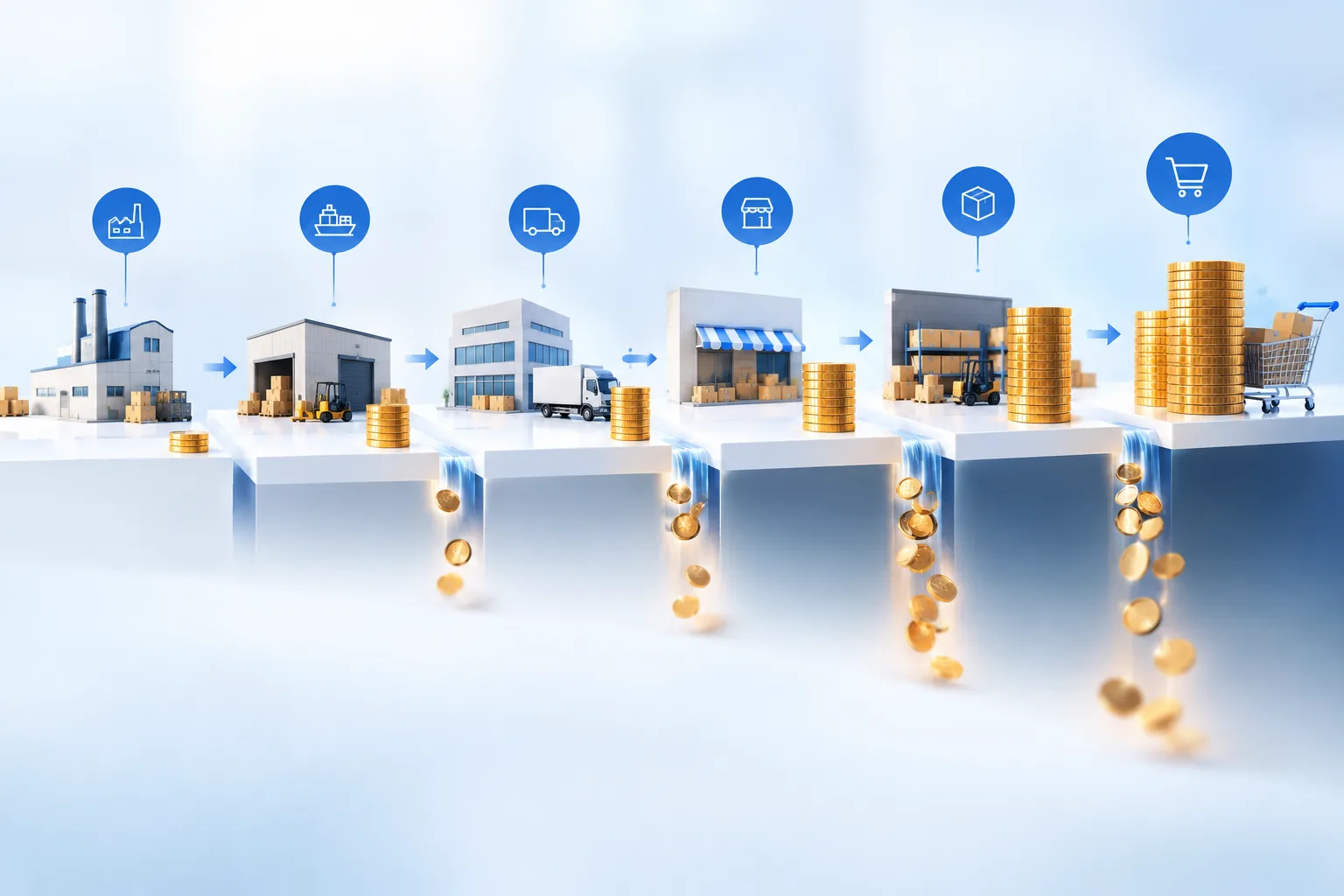
In many supply chains, the real cost problem is not the factory price. It is not always the raw material cost. It is not even always the shipping cost. The real problem is the number of layers a product passes through before it reaches the buyer.
Every layer adds margin. Every handoff adds cost. Every extra party increases the distance between the buyer and the source.
By the time the product reaches the final buyer, the price may look normal. It may even feel competitive compared with other quotes in the market. But hidden inside that price are markups, commissions, handling charges, repackaging costs, coordination fees, and margins from multiple middle layers.
That is where profit quietly disappears.
The Real Problem Is Not Always the Unit Price
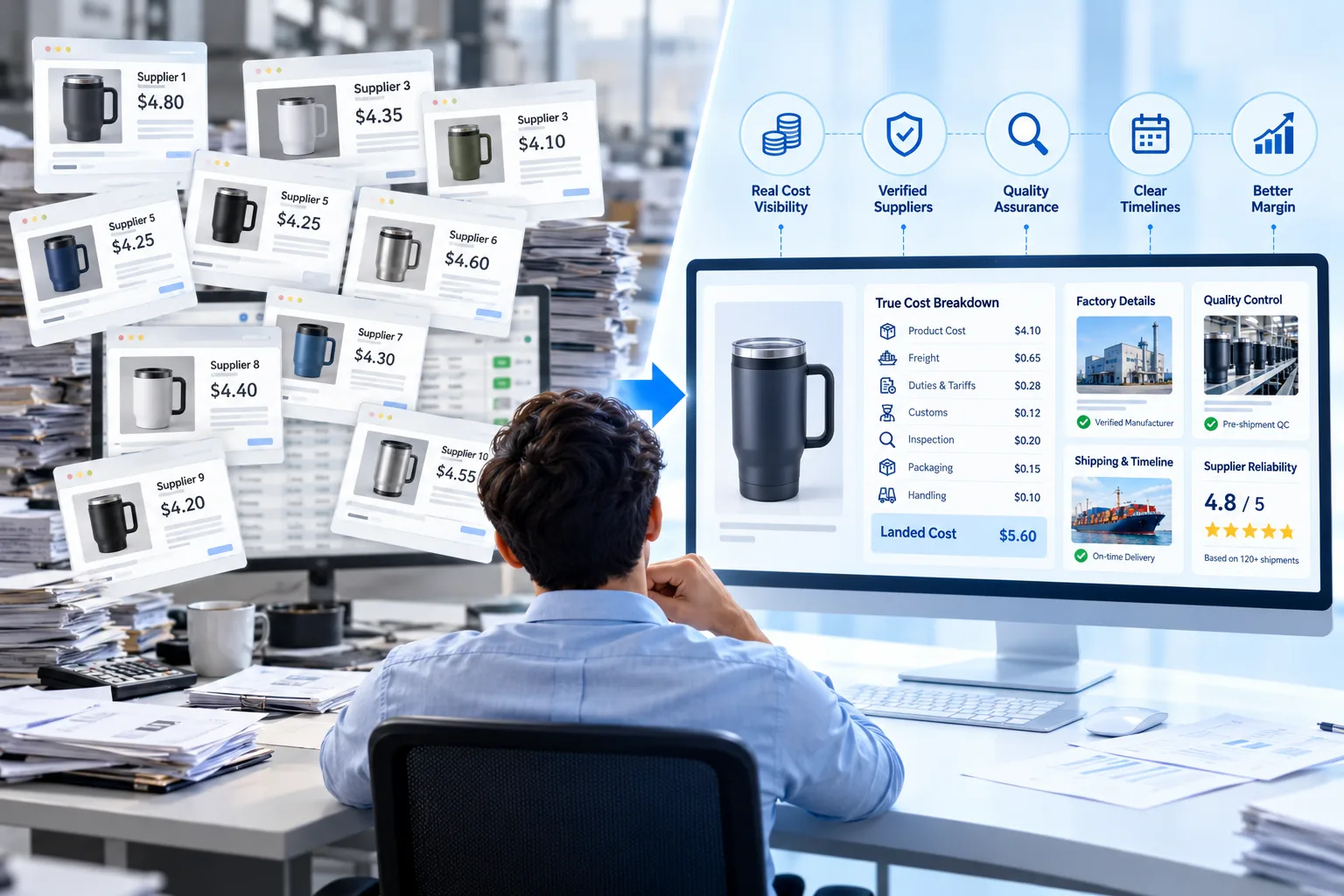
Most buying teams compare products by unit price because it is simple. One supplier quotes $4.80. Another quotes $4.35. A third quotes $4.10. The lowest price looks like the best deal.
But unit price alone does not tell the full story.
A product can have a low quoted unit price and still become expensive after freight, duties, packaging, quality problems, delays, returns, or poor supplier communication. Another product may have a slightly higher unit price but a lower total landed cost because it comes from a better source, has fewer defects, ships more efficiently, and requires fewer corrections.
This is why serious sourcing should not focus only on "cheap." It should focus on total cost, margin protection, and supply control.
Traditional sourcing often makes this difficult because buyers do not always know where the product is actually coming from. They may be buying through a reseller, trading company, importer, distributor, broker, or local middleman. Sometimes each party is useful. But often, several layers exist simply because that is how the old sourcing model works.
The buyer sees the final price. They do not see the path the product took to get there.
That lack of visibility is expensive.
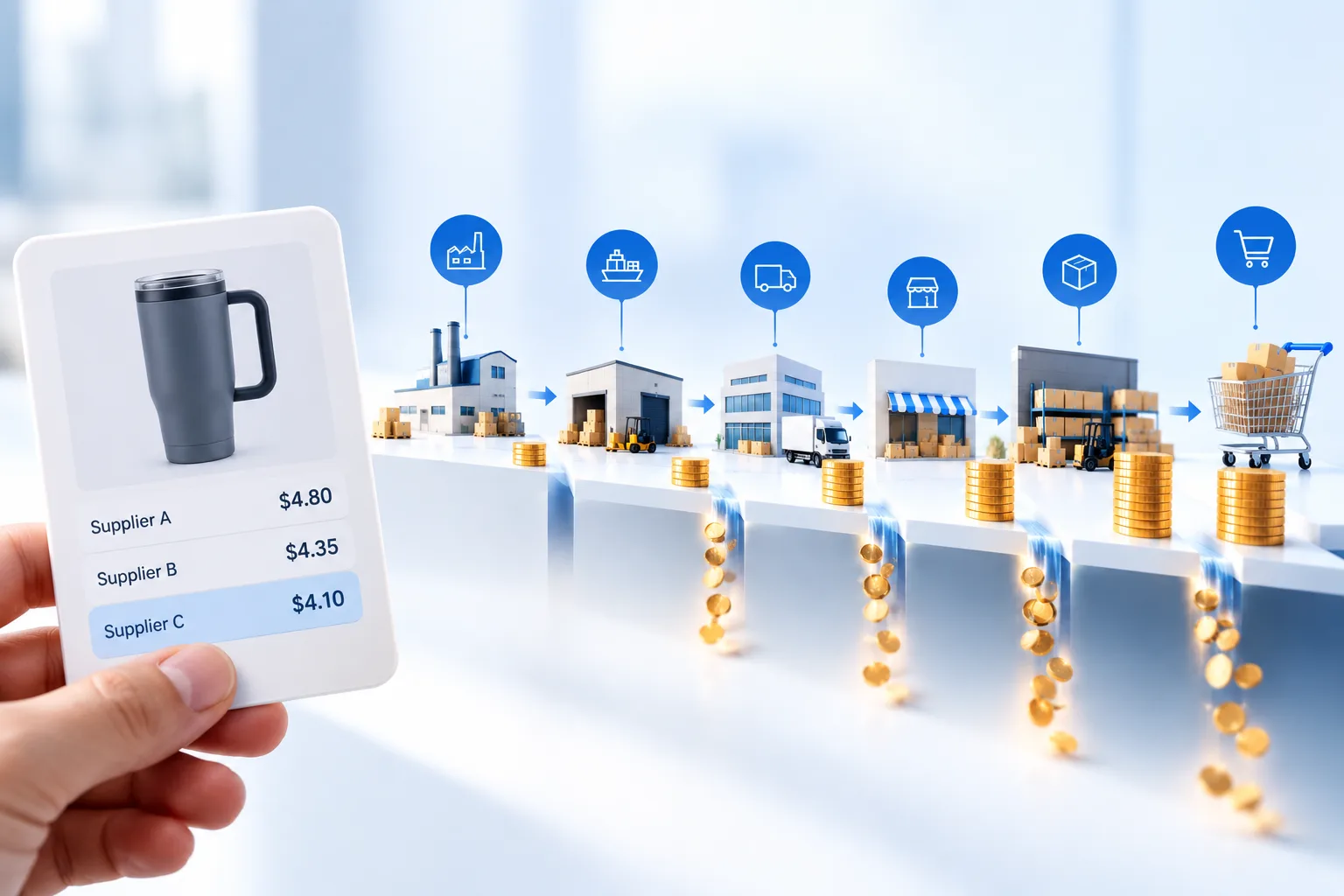
How Traditional Sourcing Creates Hidden Markup
A product rarely moves in a straight line from factory to buyer.
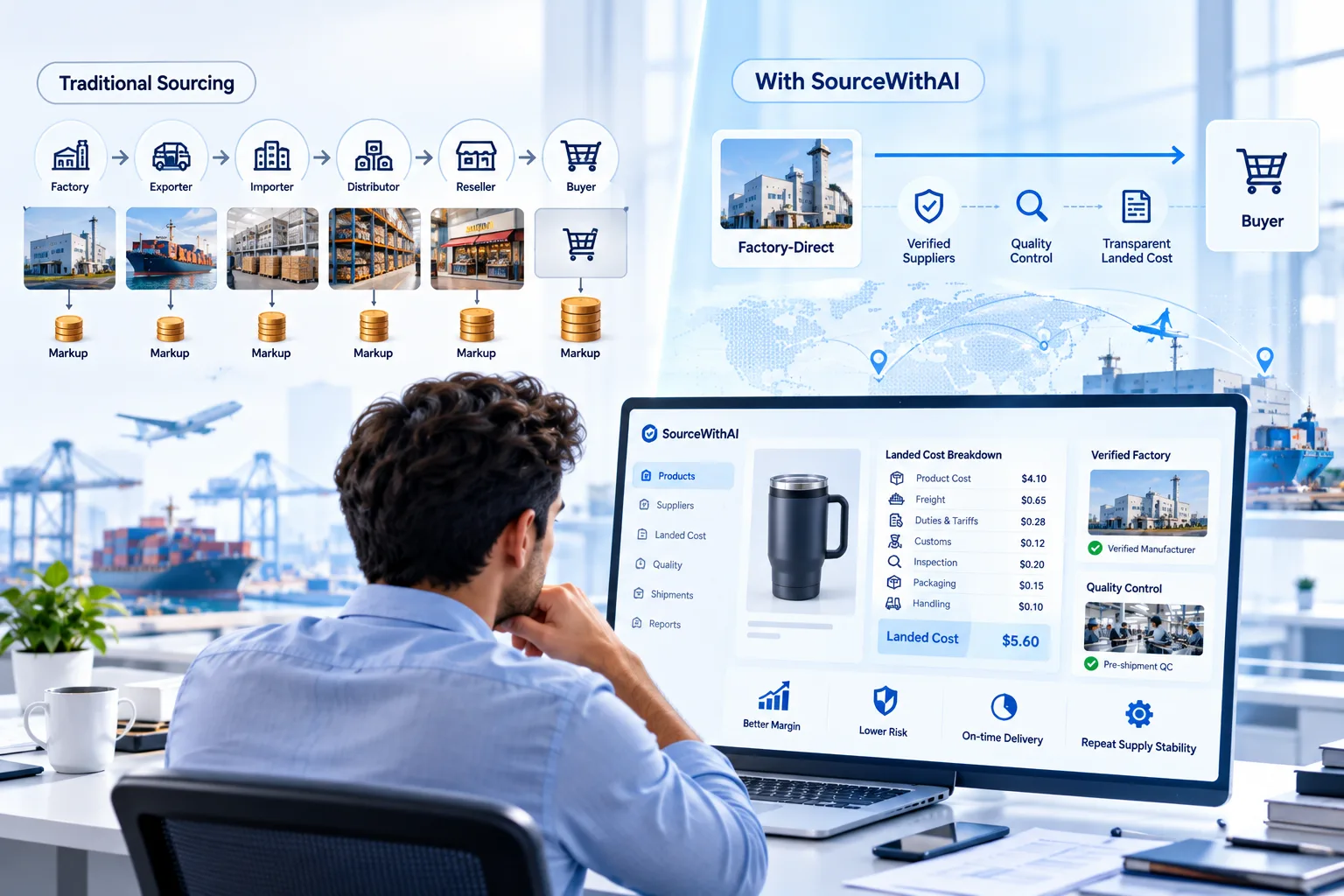
In a traditional sourcing chain, the product may pass through several layers:
Factory to exporter. Exporter to importer. Importer to distributor. Distributor to reseller. Reseller to buyer.
Each layer has a role, and each layer needs to make money. That is not automatically wrong. The problem starts when the buyer is paying for layers that are not adding meaningful value.
For example, a reseller may not improve the product. An importer may not improve quality control. A distributor may not improve speed. A broker may not improve transparency. Yet each layer can still add a margin before the product reaches the buyer.
This means a product that started at a much lower source cost can reach the buyer at a price that is 20 to 40 percent higher than necessary.
The buyer may never notice because they are comparing against other quotes from the same traditional market. If every supplier in the market is working through similar layers, every price looks "normal."
But normal does not mean efficient.
It only means the margin leak has become accepted.
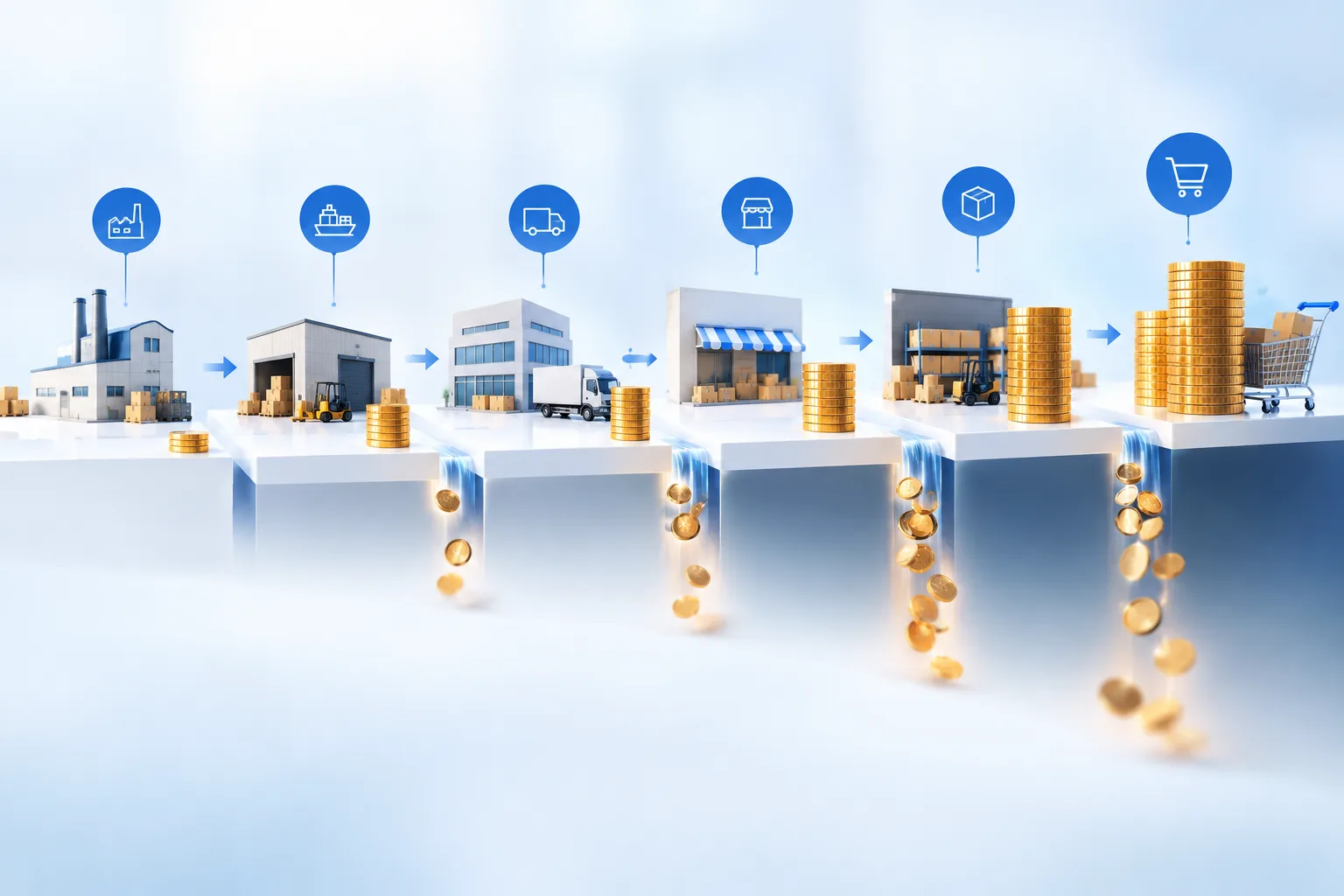
Why Margin Leakage Is Hard to See
Margin leakage is dangerous because it rarely appears as one obvious line item.
It does not show up as "hidden markup" on an invoice. It does not announce itself during a supplier call. It does not always look like overcharging. Instead, it hides inside the structure of the supply chain.
The buyer may see a product quote, a freight estimate, a timeline, and basic terms. But they may not know:
● Whether they are buying from the actual manufacturer
● How many parties are between them and the source
● What the product really costs before markups
● Whether the packaging has been optimized for shipping
● Whether quality checks are happening before shipment
● Whether the landed cost has been calculated accurately
● Whether the supplier has control over production or is simply passing the order along
Without that visibility, the buyer cannot tell whether the quote is truly competitive or just familiar.
This is especially important for companies that buy the same products repeatedly. A one-time overpayment is painful. A repeat sourcing gap becomes a permanent margin problem.
If a company buys a product every month and pays 15, 20, or 30 percent more than necessary, that is not a small sourcing mistake. It is a recurring profit leak.

Landed Cost Matters More Than Quoted Price
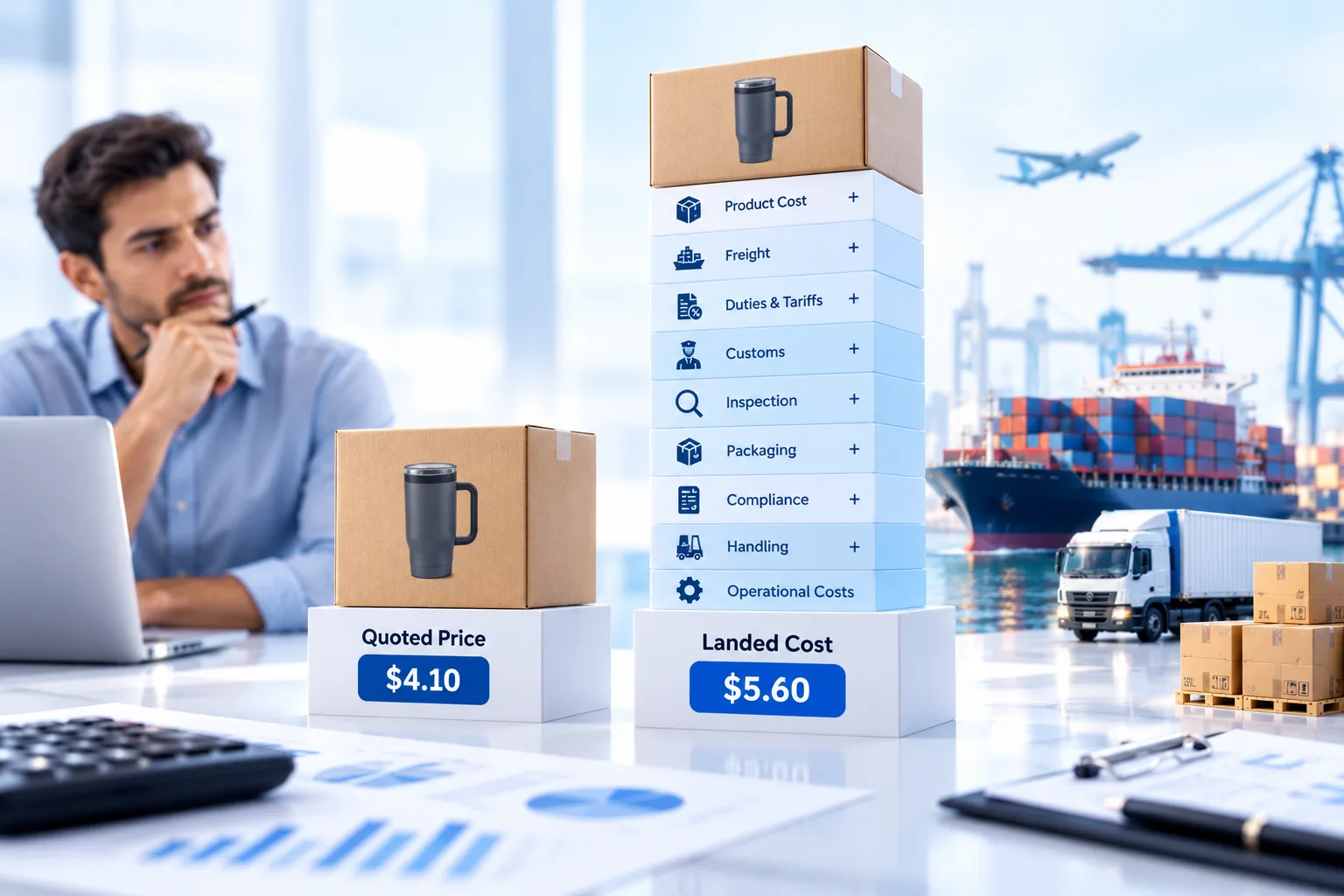
One of the biggest mistakes buyers make is comparing product quotes without comparing landed cost.
The quoted price is only one part of the real cost. Landed cost includes the product cost, freight, duties, tariffs, customs, inspection, packaging, compliance, handling, and operational costs required to get the product delivered and ready to sell or use.
A supplier may quote a low product price but ship inefficiently. Another may quote a slightly higher product price but reduce freight cost through better carton sizing, better packaging, or better production planning.
In the first case, the buyer feels like they saved money. In reality, they may lose it later through shipping, rework, delays, or defects.
That is why landed cost clarity is one of the most important parts of modern sourcing.
Buyers do not need the cheapest quote. They need the clearest cost picture.
When a company understands landed cost, it can make better decisions. It can compare suppliers accurately. It can protect selling margins. It can plan inventory more confidently. It can avoid surprises after the order is already in motion.
Without landed cost clarity, sourcing becomes a guessing game.
And guessing is expensive.
Cheap Without Control Is Not a Strategy
There is another trap in sourcing: assuming cheaper automatically means better.
The goal is not just to reduce price. The goal is to improve margin without creating new risks.
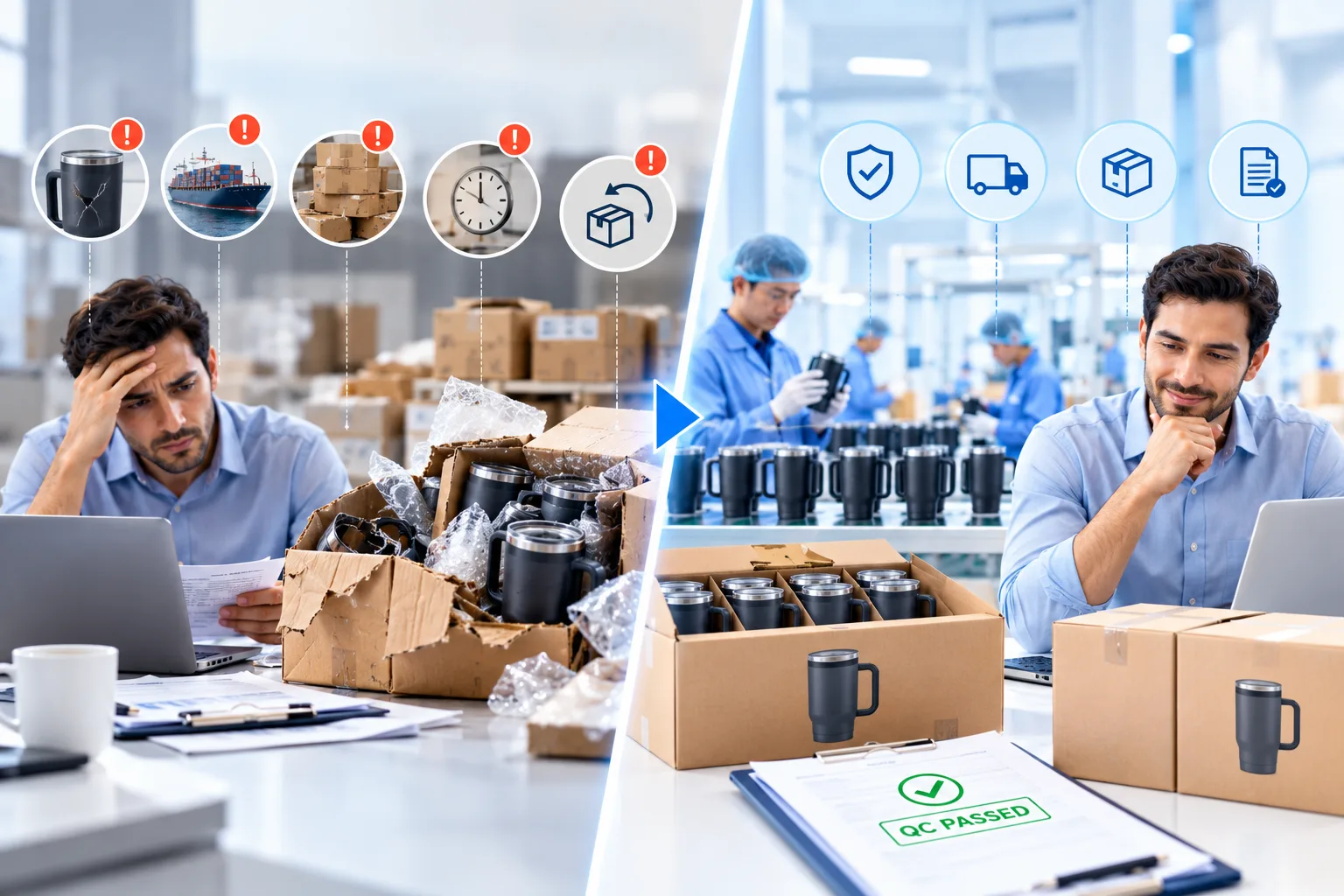
A lower-cost supplier is only useful if the product quality is reliable, the communication is clear, the production timeline is realistic, and the final landed cost still makes sense. Otherwise, the buyer may save on the quote and lose on the outcome.
Poor sourcing can create hidden costs that are even worse than high pricing:
● Defective products
● Missed deadlines
● Inconsistent packaging
● Wrong specifications
● Poor communication
● Reorders that do not match the first batch
● Freight surprises
● Returns or customer complaints
● Inventory delays
This is why factory-direct sourcing must be paired with quality control and cost transparency.
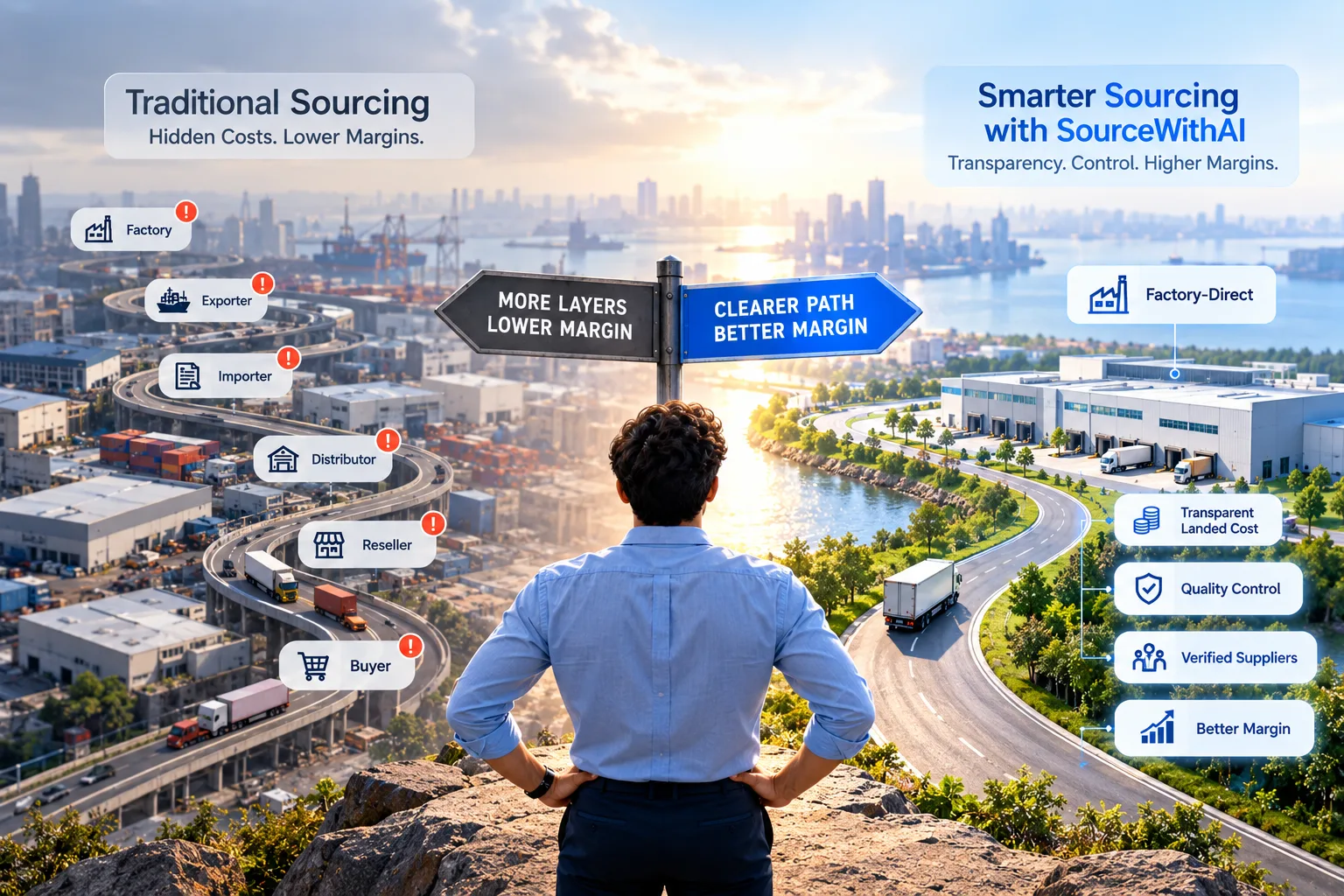
Going closer to the factory is powerful, but it must be managed properly. A buyer should not simply chase the lowest factory price. They should build a sourcing process that gives them better visibility, better control, and better economics.
That is the difference between cheap sourcing and smart sourcing.
What Factory-Direct Sourcing Changes
Factory-direct sourcing reduces unnecessary layers between the buyer and the producer.
Instead of buying through a chain of intermediaries, buyers can get closer to the actual manufacturing source. This does not mean every middle layer disappears in every case. Some partners are still useful for logistics, compliance, quality checks, and coordination. But the goal is to remove layers that add cost without adding value.
When done correctly, factory-direct sourcing can help buyers:
● Understand real production costs more clearly
● Reduce unnecessary markups
● Improve landed cost visibility
● Compare products more accurately
● Customize packaging or specifications more effectively
● Build stronger supplier relationships
● Add quality checks before shipment
● Improve margin on repeat orders
For companies that buy in volume, the impact can be significant. Even a small improvement in sourcing cost can create a meaningful improvement in gross margin.
If a product is purchased regularly, a 10 percent cost improvement can compound across every reorder. A 20 to 40 percent improvement can change the economics of an entire product line.
That is why sourcing should be treated as a strategic margin function, not just an administrative buying task
Why Buyers Need Transparency, Not Just More Supplier Options
Many platforms and suppliers promise more options. More factories. More quotes. More catalogs. More products.
But more options do not automatically create better decisions.
If a buyer receives ten quotes but does not understand landed cost, quality risk, supplier reliability, or markup layers, the buyer still may not know which quote is best.
The real value is not just access. The real value is clarity.
Buyers need to know what they are paying for, where the product is coming from, what risks exist, and how the final cost is built.
This is especially important for founders, procurement teams, ecommerce brands, distributors, promotional product buyers, and companies managing repeat purchases. These buyers are not just looking for a product once. They are building a repeatable supply chain.
A repeatable supply chain needs transparency.
It needs a clean view of product cost, shipping, quality control, timelines, and margin.
Without that, a company can grow revenue while still leaking profit.
How SourceWithAI Helps Solve This
SourceWithAI helps buyers move closer to the source while keeping the process structured, transparent, and margin-focused.
The goal is not simply to find a cheaper product. The goal is to help buyers understand the real cost structure behind the products they already buy or plan to buy.
That means looking at the product, the supplier path, the landed cost, the quality requirements, and the unnecessary layers that may be increasing the final price.
SourceWithAI focuses on:
● Factory-direct sourcing
● Transparent landed costing
● Quality control support
● Fewer unnecessary middle layers
● Better visibility into repeat purchasing economics
This matters because buyers do not only need a supplier. They need confidence that the supplier path makes business sense.
A lower unit price is helpful. A clearer landed cost is better. A sourcing model that improves margin while protecting quality is better still.
For many buyers, the opportunity is not hidden in some completely new product category. It is hiding in products they already buy repeatedly.
That is where margin recovery often starts.
The Best Place to Start: One Product
Companies do not need to overhaul their entire supply chain on day one.
The best starting point is usually one repeat product.
Choose one product your company buys often. It could be a promotional item, packaging product, apparel item, accessory, printed product, retail product, or any SKU that is ordered repeatedly.
Then ask:
● What is the current unit cost?
● What is the full landed cost?
● Who are we buying from?
● How many layers are between us and the source?
● Are we paying for value or just paying for distance?
● Is quality being checked before shipment?
● Could packaging, freight, or supplier selection be improved?
● What would a cleaner factory-direct path look like?
This simple exercise can reveal whether the current sourcing model is protecting margin or quietly reducing it.
Even if the current supplier is good, the analysis is still useful. It gives the buyer a benchmark. It creates visibility. It turns sourcing from guesswork into a business decision.
Final Thought
Most companies do not have a sourcing problem in the way they think they do.
They do not just need more suppliers. They do not just need a cheaper quote. They do not just need another catalog.
They need to know where their margin is going.
Traditional sourcing often hides cost inside layers that buyers cannot easily see. Every extra handoff can add markup. Every unclear quote can create risk. Every repeat order placed through an inefficient chain can quietly reduce profit.
The companies that improve sourcing are not the ones that chase cheap prices blindly. They are the ones that understand landed cost, remove unnecessary layers, protect quality, and build clearer paths to the source.
That is where better margin comes from.
If your company buys the same products repeatedly, start with one product. Look at the full cost. Look at the layers. Look at the landed cost. Look at what value each party is actually adding.
You may find that the biggest opportunity is not selling more.
It is keeping more of the margin you already earned.
Buying the same product repeatedly?
Send SourceWithAI one product you purchase often. We will help you identify where the margin gap may be hiding and what a clearer sourcing path could look like.
Written by
Admin
October 7, 2026 · 9 min read