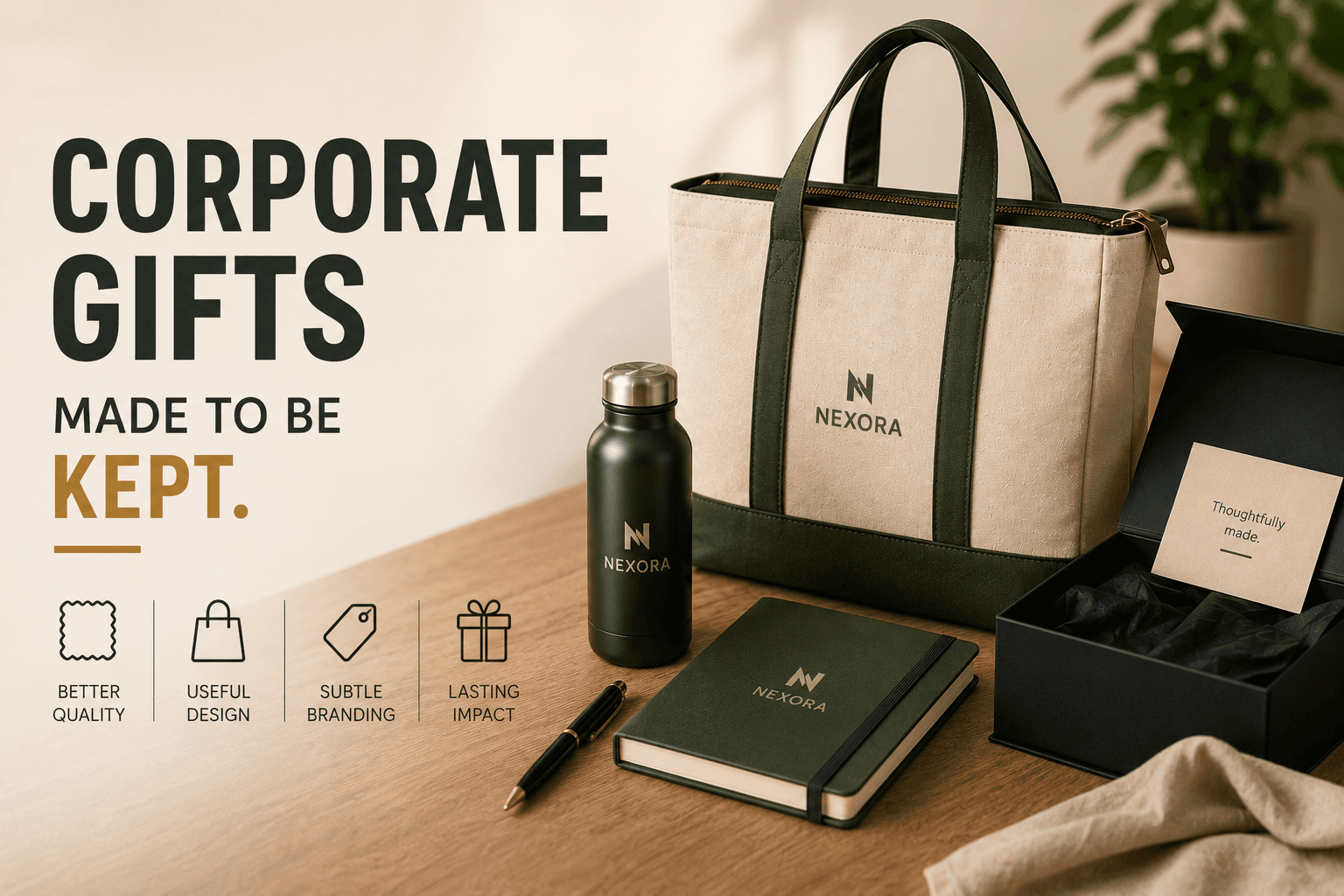
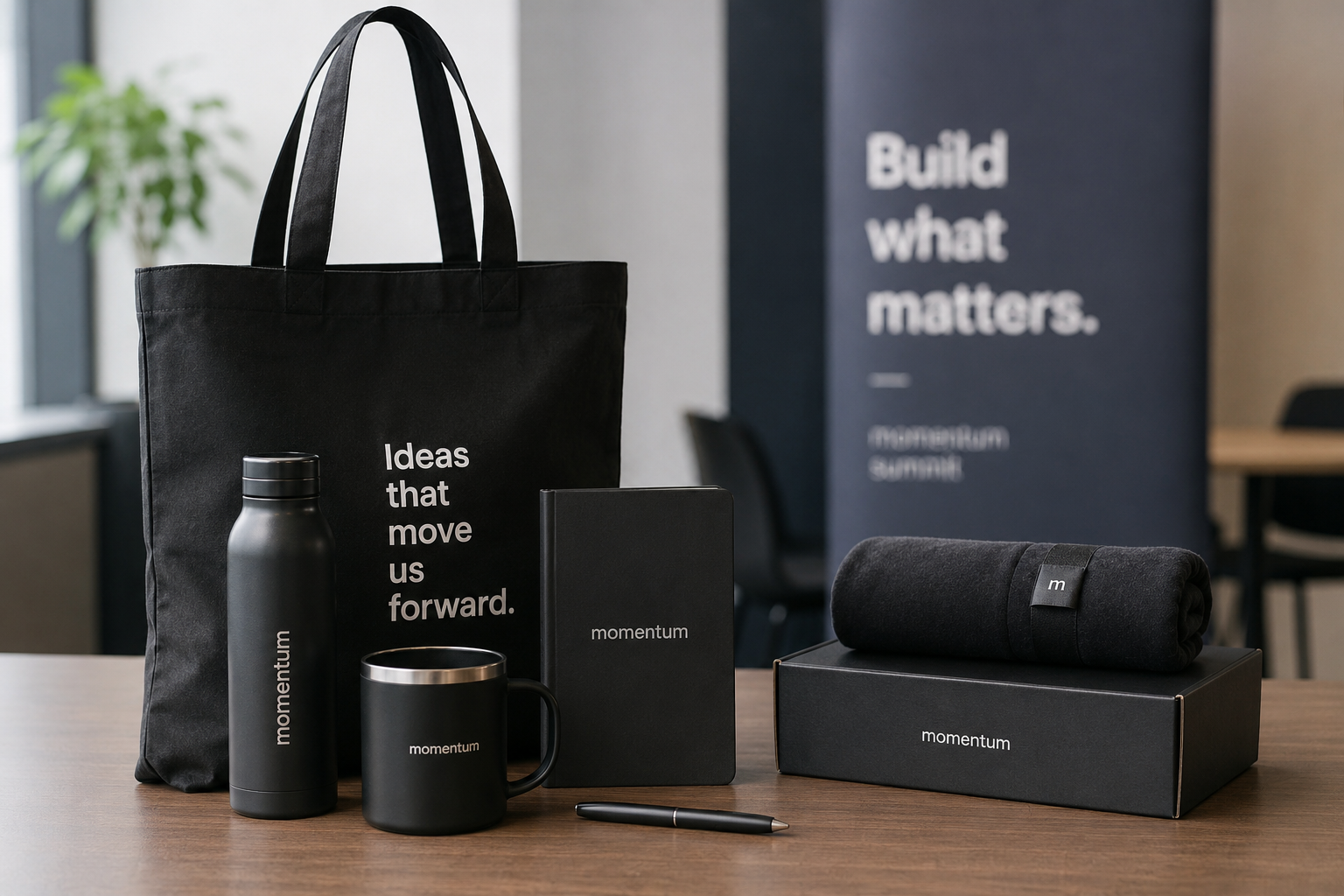
Walk into any corporate event or brand activation today and something has quietly changed. The tote bag on the welcome table has structure. The notebook has decent paper and a lay-flat binding. The drinkware looks like something you would actually buy for yourself. Products that once looked unmistakably like branded giveaways are starting to feel like things people would choose.
This shift is real, and it is worth understanding not just as a trend, but as a practical question about how to spend a gifting budget more effectively.
Why Corporate Gifts Are Becoming More Retail-Like
The people receiving corporate gifts today are used to well-designed products across every part of their lives. When a branded item lands in front of them, they evaluate it the same way they evaluate anything else: by how it feels, how useful it is, and whether it fits into their day.
A thin tote bag with a large centred logo does not just feel cheap. It communicates something about the brand behind it. A bag that stands upright, closes securely, and has a considered interior layout communicates something else entirely: that someone thought carefully about what they were giving.
That is why the most effective corporate gifts are increasingly designed around usefulness first and branding second. The logo is still there. It is just not the whole brief.
Which Gifting Occasions Justify a Quality Upgrade
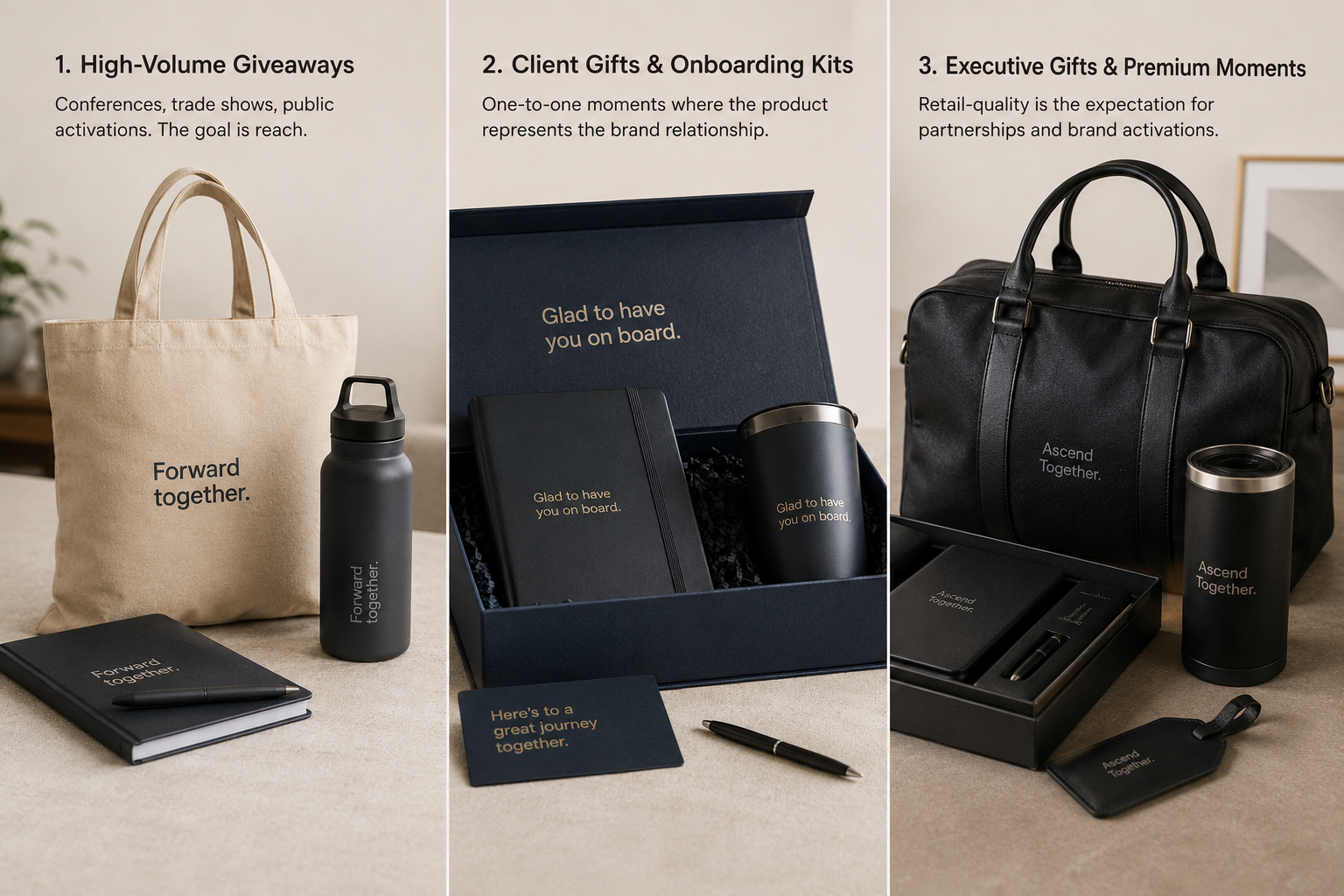
Not every gifting occasion requires the same level of product. For high-volume event giveaways, conferences, trade shows and public activations, a clean, well-specified basic product is often the right call. The goal is reach, and the budget needs to stretch across large quantities.
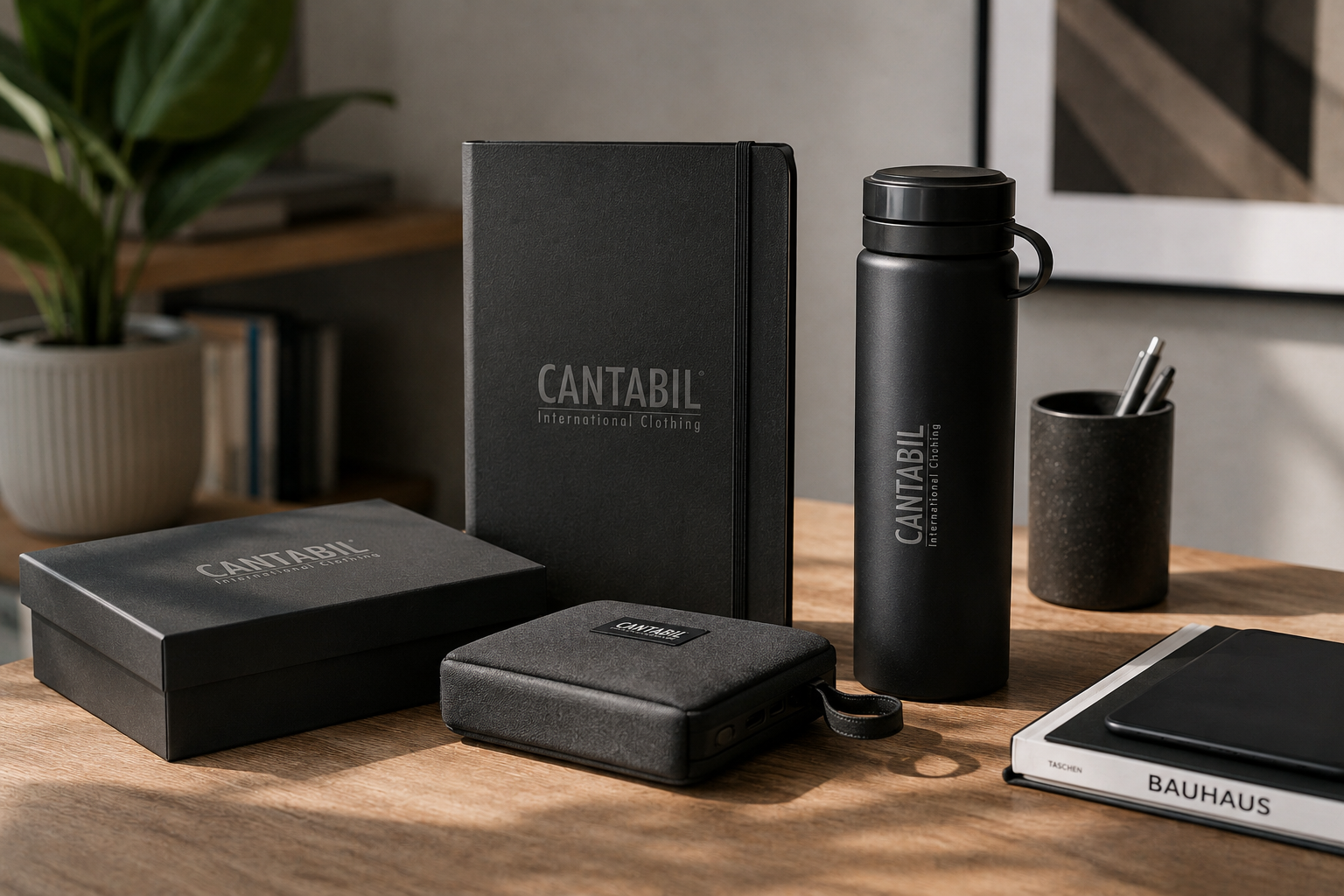
For client gifts, onboarding kits and corporate hospitality, the calculus changes. These are one-to-one moments where the product represents the brand relationship directly. For executive gifts, long-term partnership recognition or premium brand activations, a retail-quality product is not a luxury; it is the expectation.
Basic, Better, and Retail-Like
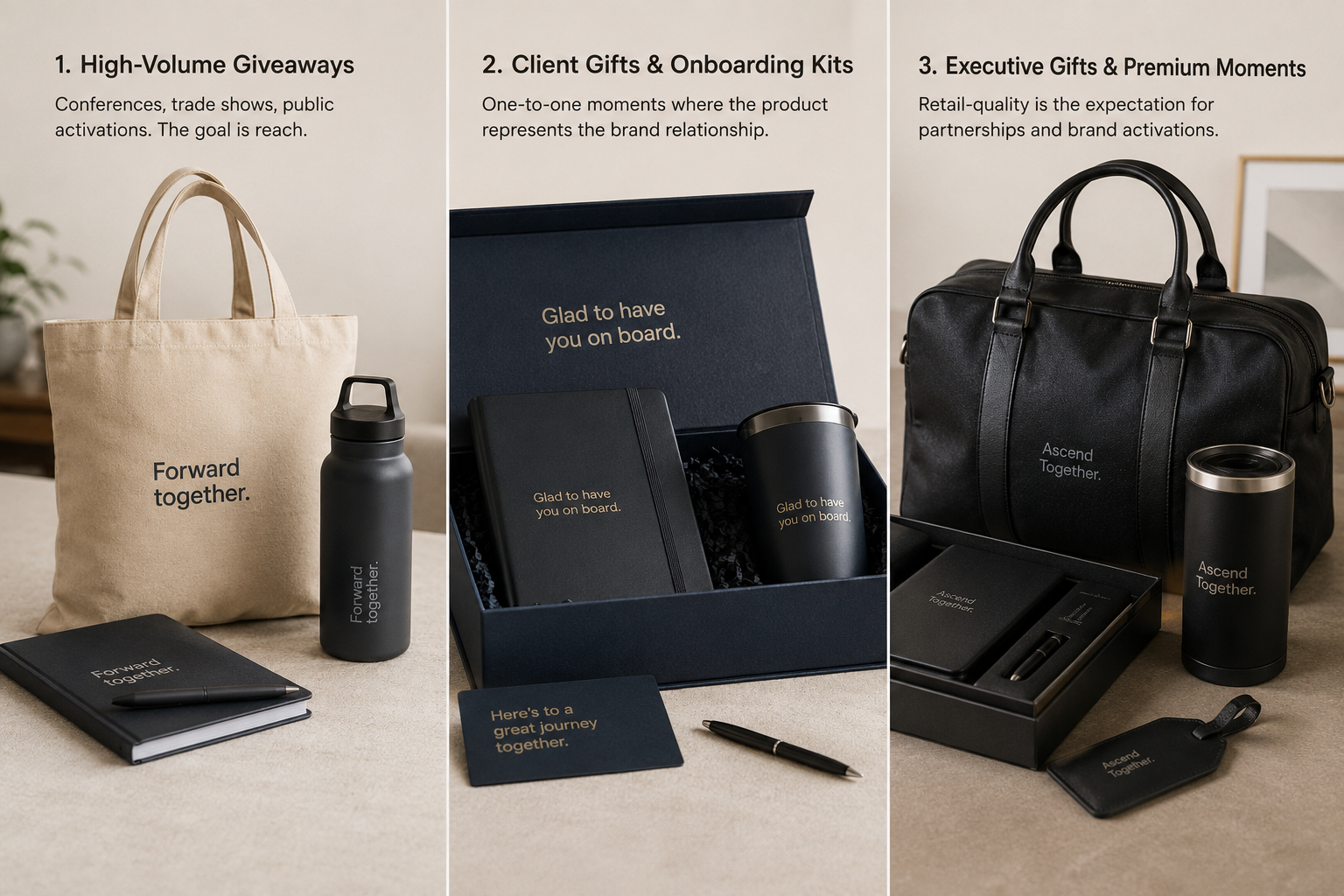
Using a tote bag as an example, specification changes the outcome across three levels.
Basic
Non-woven polypropylene fabric, open top, single compartment and a large centred logo. Functional for a single use, and often discarded shortly after an event.
Better
280gsm canvas or woven cotton, a reinforced base, zip closure with a custom pull, one internal pocket, and a smaller, more discreet logo. It holds its shape, feels more substantial, and is more likely to be used again.
Retail-Like
Structured canvas with a padded base panel, interior organisation, subtle tonal branding, custom lining, and finished packaging. It is a product someone would carry by choice, not obligation.
How Materials, Construction, Functionality and Logo Application Affect Cost
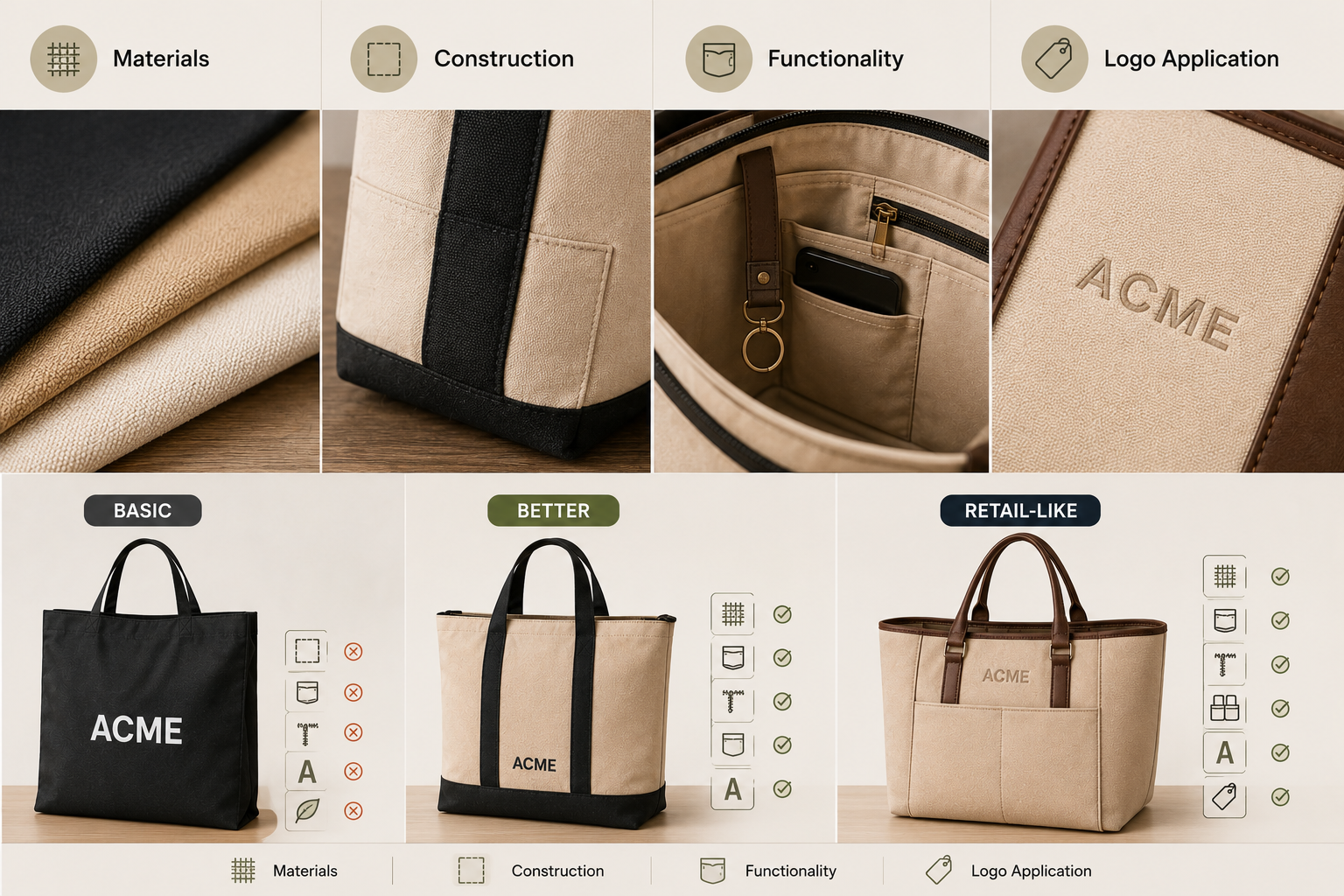
Four factors drive most of the difference between a basic corporate gift and a retail-quality one: materials, construction, functionality and logo application.
Material is the most visible lever. Fabric weight, canvas grade, metal versus plastic hardware, and paper quality are decisions recipients feel immediately. Construction determines how the product holds up over time. Functionality, such as zip closures, interior pockets, card slots and adjustable straps, adds perceived value when designed into the brief from the beginning.
Logo application matters too. A large screen print is inexpensive; an embroidered logo, debossed detail, tonal print or interior label requires more process but results in a product that feels branded rather than advertised.
Four Details to Confirm When Sourcing from China
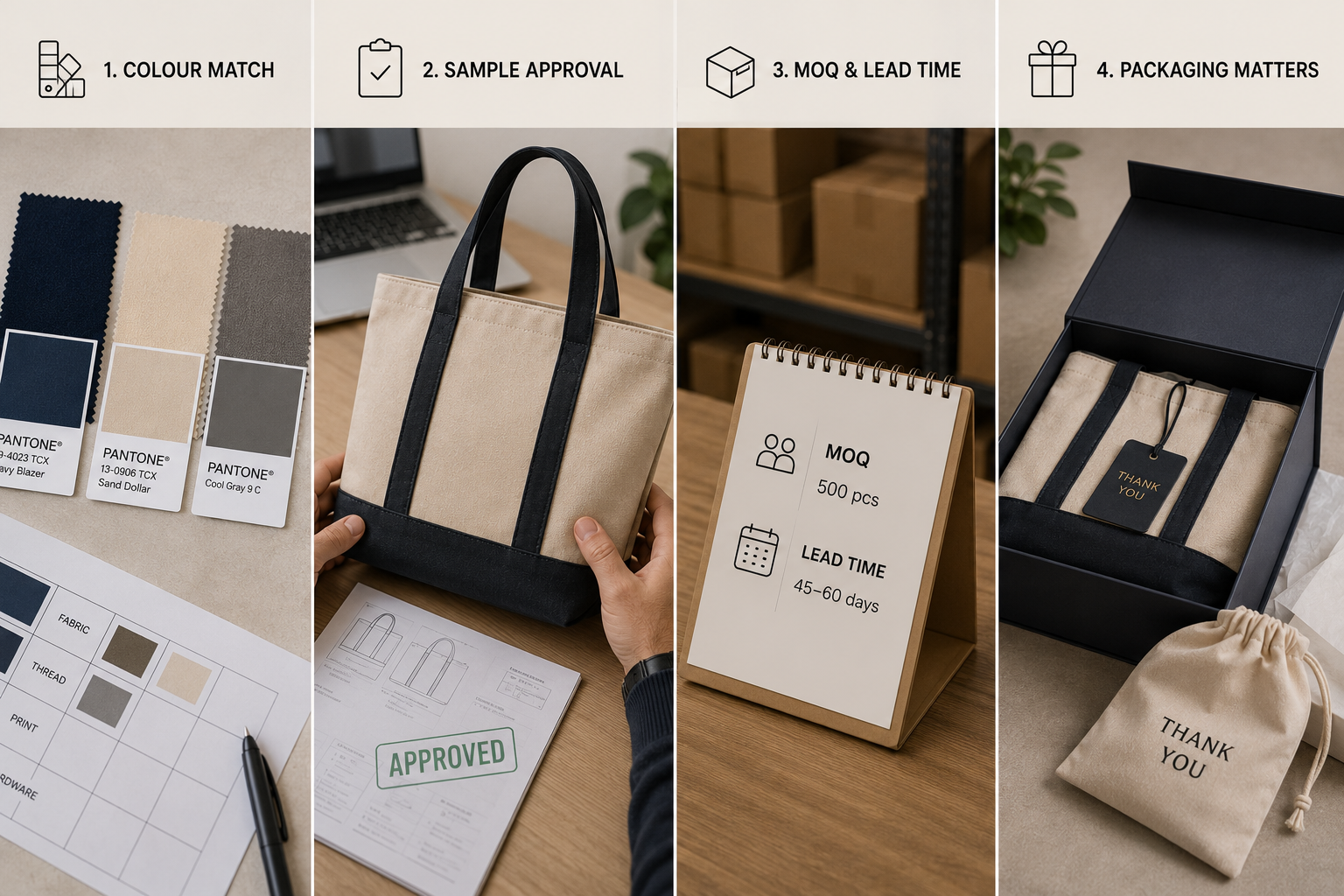
- Pantone colour references, not descriptions. Exact references for fabric, thread, print and hardware reduce colour deviation between sample and bulk production.
- Sample approval before bulk. For customised or upgraded products, approve a physical sample before production.
- MOQ and lead-time implications of customisation. Starting with a well-designed existing product and adjusting colour, packaging or logo application can achieve a premium result with more manageable MOQs and timelines.
- Packaging as part of the product. A custom box, dust bag or branded tissue should be specified in the original brief rather than added as an afterthought.
A Typical Product Upgrade Example
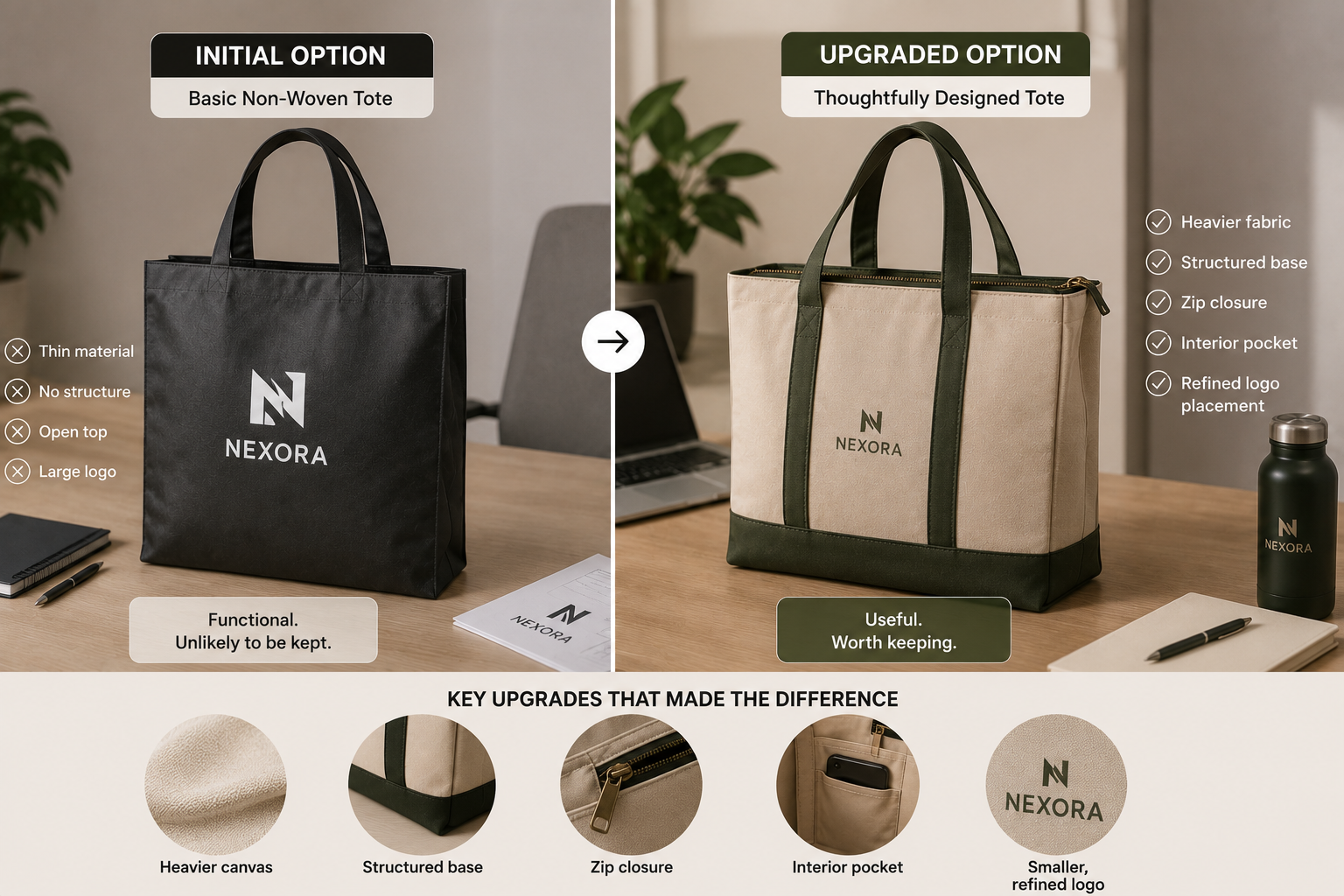
A company needs a branded tote bag for a client event. The first factory option meets the brief on paper: it is within budget, the logo fits, and the lead time works. But it is a standard non-woven tote, floppy, open-topped and unlikely to be used more than once.
Reconsider the brief from the product up. What would make it worth keeping? Heavier fabric, a base that holds its shape, a zip that keeps belongings secure, an interior phone pocket, and logo placement that feels like a brand mark rather than an advertisement.
Not every upgrade is achievable within every budget, but identifying the two or three details that make the most difference consistently produces a stronger outcome than accepting the first option at face value.
What SourceWithAI Brings to This Process
SourceWithAI helps brands and businesses think through which product version makes the most sense for the occasion, recipient and available budget. We understand what is achievable at different price points in the China market, which customisation options are realistic within a given lead time, and where a small specification change creates a meaningful difference in the final product.
The future of corporate gifting is not simply about spending more. It is about choosing familiar products more intelligently through better design, more useful features, and sourcing decisions that understand the difference between a product that gets kept and one that gets left behind.
If you have an upcoming gifting brief, send us your product category, quantity and budget. We will advise where an upgrade would make the most difference and what is realistically achievable.
Written by
SourceWithAI Team
September 2, 2026 · 4 min read