For years, buying products has largely been treated as a search problem. A buyer has a requirement. They open a catalogue, search for a product, compare a few options, request information, and eventually make a decision. That process made sense when access to products was limited. Today, the problem is different. Buyers can find almost anything. There are thousands of products across categories, countless variations, endless specifications, and more options than most teams have the time to evaluate. Finding a product is rarely the hardest part anymore.
Knowing which product is actually worth considering is. That is where product intelligence becomes important.

From finding products to understanding products
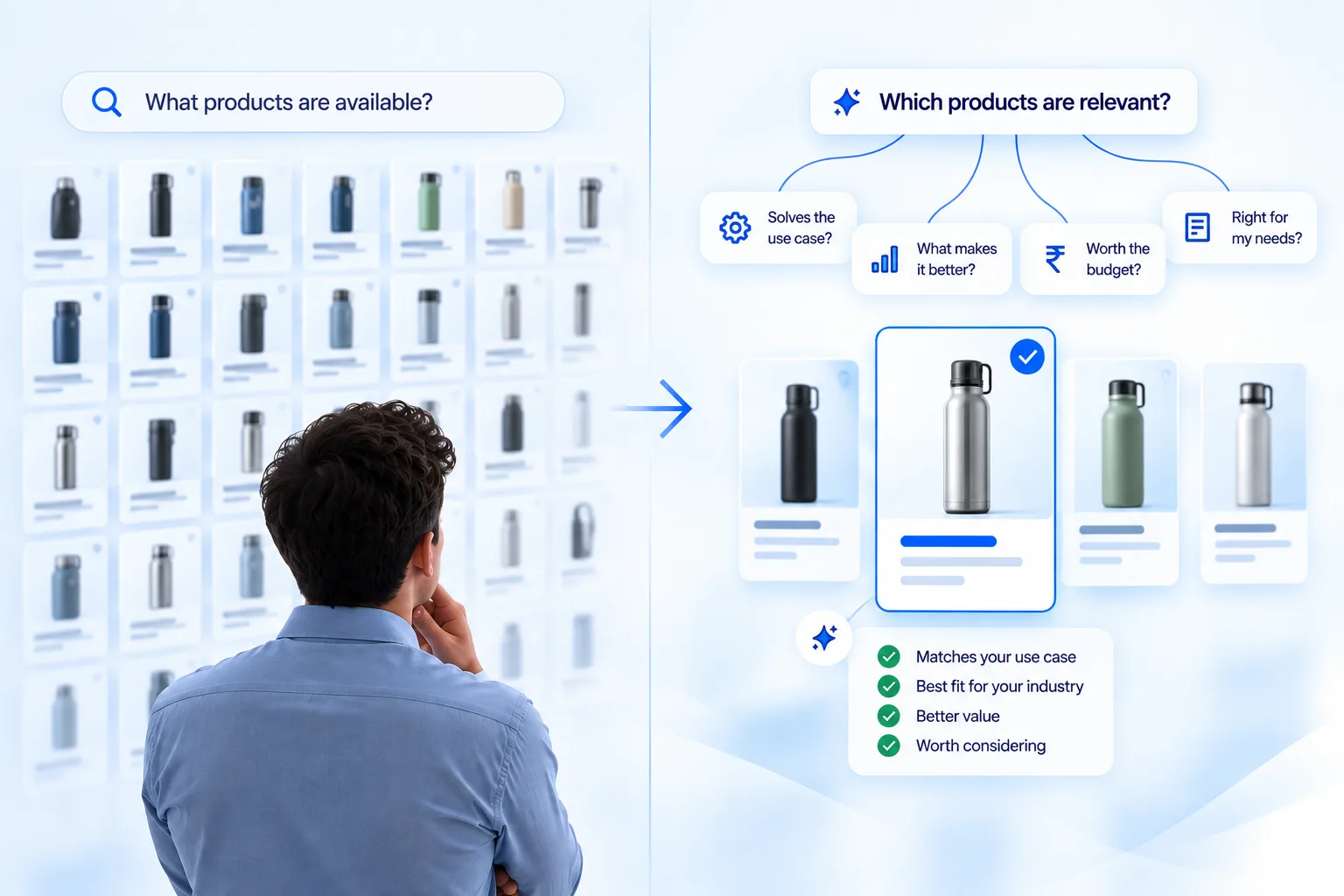
Traditional product search answers a relatively simple question: “What products are available?” Product intelligence asks a different set of questions:
“Which products are relevant?”
“Which ones actually solve the use case?”
“What makes one option better suited than another?”
“Which products are worth spending time and budget on?”
This distinction may seem small, but it changes the entire buying process. A search engine can give you hundreds of results. A catalogue can give you thousands. But more results do not automatically create better decisions. In fact, more options can make the decision harder. When every product appears to deserve consideration, buyers have to spend more time filtering, comparing, checking specifications, understanding differences, and deciding what matters. The real value is no longer simply access to more products.
It is better judgment before the purchase.
The catalogue is not the decision
A catalogue is designed to show possibilities. That is useful but possibilities are not decisions. Imagine a company looking for products for a particular team or industry. The search may produce dozens or hundreds of potentially relevant options. Some may look better. Some may cost less. Some may have more features. Some may be more popular. Some may simply have better photography. But none of those factors, individually, answers the most important question:
Is this actually the right product for this use case?
That requires context. A product should be evaluated against the problem it is supposed to solve, the people who will use it, the environment in which it will be used, and the requirements of the buyer. This is why product intelligence starts before sourcing. It starts with understanding the category.

Why more choices can create worse decisions
More choice sounds positive. But when every option requires attention, comparison becomes expensive. A buyer may begin with one requirement and quickly end up evaluating:
different materials
different designs
different specifications
different product formats
different quality levels
different packaging options
different price points
different sourcing possibilities
The result can be decision fatigue. The buyer is no longer asking:
“What is the best fit?” They are asking:
“How do I get through all of these options?”
That is an important distinction. The goal of intelligent sourcing should not be to put more products in front of the buyer. It should be to remove unnecessary choices while preserving the choices that matter.

What makes a product worth considering?
There is no universal definition of a “better product.” A product that works extremely well in one environment may be completely irrelevant in another. That is why product intelligence has to begin with the use case. A useful evaluation can consider several dimensions.
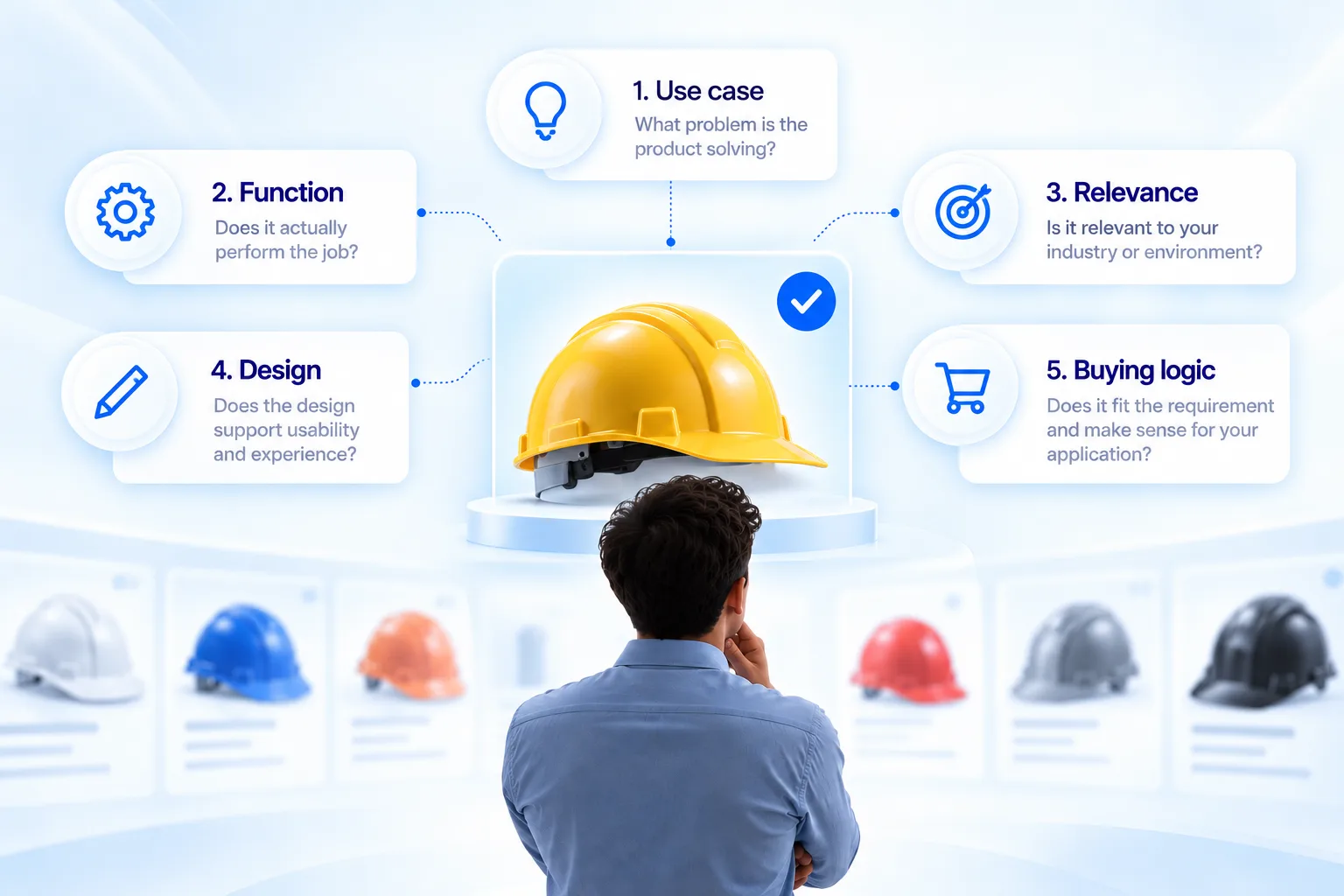
1. Use case
What problem is the product solving? If the use case is unclear, the product may never become genuinely useful.
2. Function
Does the product actually perform the job it is intended to perform? The more clearly the function connects to the buyer's requirement, the easier it becomes to evaluate.
3. Relevance
Is the product relevant to the particular industry, team, environment, or situation? A great product in the wrong context is still the wrong product.
4. Design
Design is not simply about appearance. Good design can influence usability, experience, practicality, and whether people actually want to use a product.
5. Buying logic
The final question is whether the product makes sense from the buyer's perspective. Does it fit the requirement? Does it make sense for the intended application? Does it justify further consideration? These factors create a much stronger foundation than simply asking which product appears first in a search result.
Product intelligence is a filtering process
The shift from product search to product intelligence can be understood as a sequence:
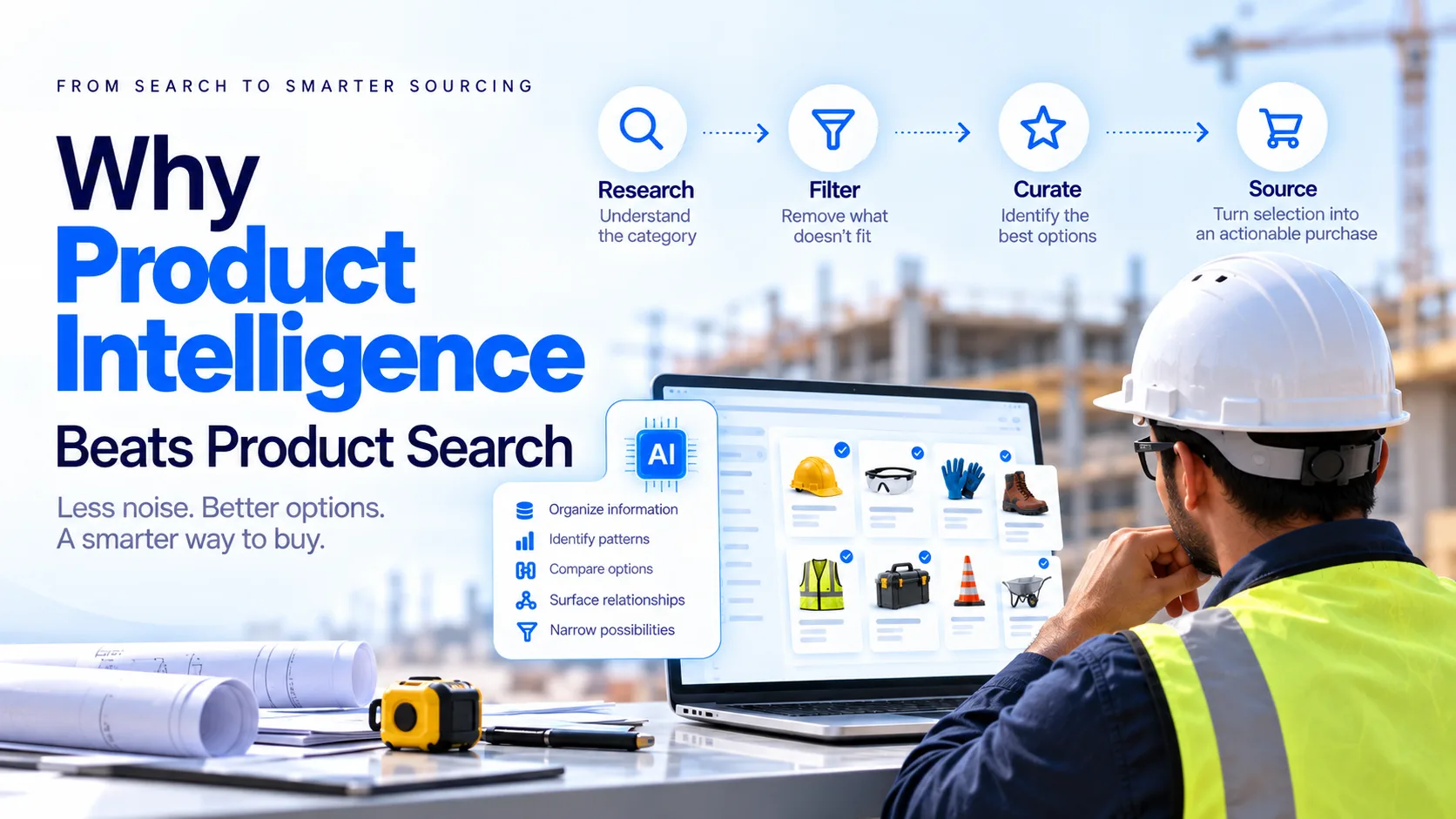
Research → Filter → Curate → Source
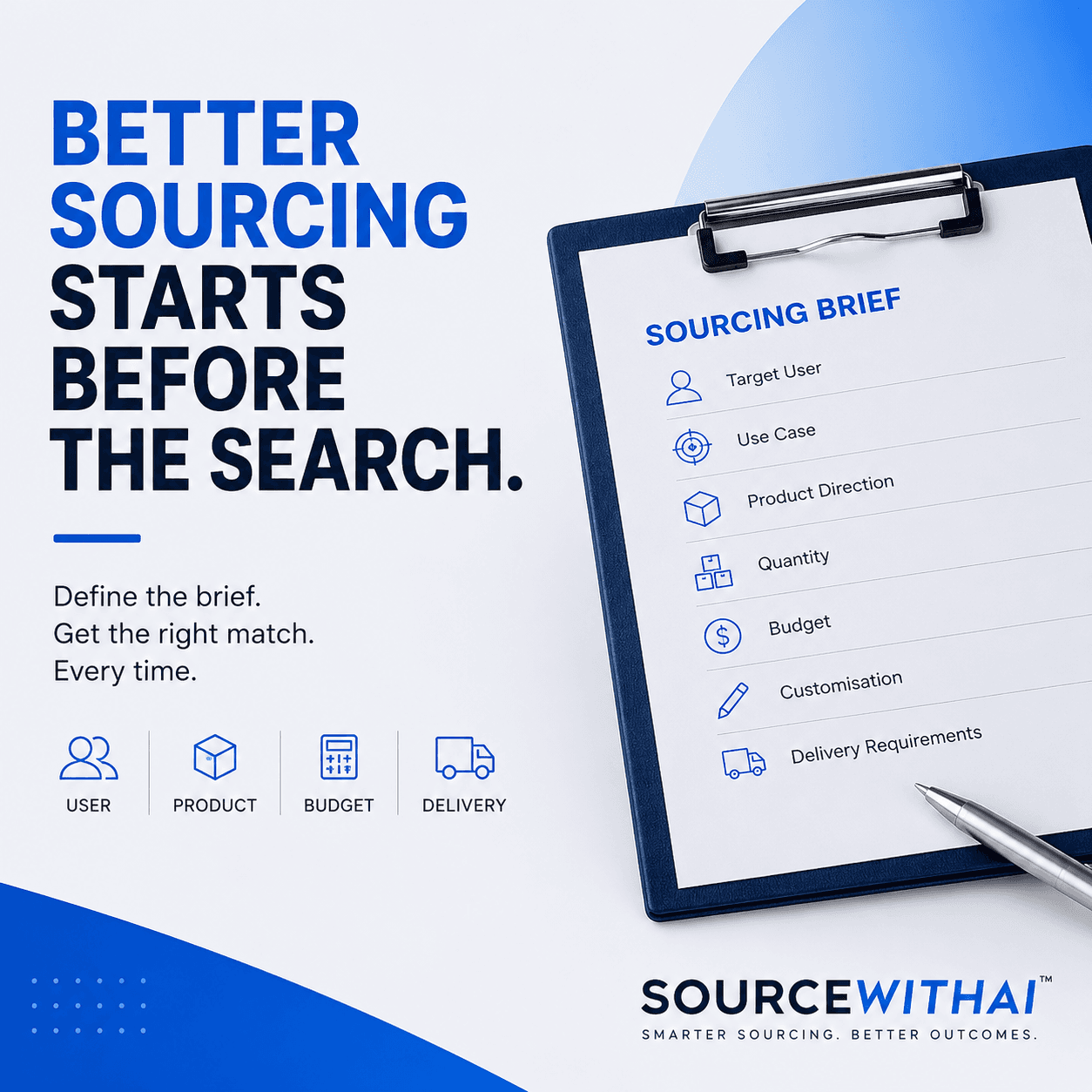
Research expands the understanding of a category. Filtering removes options that do not meet the relevant criteria. Curation identifies the products that deserve serious consideration. Sourcing turns those selected products into an actionable buying opportunity. The important part is that sourcing comes after the thinking.
Instead of starting with:
“What can we source?”
the process starts with:
“What should the buyer actually consider?”
That creates a fundamentally different experience.
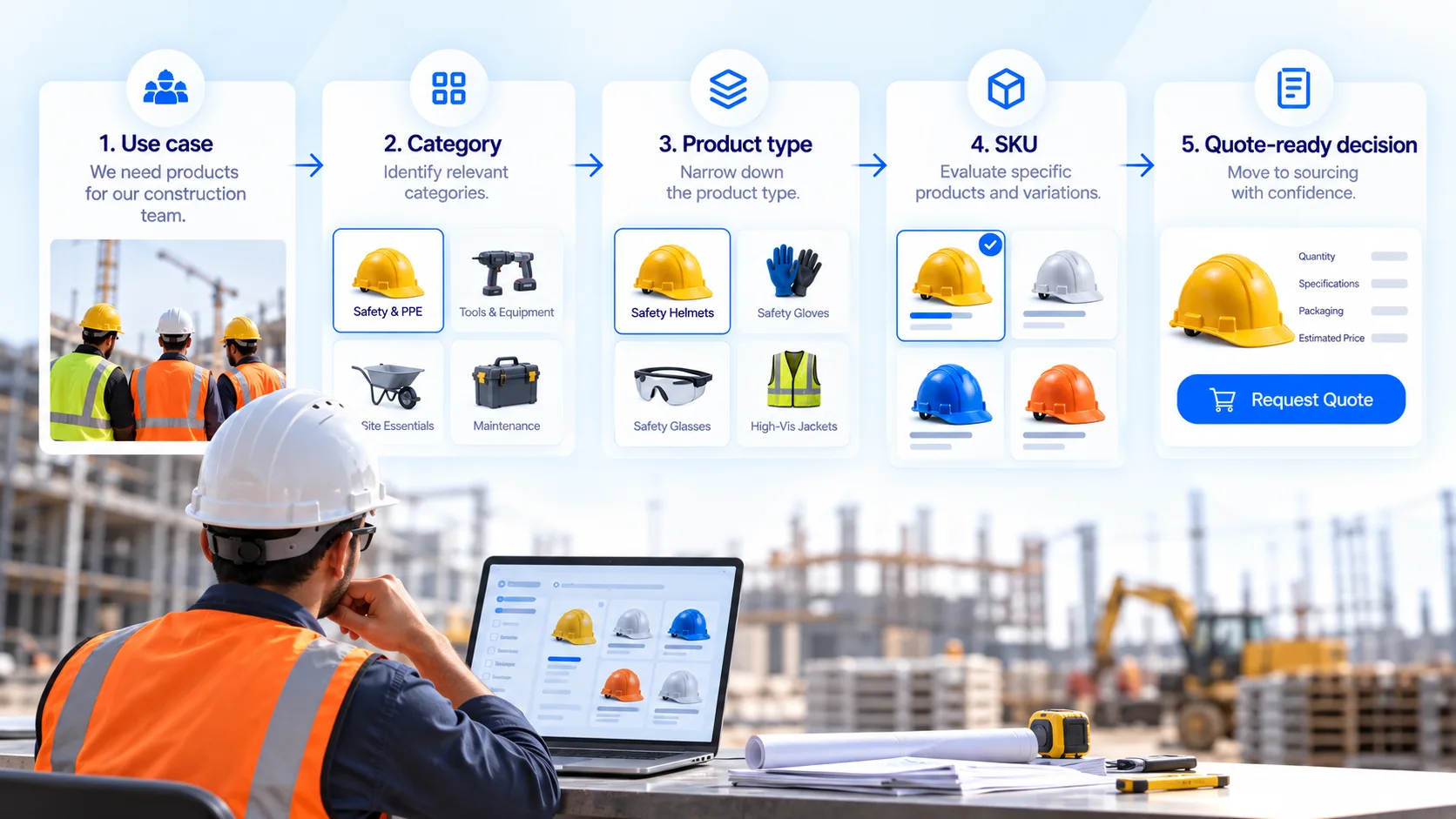
From category to SKU
One of the most important steps in this process is moving from a broad category to a specific product. A buyer might begin with a broad requirement such as: “We need products for our construction team.” That statement alone is not a product specification. The next step is understanding the actual use cases.
What does the team need?
What products are repeatedly used?
What problems occur in the working environment?
Which categories are relevant?
Once those questions become clearer, the product search becomes more focused. Instead of looking at everything, the buyer can move through a more deliberate path:
Use case → Category → Product type → SKU → Quote-ready decision
That is where product intelligence creates practical value. The buyer is not simply receiving a list. They are moving toward a decision.

Why curation matters more than ever
The internet has made product discovery incredibly easy. But discovery and selection are different skills. Anyone can search for a product. The harder work is deciding what deserves attention. This is especially important for businesses because buying decisions are rarely isolated. A product may eventually become part of a team requirement, a recurring purchase, a kit, an event, a workplace setup, or a broader supply program. A poor product decision can therefore create more than one bad purchase.
It can create repeated waste, unused inventory, unnecessary replacements, or products that simply fail to become part of the team's everyday workflow. Curation helps move the conversation from:
“What can we buy?”
to:
“What is actually worth buying?”
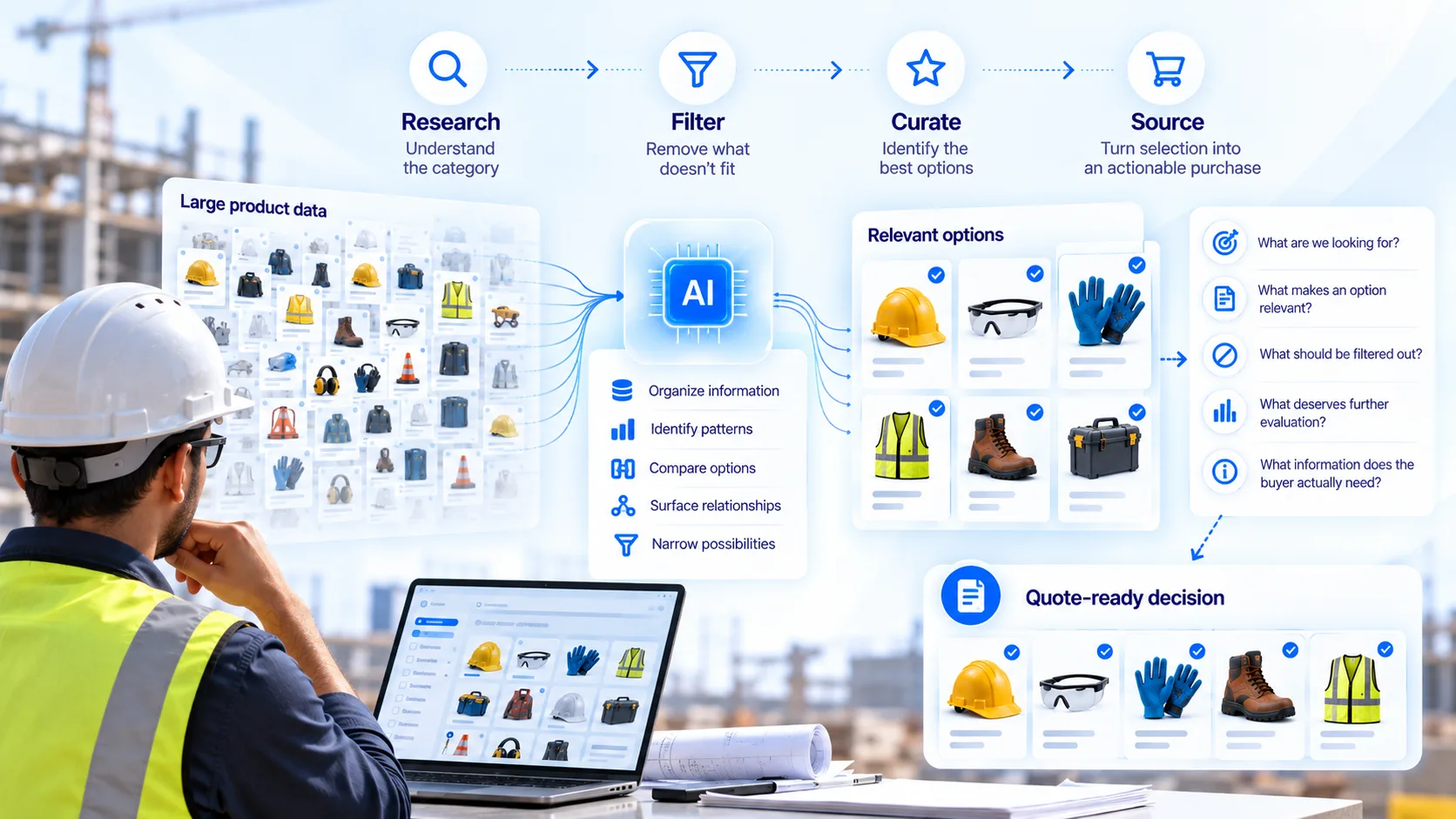
The role of AI in product intelligence
AI can make this process more useful not by replacing judgment, but by helping buyers work through information more efficiently. Large product categories contain enormous amounts of information.
AI can help organize research, identify patterns, compare relevant information, surface relationships between categories, and help narrow large sets of possibilities.
But technology alone does not create good product decisions. The important part is the framework behind the intelligence.
What are we looking for?
What makes an option relevant?
What should be filtered out?
What deserves further evaluation?
What information does the buyer actually need?
The combination of research, structured evaluation, human judgment, and sourcing capability is what makes product intelligence useful.
A better way to buy
The future of sourcing does not necessarily require buyers to see more. It may require them to see less—but better. Instead of presenting an overwhelming catalogue, imagine beginning with a curated set of products that have already been evaluated against the relevant use case. The buyer can then spend time making meaningful decisions instead of sorting through endless possibilities.
That creates a simpler path:
Understand the need.
Research the category.
Filter the options.
Curate the strongest candidates.
Source what makes the cut.
This is not about limiting choice for the sake of limiting choice. It is about making choice more useful.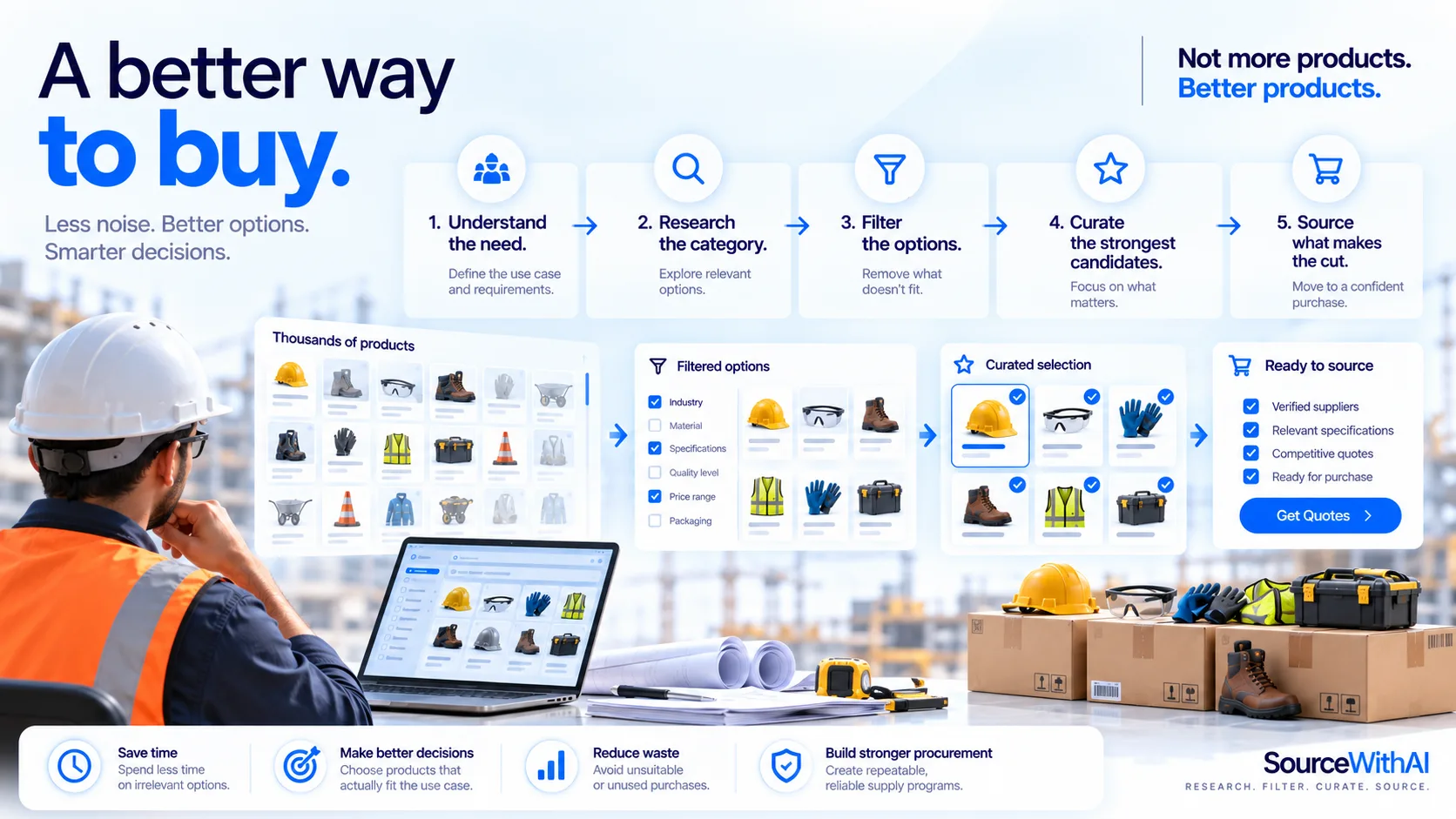
The next generation of sourcing
Product sourcing is changing because product discovery has changed. The advantage is no longer simply knowing where to find products. The advantage is knowing which products deserve to be found in the first place. That is the shift from product search to product intelligence.
At SourceWithAI, the idea is simple:
Buyers should not have to guess their way through thousands of products. Research should come first. Curation should create clarity. Sourcing should follow the decision. Because the goal isn't to give buyers more products to look at.
It is to help them find better products, make cleaner buying decisions, and spend less time on options that were never right for them.
Research. Filter. Curate. Source. That is a smarter way forward.
Written by
Admin
September 24, 2026 · 6 min read