
Your customer hasn’t touched your product yet. They haven’t seen the stitching, the finish or the colour.
What they’ve touched is the box.
That box decides whether they grab their phone and start filming, or rip it open over the bin. It decides whether your product arrives perfect or dented. And it can quietly decide how much you pay to ship it.
Here’s how to get custom packaging boxes right, without needing a degree in cardboard.
Why your box is doing more work than you think
A good custom box has four jobs:
Protect the product. Nothing kills a five-star review faster than a crushed corner.
Make a first impression. Opening the box is the first moment someone experiences your brand in real life.
Fit the product. Too big wastes material, needs more filler and can cost more to ship. Too small means damage.
Tell people who you are. Colour, print and finish say “premium”, “playful” or “practical” before anyone reads a word.
Pick the right box style
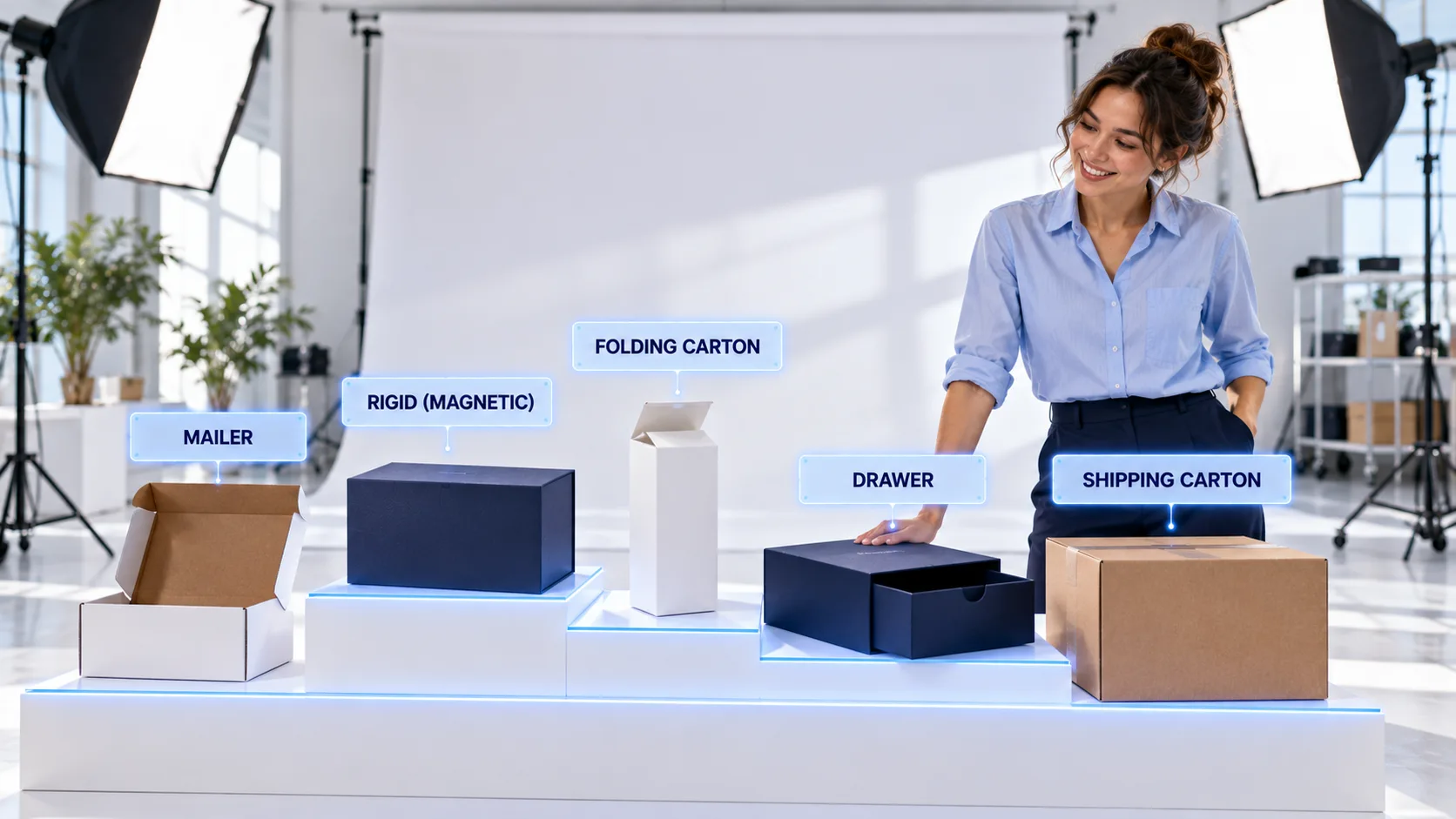
There are dozens of box styles, but most brands only need to know these five:
Mailer box. A folding box that ships on its own, with a lid that tucks in. Great for subscription boxes, apparel and direct-to-customer orders.
Rigid box. Thick, sturdy board wrapped in printed or textured paper. Think premium gift sets and launches. A magnetic closure version, like our Premium Gift Box, adds that satisfying snap when it closes.
Folding carton. Thinner board that folds flat, used for retail shelves: cosmetics, small electronics, food items.
Drawer (sleeve) box. A tray that slides out of a sleeve. Feels like a reveal, great for gifts and small accessories.
Shipping carton. The plain, strong outer box that protects everything else in transit. Not glamorous, but essential.
Not sure? Ask yourself two questions: will it ship on its own, and will it sit on a shelf? That usually narrows it to one or two styles.
Materials and finishes, in plain English
Board types
Corrugated board: the wavy middle layer makes it strong. Best for mailers and shipping.
Paperboard: thinner and smooth, great for printing. Best for folding cartons.
Rigid board: thick and stiff, doesn’t fold. Best for premium gift and presentation boxes.
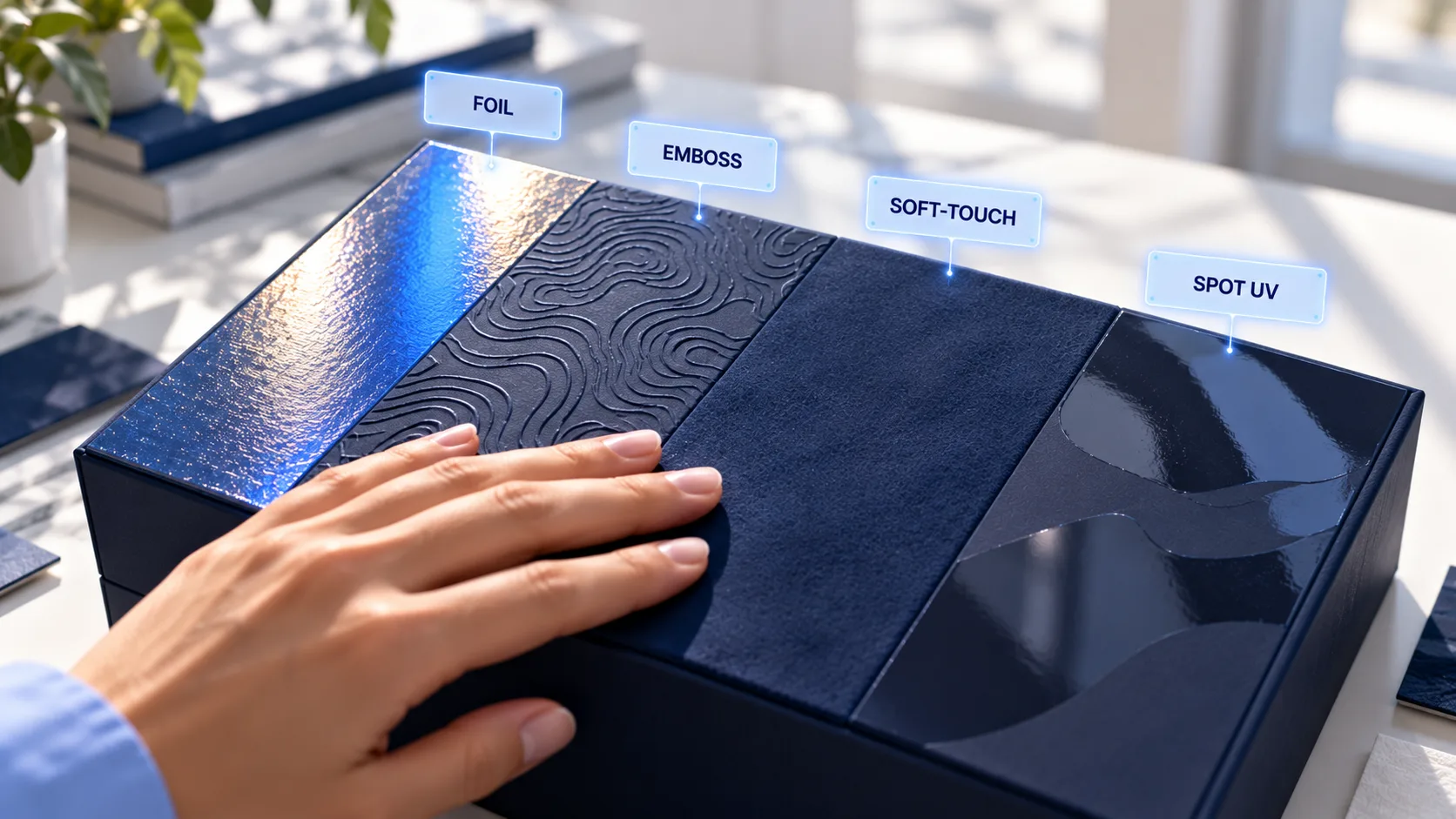
Finishes that change how a box feels
Matte or gloss lamination: matte feels calm and premium, gloss makes colours pop.
Soft-touch: a velvety coating that makes people want to keep holding the box.
Foil stamping: a metallic logo or detail that catches the light.
Embossing or debossing: a raised or pressed-in logo you can feel with your fingertips.
Spot UV: a shiny coating on just one area, like your logo, against a matte background.
One premium finish done well usually looks better than four fighting for attention.
If recyclability or recycled content matters to you, ask the factory for the material details and documentation in writing, rather than relying on a label.
What goes inside matters too
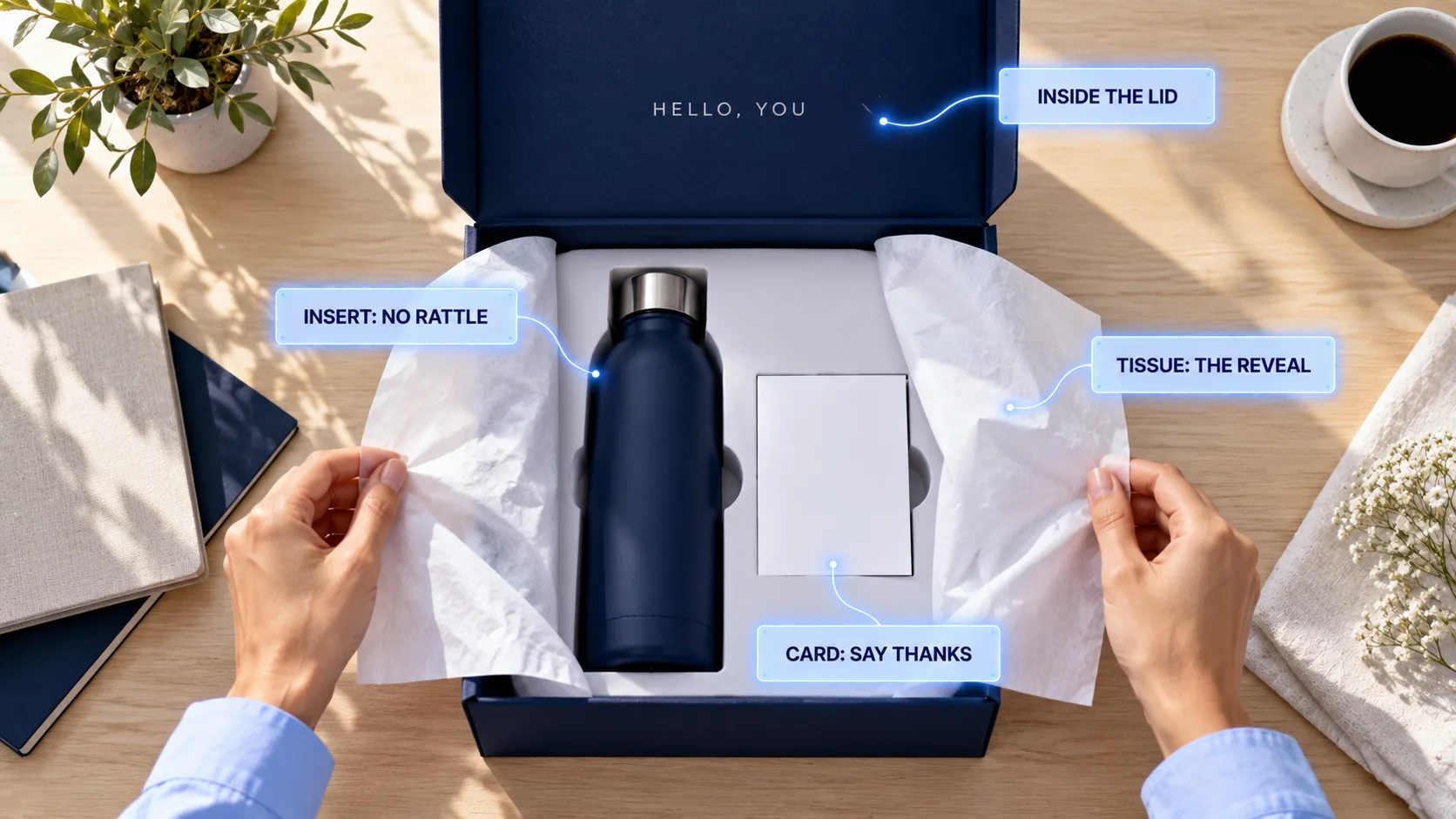
The inside is where the unboxing moment really happens:
Inserts hold the product in place, so it doesn’t rattle or break. They can be card, moulded pulp or foam, cut to your product’s shape.
Tissue paper or a wrap adds a layer of reveal.
A printed message inside the lid is a cheap way to surprise people.
An insert card can say thank you, explain how to use the product, or point people to your reorder page.
How to brief a packaging factory
A clear brief gets you an accurate quote the first time. Include:
Product dimensions and weight, measured including any protective wrap. Ask for the box’s inner dimensions to fit.
Box style and how it closes.
Material and thickness, or tell the factory what it needs to survive (shipping alone, stacking on a shelf, being gifted).
Print: how many colours, inside and outside, and your artwork files.
Finishes: foil, emboss, soft-touch, spot UV, and exactly where.
Inserts: what goes inside and how it should hold the product.
Quantity, plus your likely reorder quantity. Packaging often has its own minimum order, separate from the product.
Delivery: where it’s going and whether it ships flat or assembled.
Ask for a dieline, the flat template of your box, before you finalise artwork. Then approve a physical sample before bulk production. For more on writing briefs that get better quotes, see Why Better Sourcing Starts Before the Supplier Search.

5 packaging mistakes that crush budgets (and products)
Measuring the product, not the product plus wrap. Then nothing fits.
Designing artwork before getting the dieline. Logos end up on folds and flaps.
Picking a box that’s far bigger than the product. More filler, more damage and often higher shipping.
Skipping the physical sample. Colours on screen and colours on board are not the same.
Ordering packaging last. If the product is ready and the boxes aren’t, nothing ships.
Quick answers to common questions
What are custom packaging boxes? Boxes made to your product’s size and your brand’s design, with your choice of style, material, print and finish.
What’s the difference between a mailer box and a rigid box? A mailer box is made from foldable corrugated board and can ship on its own. A rigid box is made from thick board that doesn’t fold, and it’s used for premium presentation and gifting.
How do I get custom boxes with my logo? Brief a packaging manufacturer with your product size, box style, material, print, finishes and quantity. Get a dieline, place your artwork on it, then approve a physical sample.
Is there a minimum order for custom boxes? Usually, yes. Packaging often has its own minimum order quantity, which can change with the size, print and finish you choose.
What’s a dieline? It’s the flat, unfolded template of your box, showing every panel, fold and cut line. Designers place artwork on it so everything lines up when the box is folded.
The bottom line
Your box is your product’s first impression, its bodyguard and its billboard. Pick the right style, keep the finishes focused, design on the dieline and always sample before you scale. Get it right, and your customers will do the marketing for you, one unboxing video at a time.
Want packaging that gets filmed, not binned? Send us your product details and target quantity, and we’ll help you source custom boxes that fit.
Written by
Sourcewithai
October 24, 2026 · 5 min read