
Global sourcing has transformed the way businesses manufacture and scale. Today, companies can work with factories across continents, access suppliers through online marketplaces, and ship products worldwide faster than ever before. But while sourcing has become more accessible, it has also become significantly more complex and risky.
Choosing the wrong supplier or factory is no longer just an inconvenience it can lead to delayed product launches, lost revenue, compliance issues, and damaged brand reputation. In 2026, supplier due diligence has evolved into an end-to-end process that spans suppliers, factories, production timelines, and shipping logistics.
This is where AI supplier due diligence is reshaping global sourcing by helping businesses identify risks early and make smarter decisions across the entire supply chain.
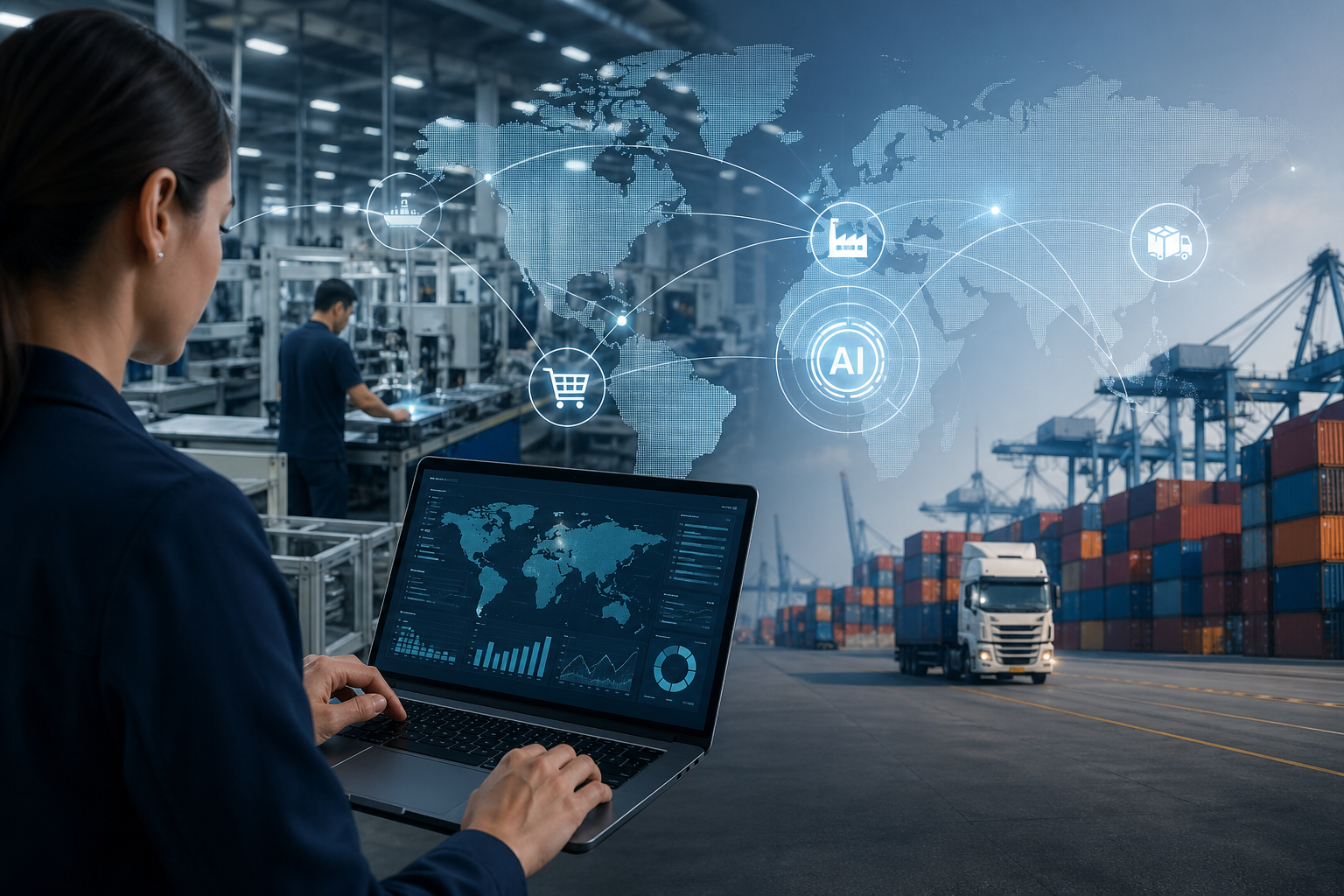
Why Supplier Due Diligence Is More Critical Than Ever
Modern supply chains are deeply interconnected. A single product may involve raw material suppliers, component manufacturers, assembly factories, freight forwarders, and customs brokers across multiple countries.
With so many moving parts, one weak link can disrupt the entire process.
Businesses today face increasing risks such as:
Fake suppliers and trading companies posing as factories
Factories that cannot meet production capacity or quality standards
Compliance and certification issues that lead to customs delays
Shipping disruptions caused by port congestion or geopolitical events
Sudden supplier shutdowns or financial instability
Due diligence is no longer just about verifying a supplier’s website or requesting documents. It now requires a complete view of the sourcing journey from the factory floor to final delivery.
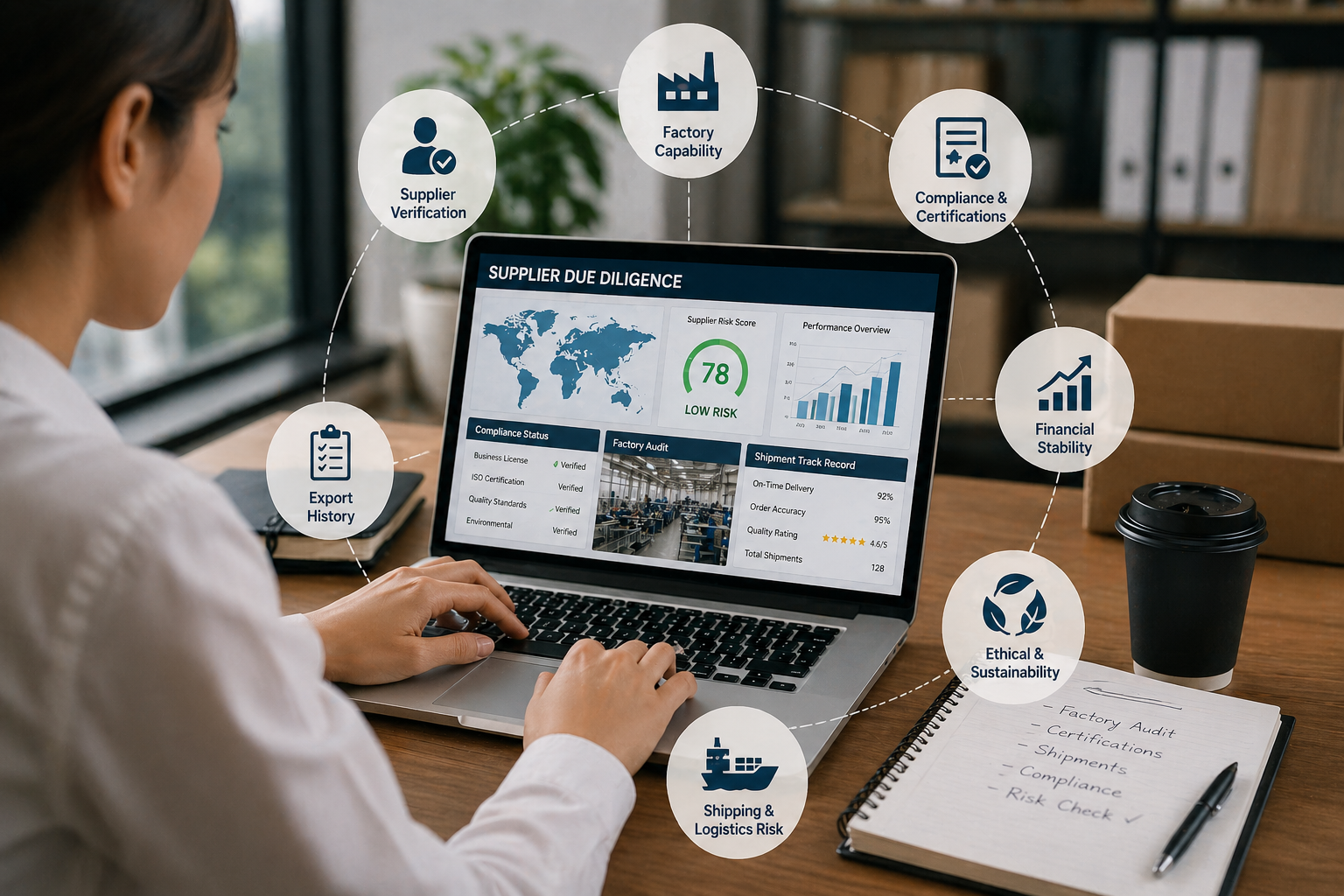
What Supplier Due Diligence Means in 2026
Supplier due diligence today includes a much broader scope than in the past. It involves evaluating every stage of the sourcing process to ensure reliability and reduce risk.
Key areas of modern due diligence include:
Supplier identity and registration verification
Factory capability and production capacity checks
Export history and past shipment analysis
Compliance and certification validation
Financial stability assessment
Ethical and sustainability verification
Shipping and logistics risk analysis
This shift reflects a simple reality: sourcing risk does not start and end with the supplier it exists throughout the entire supply chain.
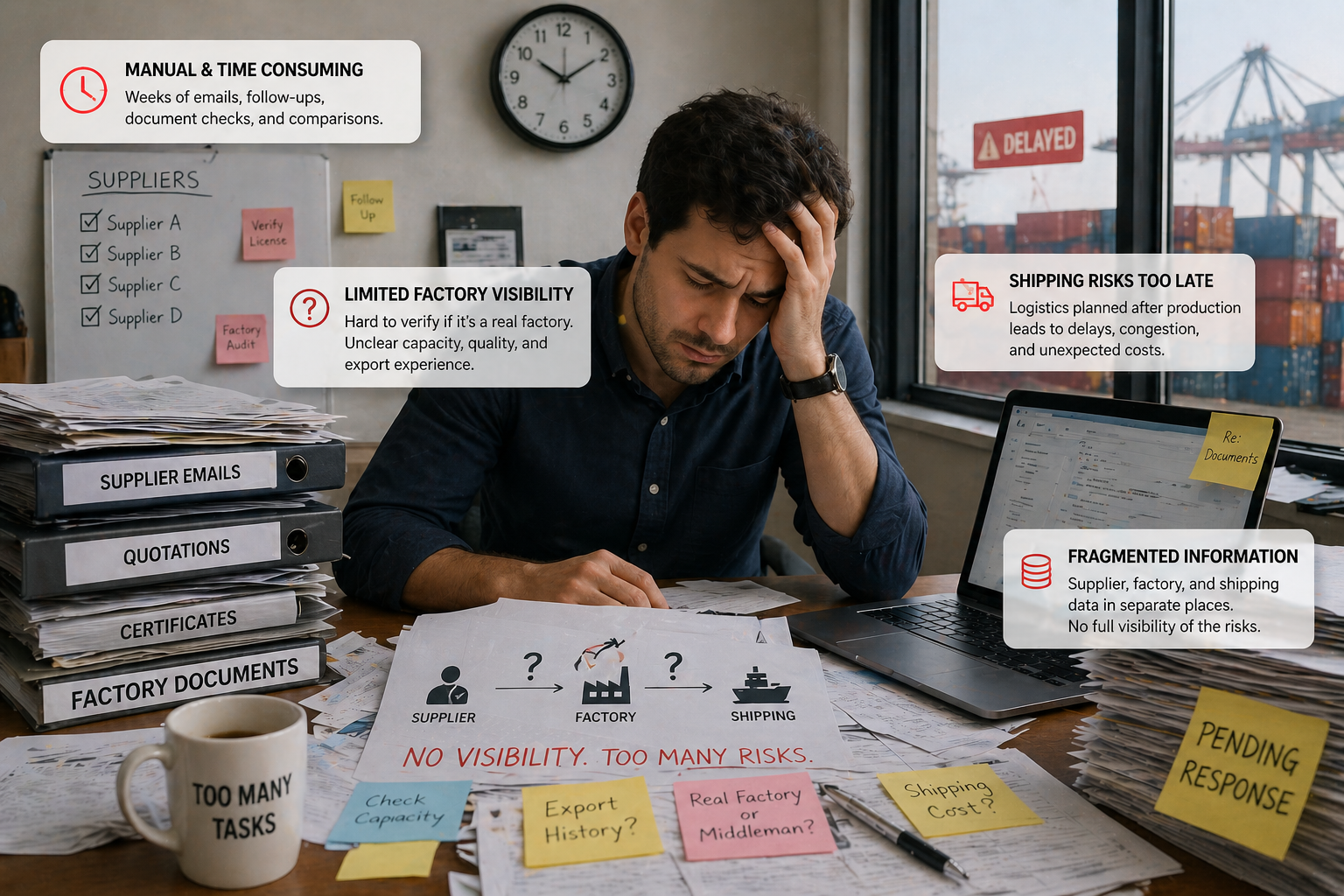
Why Traditional Due Diligence No Longer Works
Despite the increasing complexity of global sourcing, many businesses still rely on manual research and outdated processes.
Manual Supplier Vetting Is Too Slow
Procurement teams often spend weeks emailing suppliers, comparing quotes, verifying documents, and searching through trade directories. This slows down product development and delays market entry.
Limited Factory Visibility
Many businesses struggle to confirm whether they are dealing with a real factory or a middleman. Without reliable data, it is difficult to assess production capacity, quality standards, or export experience.
Shipping Risks Are Addressed Too Late
Logistics planning frequently begins only after production is completed. By then, shipping delays, port congestion, or rising freight costs can derail timelines and budgets.
Fragmented Information Across the Supply Chain
Supplier data, factory data, and shipping data are often stored in separate systems. This lack of integration makes it difficult to see the full risk picture.
These challenges have created a need for a smarter, faster, and more connected approach.
How AI Transforms Supplier, Factory, and Shipping Due Diligence
Artificial intelligence is revolutionizing sourcing by automating research, consolidating data, and providing predictive insights across the entire supply chain.
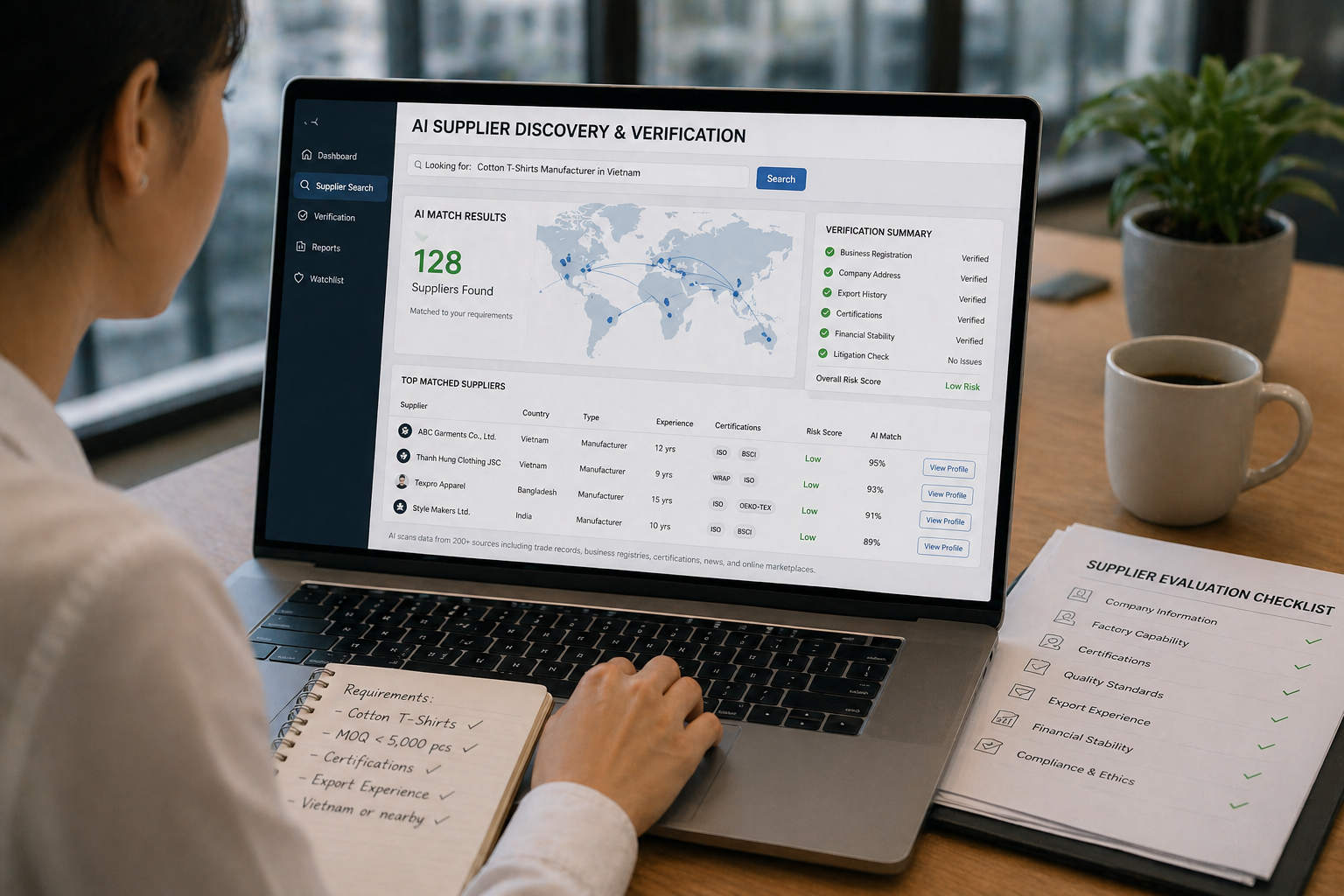
AI Supplier Discovery and Verification
AI tools can scan global supplier databases, trade records, and online marketplaces within minutes. Instead of manually searching, businesses receive curated lists of verified suppliers that match their requirements.
AI also cross-checks supplier information across multiple data sources, reducing the risk of fraud and misrepresentation.
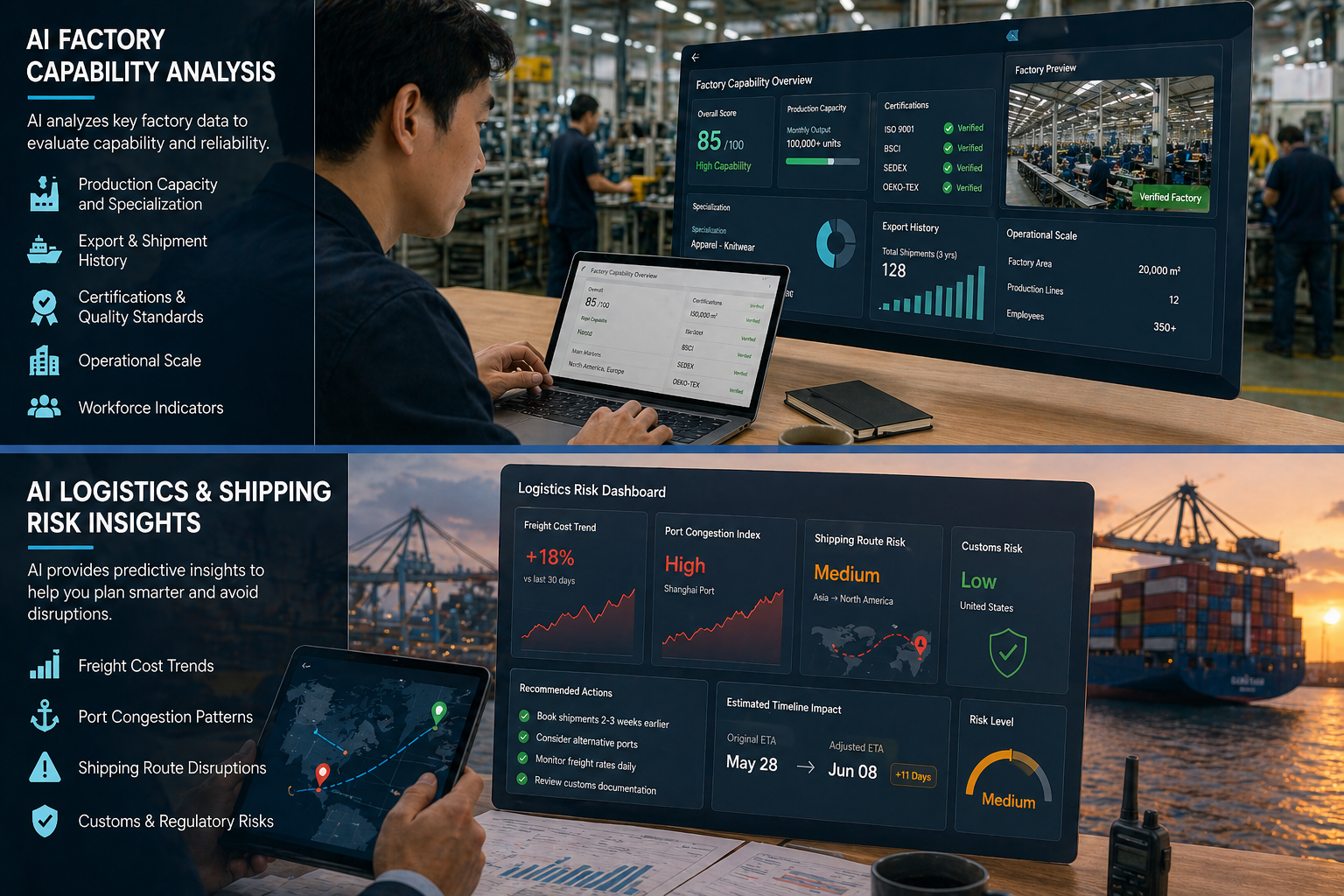
AI Factory Capability Analysis
Understanding factory capabilities is essential for successful sourcing. AI can analyze:
Production capacity and specialization
Export and shipment history
Certifications and quality standards
Operational scale and workforce indicators
This helps businesses confirm whether a factory can meet production expectations before placing an order.
AI Logistics and Shipping Risk Insights
Shipping is one of the most unpredictable stages of global sourcing. AI helps businesses plan ahead by analyzing:
Freight cost trends
Port congestion patterns
Shipping route disruptions
Customs and regulatory risks
By integrating logistics insights early, businesses can align production schedules with realistic shipping timelines.
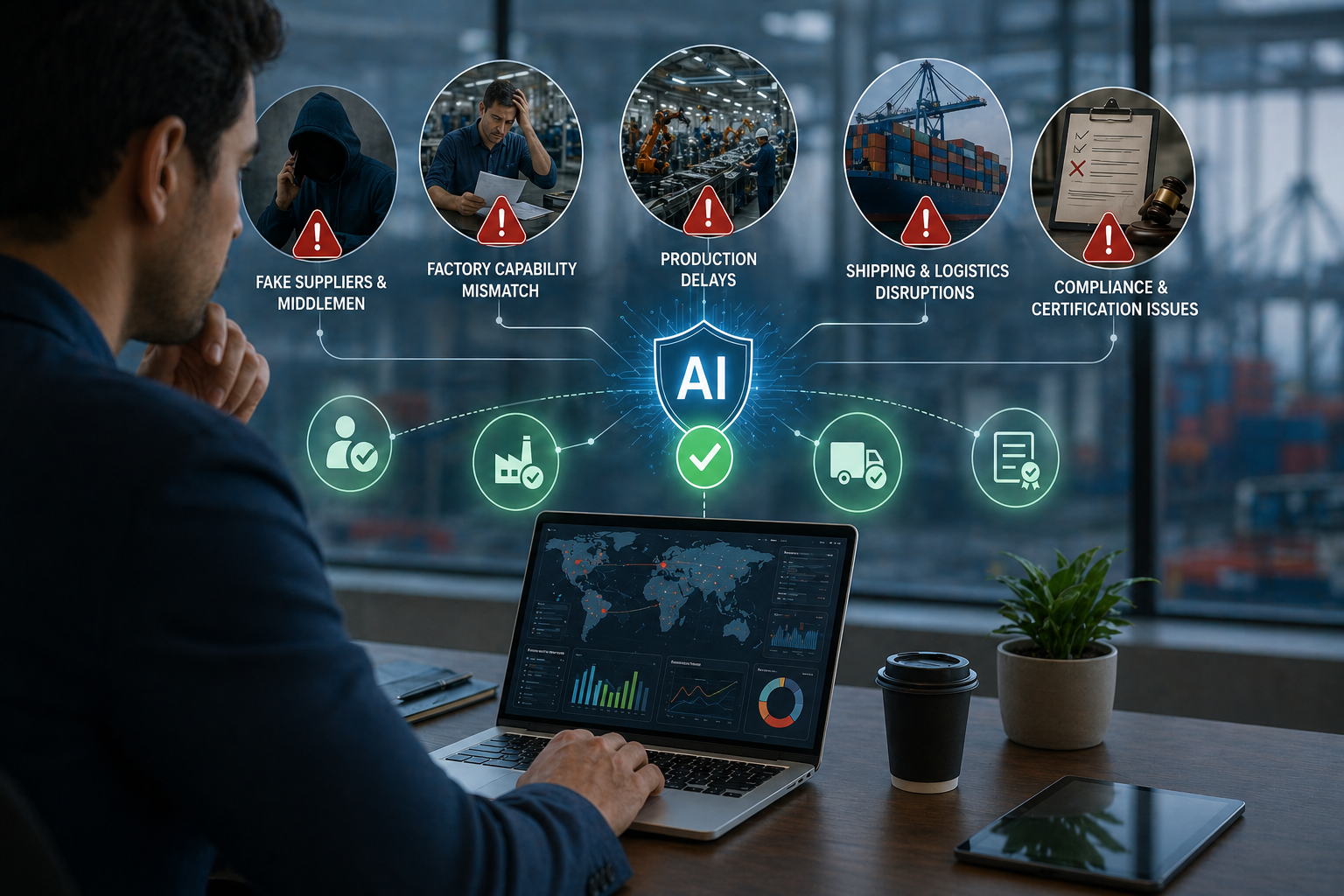
Major Global Sourcing Risks And How AI Reduces Them
Fake Suppliers and Middlemen
One of the biggest risks in sourcing is working with trading companies that present themselves as manufacturers. This can result in higher costs, communication issues, and reduced quality control.
AI verifies supplier legitimacy by cross-checking registrations, export records, and digital footprints across multiple databases.
Factory Capability Mismatch
A supplier may appear capable on paper but lack the capacity to meet large orders or strict quality requirements.
AI analyzes production history and shipment data to assess whether factories have successfully fulfilled similar orders in the past.
Production Delays
Production delays often lead to missed shipping windows and lost sales opportunities.
AI uses predictive analytics to identify potential delays based on supplier performance, seasonal demand, and market conditions.
Shipping and Logistics Disruptions
Port congestion, freight price spikes, and customs delays can significantly impact delivery timelines.
AI monitors global shipping trends and provides early warnings about potential disruptions.
Compliance and Certification Issues
Working with non-compliant suppliers can lead to customs holds, fines, or product recalls.
AI automates certification validation and monitors regulatory databases to ensure compliance.
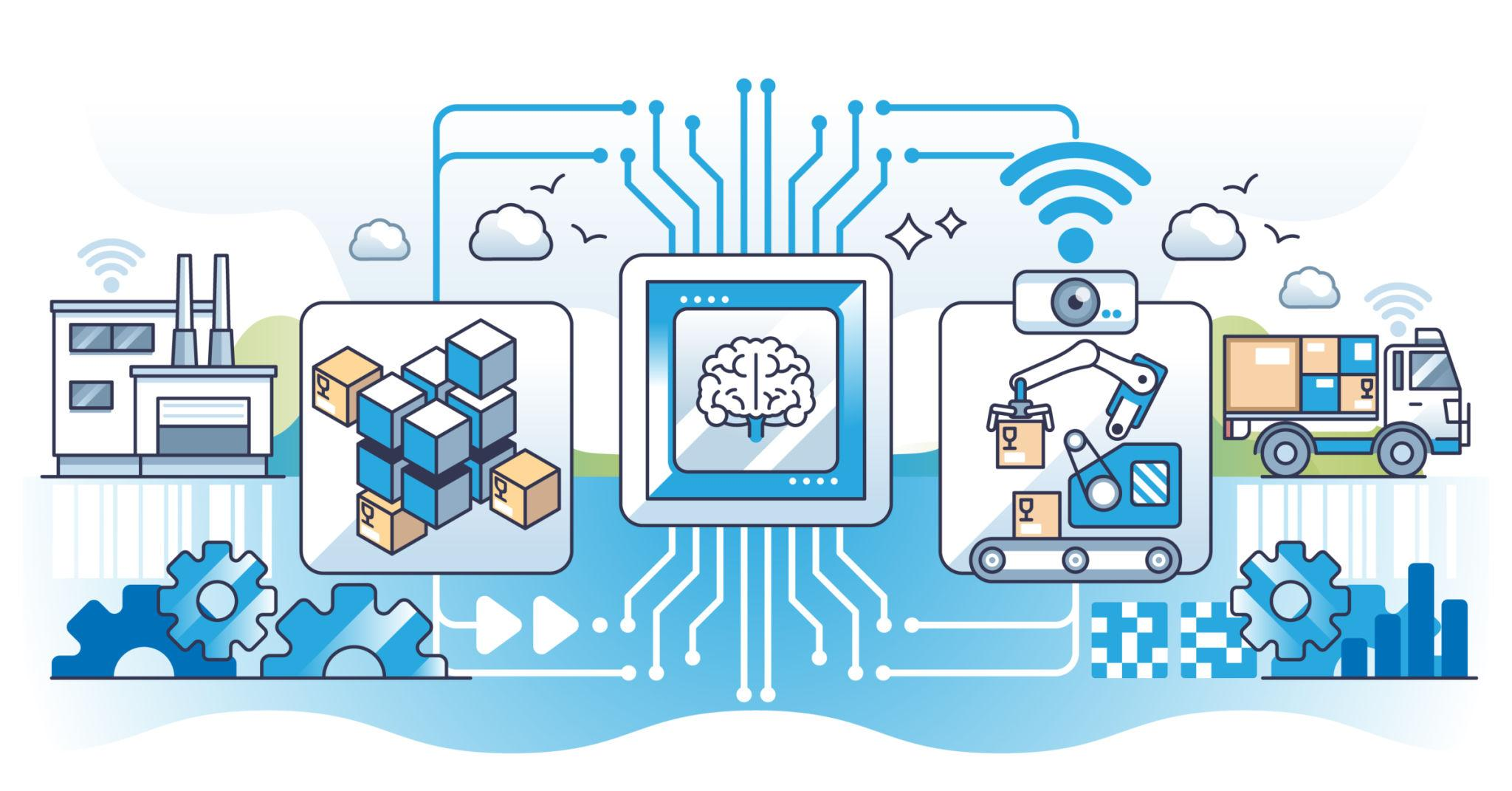
The AI Workflow: From Factory Discovery to Final Delivery
AI supplier due diligence supports every stage of the sourcing lifecycle.
Define sourcing requirements and product specifications
AI discovers and verifies potential suppliers and factories
Automated risk scoring and supplier shortlisting
Factory capability and export history analysis
Shipping and logistics risk forecasting
Supplier selection and negotiation
Continuous monitoring during production and shipping
This workflow combines the speed of AI with the strategic decision-making of human sourcing teams.
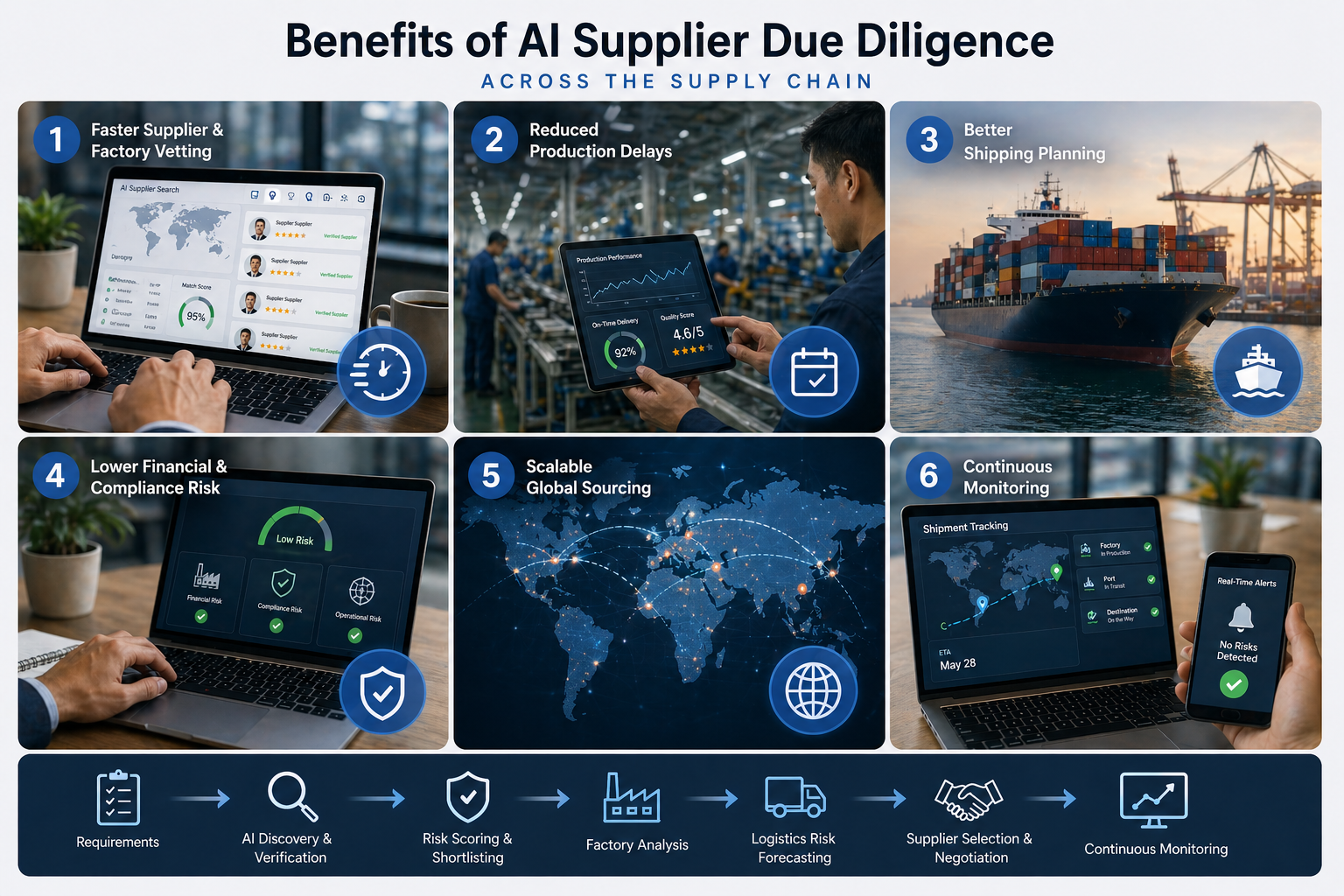
Benefits of AI Supplier Due Diligence Across the Supply Chain
Faster Supplier and Factory Vetting
Research that once took weeks can now be completed in hours, accelerating product development and time to market.
Reduced Production Delays
Predictive insights help businesses plan production timelines more accurately and avoid costly setbacks.
Better Shipping Planning
By integrating logistics insights early, companies can choose the best shipping methods and routes.
Lower Financial and Compliance Risk
Early risk detection prevents expensive mistakes and protects business investments.
Scalable Global Sourcing
AI enables businesses to evaluate hundreds of suppliers simultaneously, making it easier to expand into new markets.
Continuous Monitoring
Supplier and logistics risks are tracked even after onboarding, ensuring ongoing reliability.
 Real-World Applications
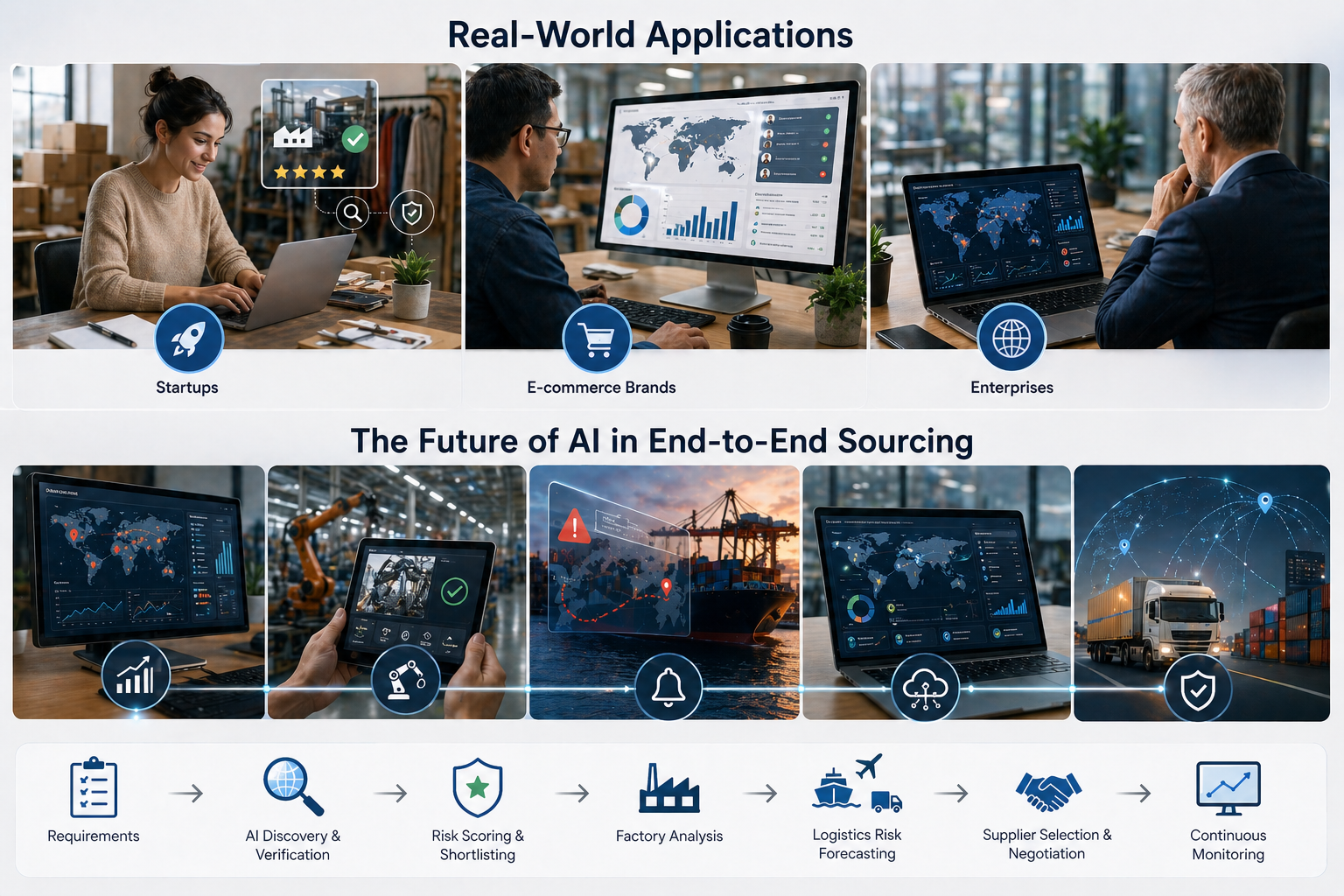
Startups Launching New Products
Startups often lack large procurement teams but need reliable manufacturers quickly. AI enables them to perform enterprise-level due diligence with limited resources.
E-commerce Brands Scaling Globally
Fast-growing brands require multiple suppliers and consistent shipping timelines. AI helps them scale sourcing safely and efficiently.
Enterprises Diversifying Supply Chains
Large organizations expanding into new regions need automated due diligence to manage risk across multiple suppliers and logistics partners.
The Future of AI in End-to-End Sourcing
The role of AI in supplier due diligence is only beginning. In the coming years, we can expect:
Real-time supply chain risk dashboards
AI-powered factory audits
Predictive alerts for shipping disruptions
Fully integrated sourcing intelligence platforms
Businesses that adopt AI early will gain a significant competitive advantage in building resilient supply chains.
 How SourcewithAI Supports Safer Global Sourcing
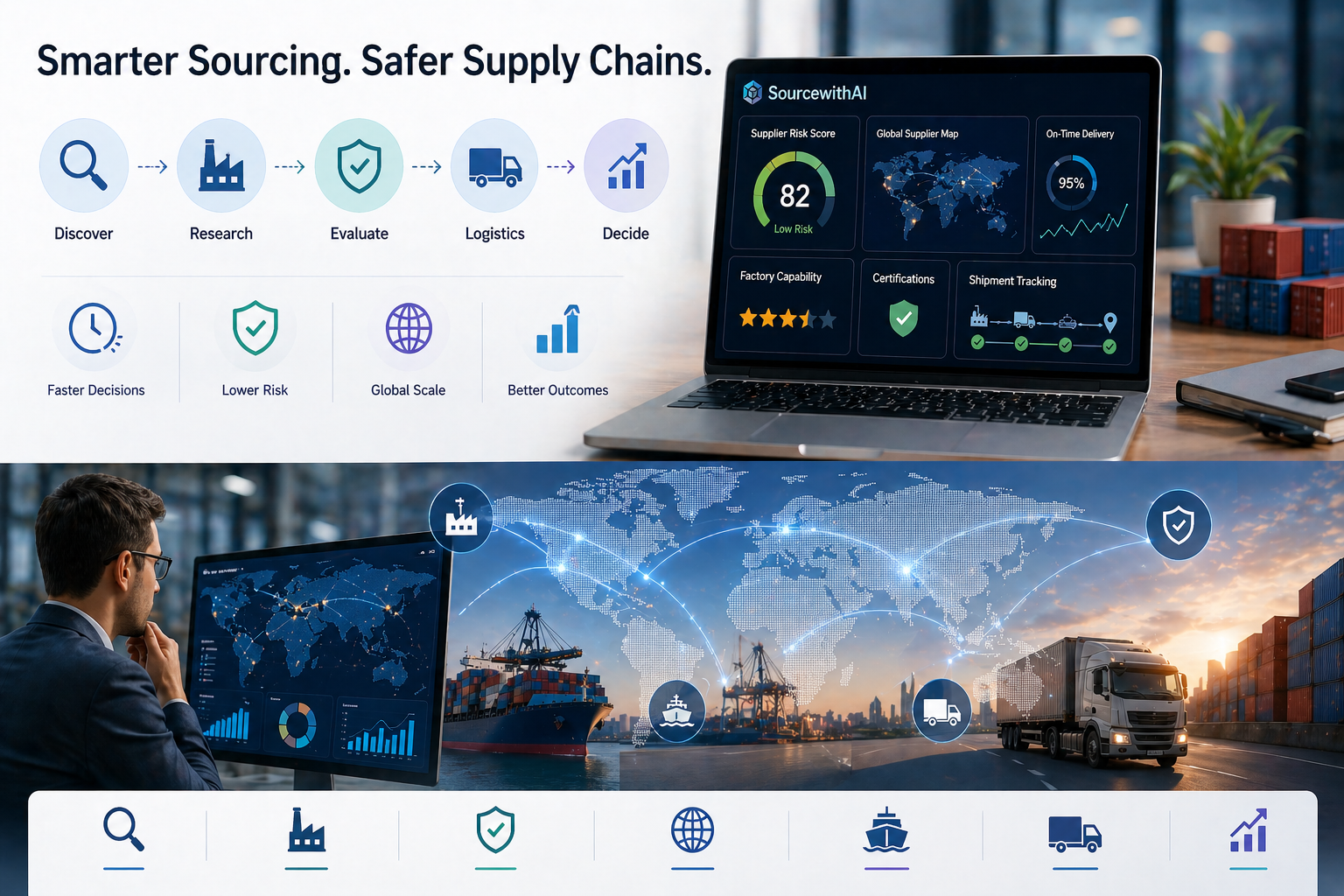
As sourcing becomes more complex, businesses need tools that can simplify research and reduce risk. SourcewithAI is working to help companies streamline supplier discovery, factory research, and supply chain intelligence using AI-powered workflows.
Instead of spending weeks manually gathering information, businesses can access structured insights, automated data aggregation, and faster supplier evaluation. By combining AI capabilities with sourcing expertise, SourcewithAI helps companies make better decisions, reduce risk, and accelerate global sourcing.
Learn more at www.sourcewithai.com.
Conclusion
Supplier due diligence now extends far beyond verifying a supplier’s credentials. It includes evaluating factories, production timelines, and shipping risks across the entire sourcing journey.
AI supplier due diligence provides a faster, smarter, and more proactive approach to managing global sourcing risks. By automating research, predicting disruptions, and providing end-to-end visibility, AI empowers businesses to build stronger and more resilient supply chains.
In the future of global sourcing, companies that embrace AI will not only reduce risk they will gain the confidence to scale faster and compete globally.
Written by
Eva Liu
April 30, 2026 · 6 min read