The World Cup is not just a football tournament. It is one of the most commercially potent moments in the global calendar a six-week window where brands, hotels, corporate sponsors, event organisers, and retailers compete for the attention of billions of emotionally charged fans. And right at the centre of that commercial opportunity sits one product category that keeps showing up: the fan gift kit.
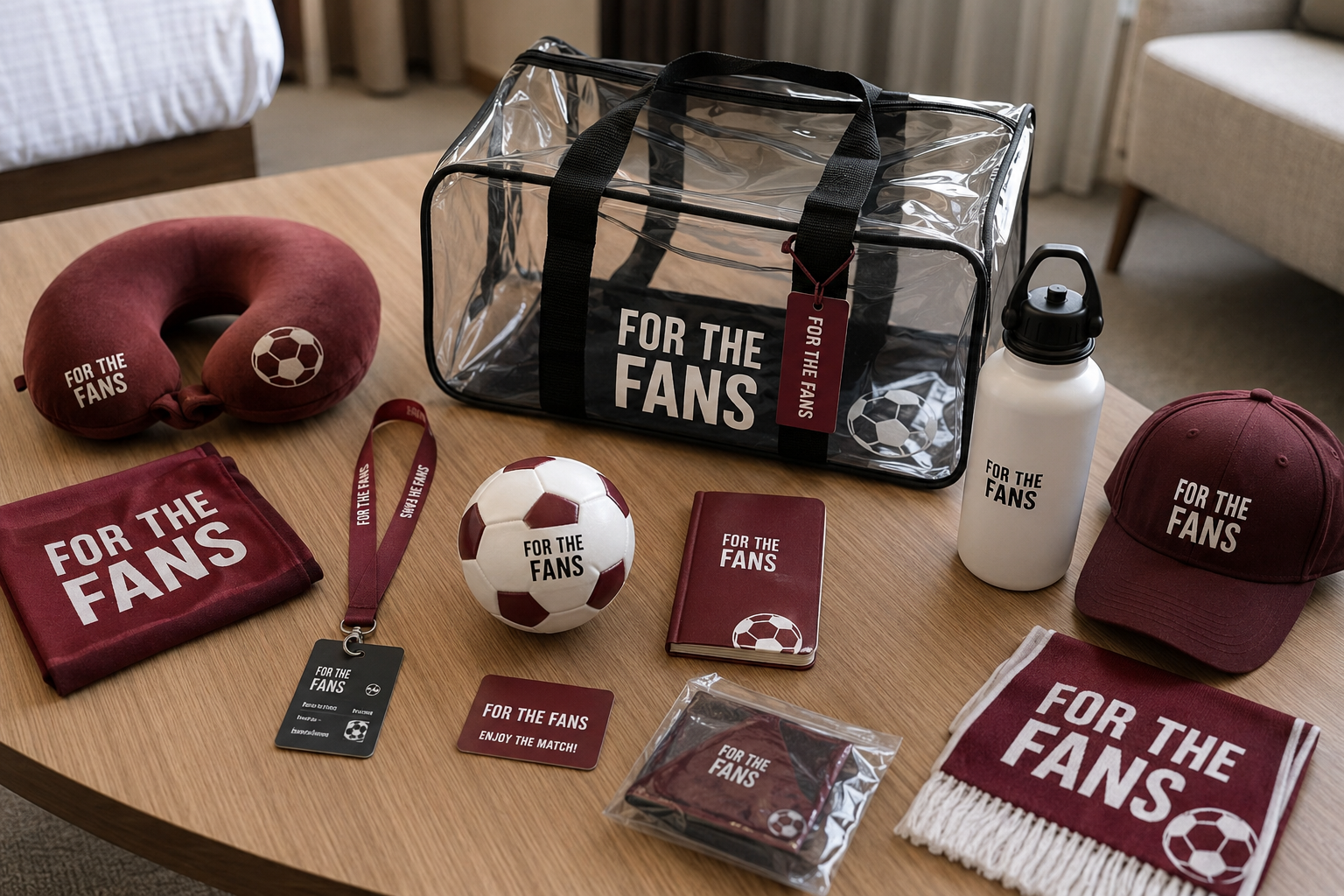
You've seen them. The hotel room drop before a big match. The welcome pack at a brand activation. The corporate hospitality gift. A clear bag, a scarf in country colours, a mini football, a lanyard, a neck pillow everything customised, everything on-theme, everything designed to make the recipient feel like they're part of something bigger than themselves.
The brands that do these kits well create moments that get photographed, shared, and remembered. The brands that do them poorly end up with a warehouse of mismatched items that arrived late, off-colour, and over budget.
The difference is almost always sourcing. Here is the roadmap.
Step 1: Define the Kit Before You Source a Single Item
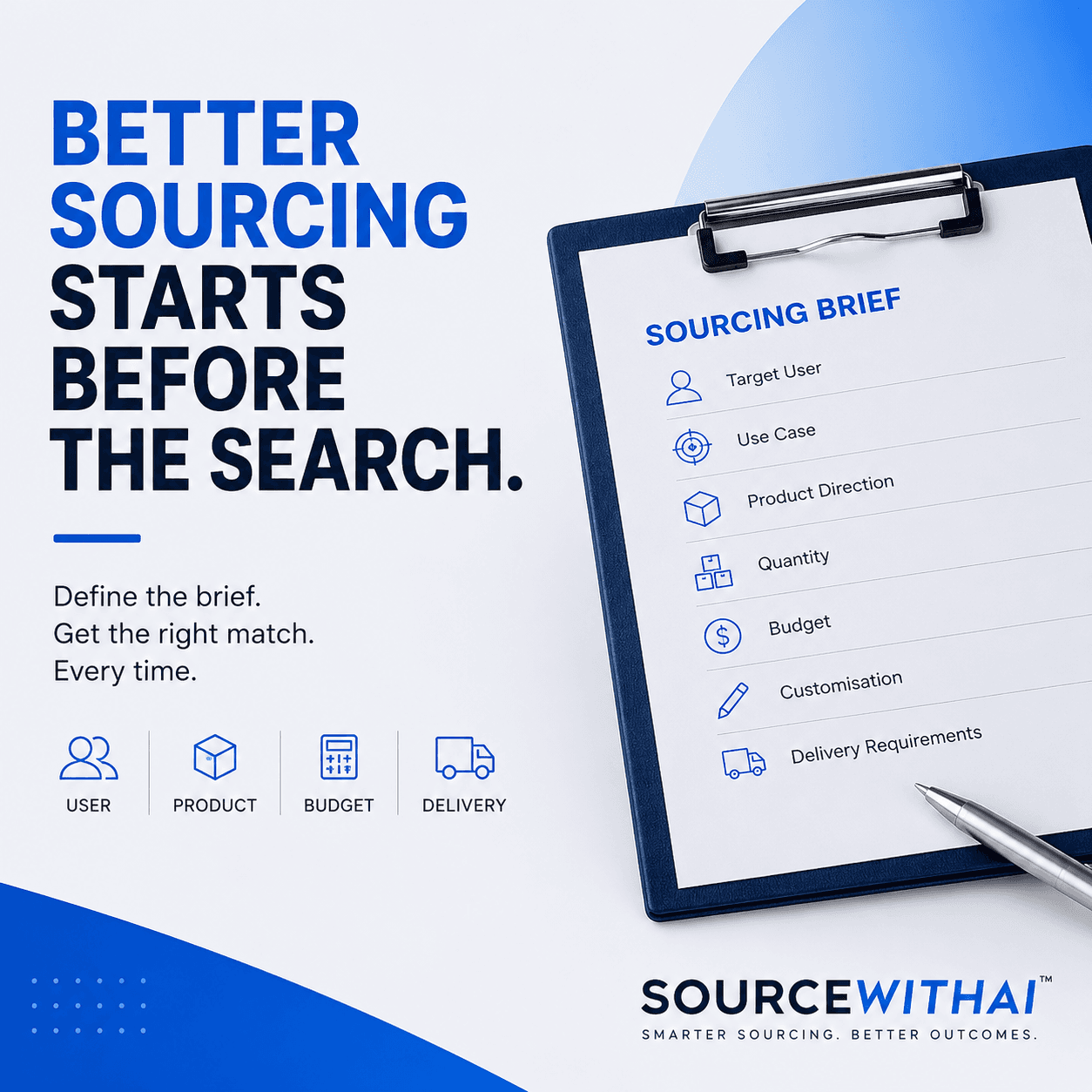
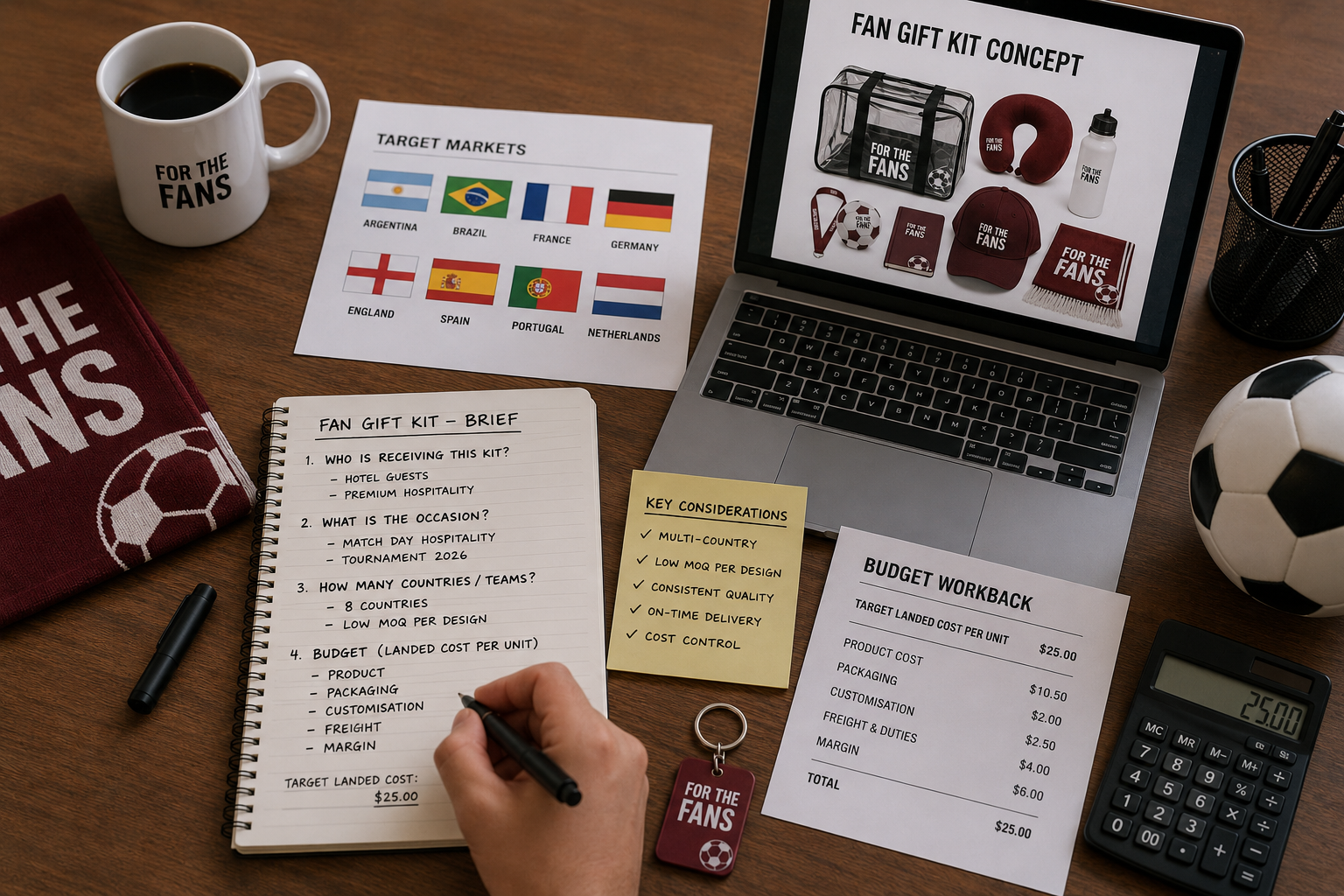
The most common mistake in building a fan gift kit is starting with products instead of purpose. Before you contact a single supplier, you need to be clear on four things.
Who is receiving this kit? A hotel room drop for premium hospitality guests has completely different requirements from a fan pack handed out at a public activation. The former demands premium materials, refined packaging, and thoughtful personalisation. The latter prioritises volume, durability, and visual impact at a distance.
What is the occasion? Match day hospitality, a brand launch tied to the tournament, a corporate client gift, a retail product each context shapes every sourcing decision that follows, from product selection to packaging spec to delivery timeline.
How many countries or teams are you covering? This is where most first-time kit builders underestimate the complexity. A single-team kit with one colourway is a straightforward sourcing exercise. A multi-country kit with different scarves, different colour schemes, different design elements per nation is a completely different challenge. Low MOQ per design, multiple SKUs, and custom elements across all of them is exactly where most factories say no, or where pricing spirals.
What is your per-unit budget, and what does that need to include product, packaging, customisation, freight, and margin? Working backwards from a landed cost target is the discipline that saves most kit projects from going over budget.
Step 2: Build Your Product List Around the Kit's Story
A great fan gift kit has a logic to it. Every item earns its place. The best kits tell a coherent story they feel curated, not assembled. Build your product list with that in mind.
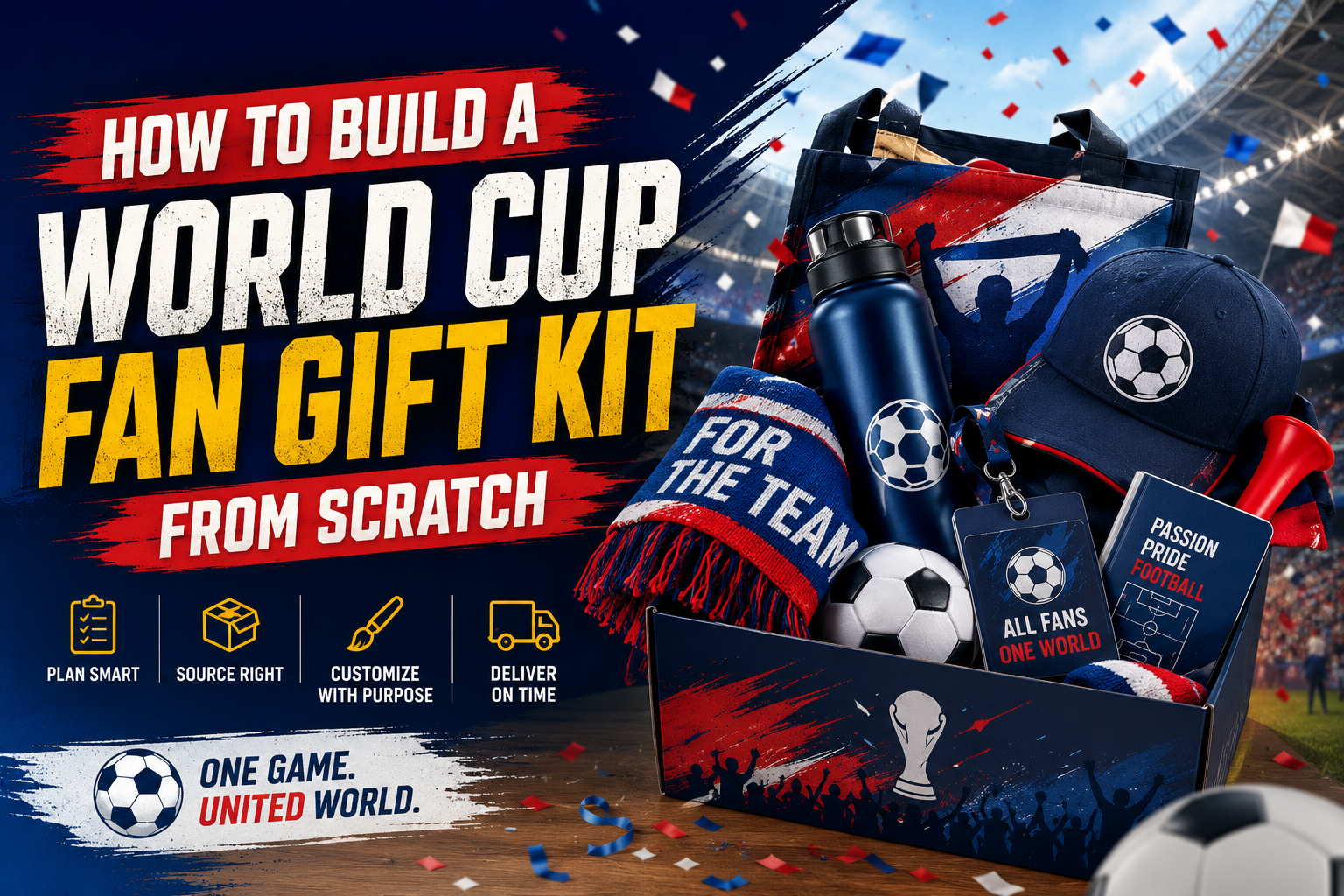
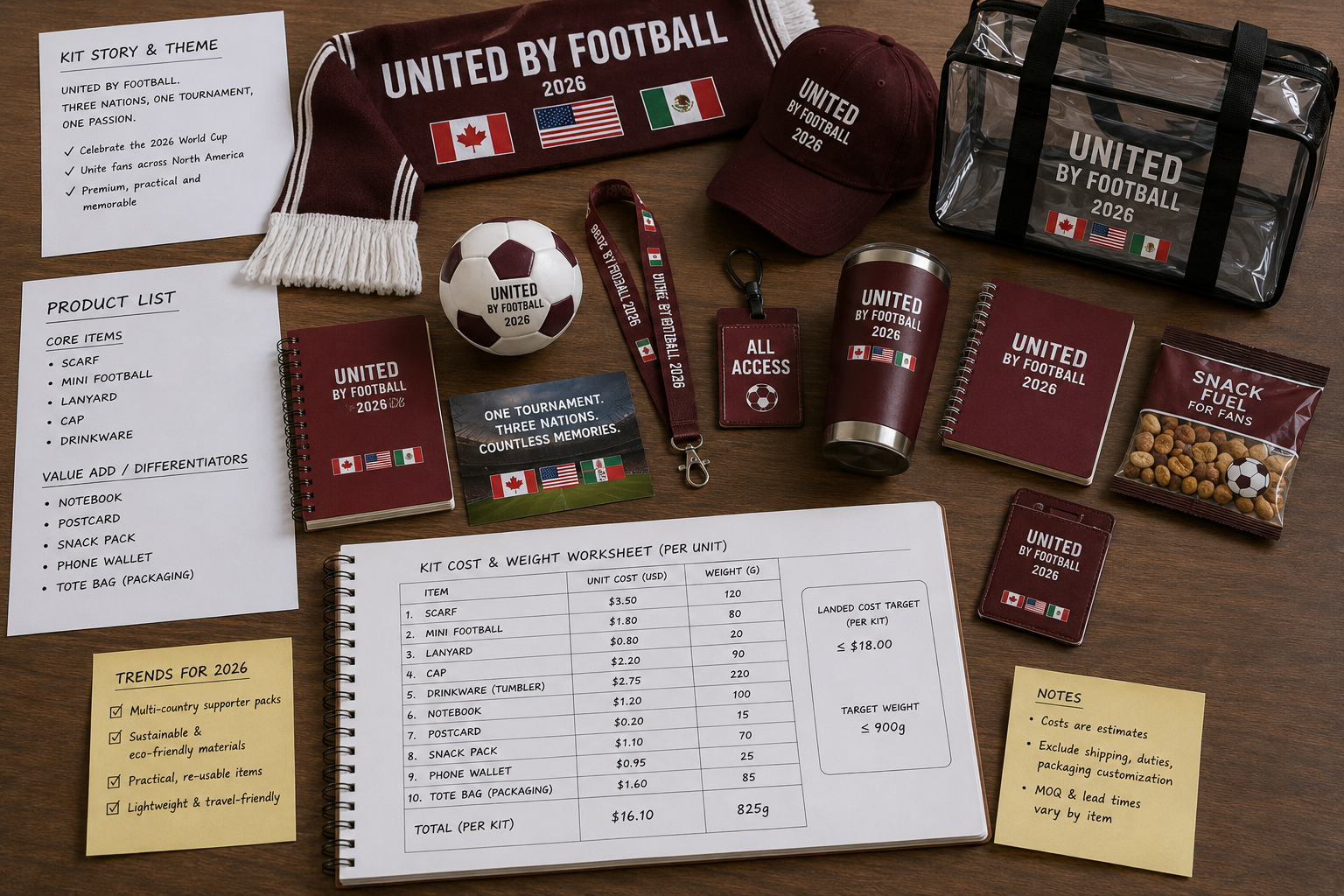
The core items that appear in almost every successful fan kit are well established. A scarf is the emotional anchor it is the item most associated with football fandom, most likely to be worn, most likely to be photographed. A mini football or stress ball adds playfulness and tactility. A lanyard or badge reel serves a practical function at events. A cap or beanie extends the kit's wearability beyond the match. Drinkware a branded cup, tumbler, or water bottle adds perceived value without significantly increasing weight.
Beyond the core, the items that elevate a kit from functional to memorable tend to be the unexpected ones. A small notebook or postcard with a tournament message. A packet of locally themed snacks. A custom-printed tote or clear bag that doubles as the kit's packaging. A phone wallet or card holder with the team crest. These additions cost relatively little but change how the kit is received.
Two trends are particularly worth noting for 2026. Multi-country supporter packs kits that celebrate more than one team are seeing strong demand because of the 48-team format and the three-nation hosting arrangement. And eco-friendly merchandise bamboo accessories, recycled polyester fabrics, paper-based packaging is a meaningful differentiator for buyers selling into European and North American markets where retail customers increasingly ask about sustainability credentials.
Once your product list is set, assign a rough unit cost and weight to each item. This gives you an early read on whether your kit is commercially viable before you've committed to any supplier.
Step 3: Understand Where Each Item Comes From
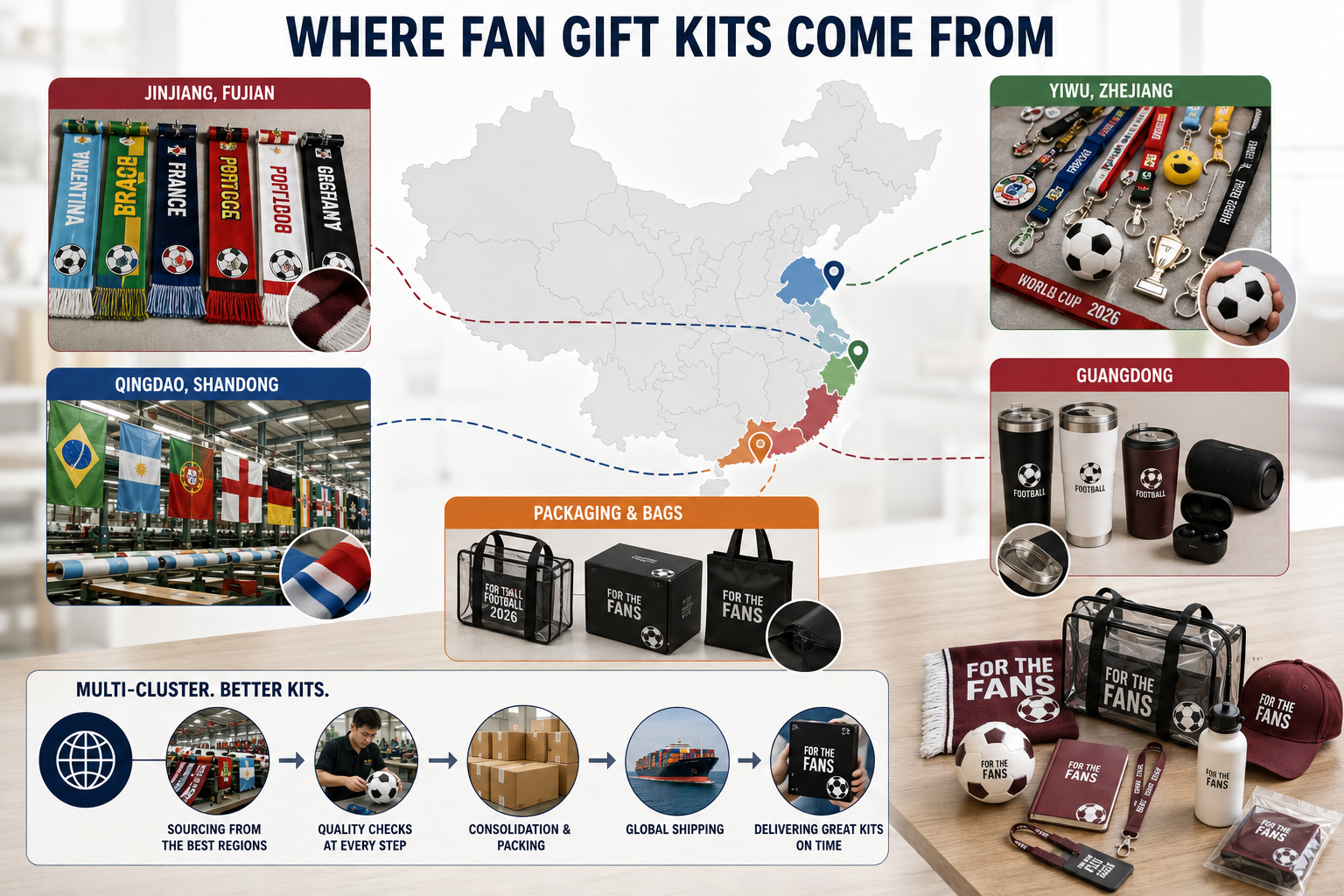
Different items in a fan gift kit come from different parts of China's manufacturing ecosystem and sourcing them well means knowing where to go for what.
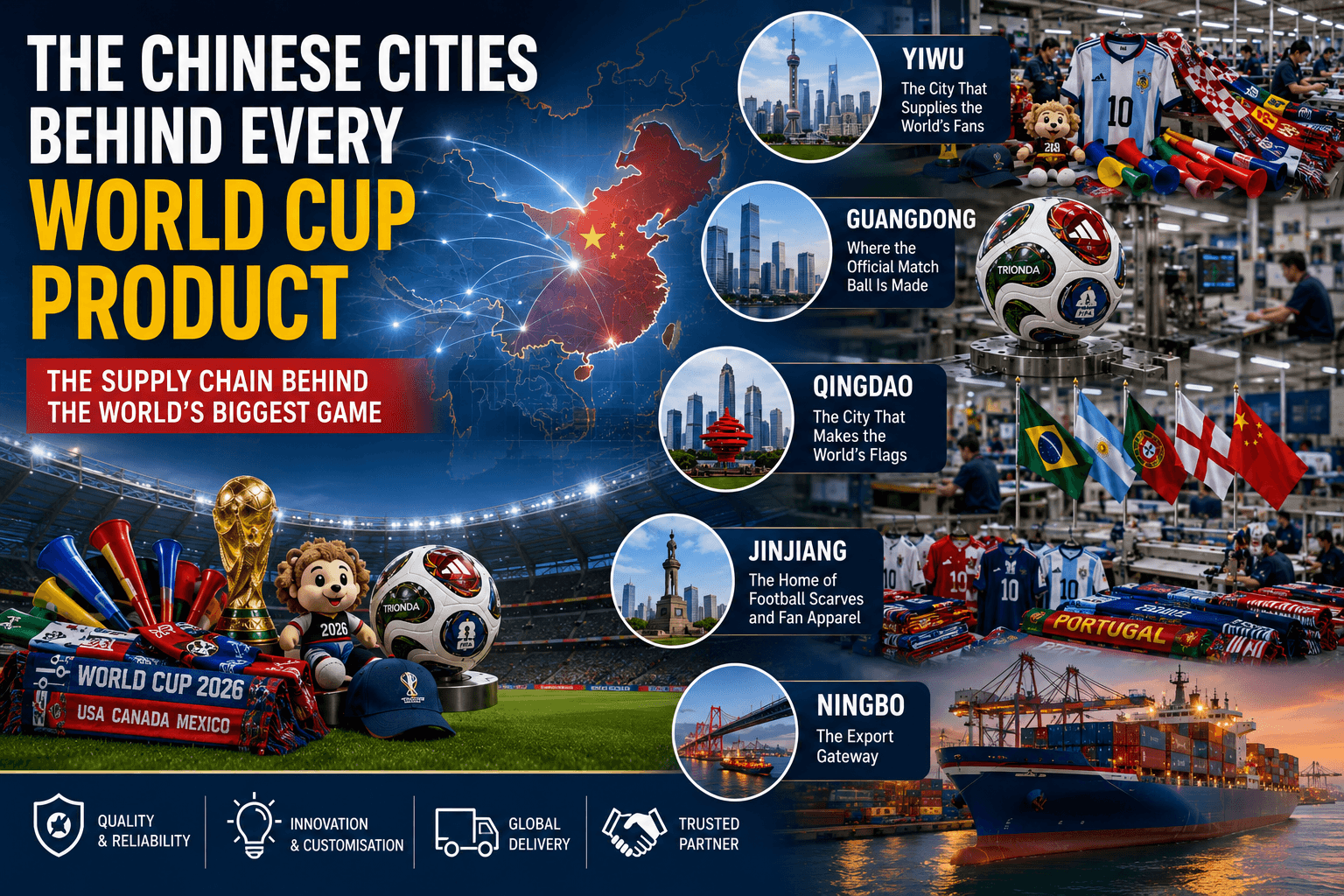
Scarves come from Jinjiang in Fujian Province. This is the world's football scarf capital knitted acrylic, polyester print, and woven jacquard production at flexible MOQs and with genuine multi-design capability. If your kit requires scarves in multiple country colourways at modest volumes per design, Jinjiang is where the answer lives.
Flags, banners, and textile decorations come from Qingdao in Shandong Province, where the world's flag manufacturers are concentrated. Small merchandise keyrings, lanyards, badges, stress balls, novelty items comes from Yiwu in Zhejiang, the world's largest small commodity market, which is producing an estimated 70% of World Cup fan merchandise for 2026.
Drinkware, tech accessories, and higher-specification items typically come from Guangdong, where manufacturing capability spans everything from vacuum-insulated tumblers to Bluetooth speakers to custom phone accessories.
Packaging custom boxes, tote bags, clear pouches, branded tissue paper is worth sourcing separately and carefully. Packaging is what the recipient sees first, and it is one of the most effective levers for making a mid-range kit feel premium without significantly increasing per-unit cost.
The practical implication of this geography is important: if you are trying to source a complete fan kit from a single supplier, you will almost certainly compromise on either quality, variety, or price. The best kits are assembled from the best sources for each category, then consolidated for shipping. This is where a sourcing partner who knows these manufacturing clusters adds genuine value handling multi-supplier coordination so you don't have to manage five separate factory relationships across four Chinese provinces.
Step 4: Navigate Custom Design and IP Carefully
Customisation is what transforms a generic fan product into a branded gift kit. It is also where some sourcing projects run into legal complications that catch buyers completely off guard.
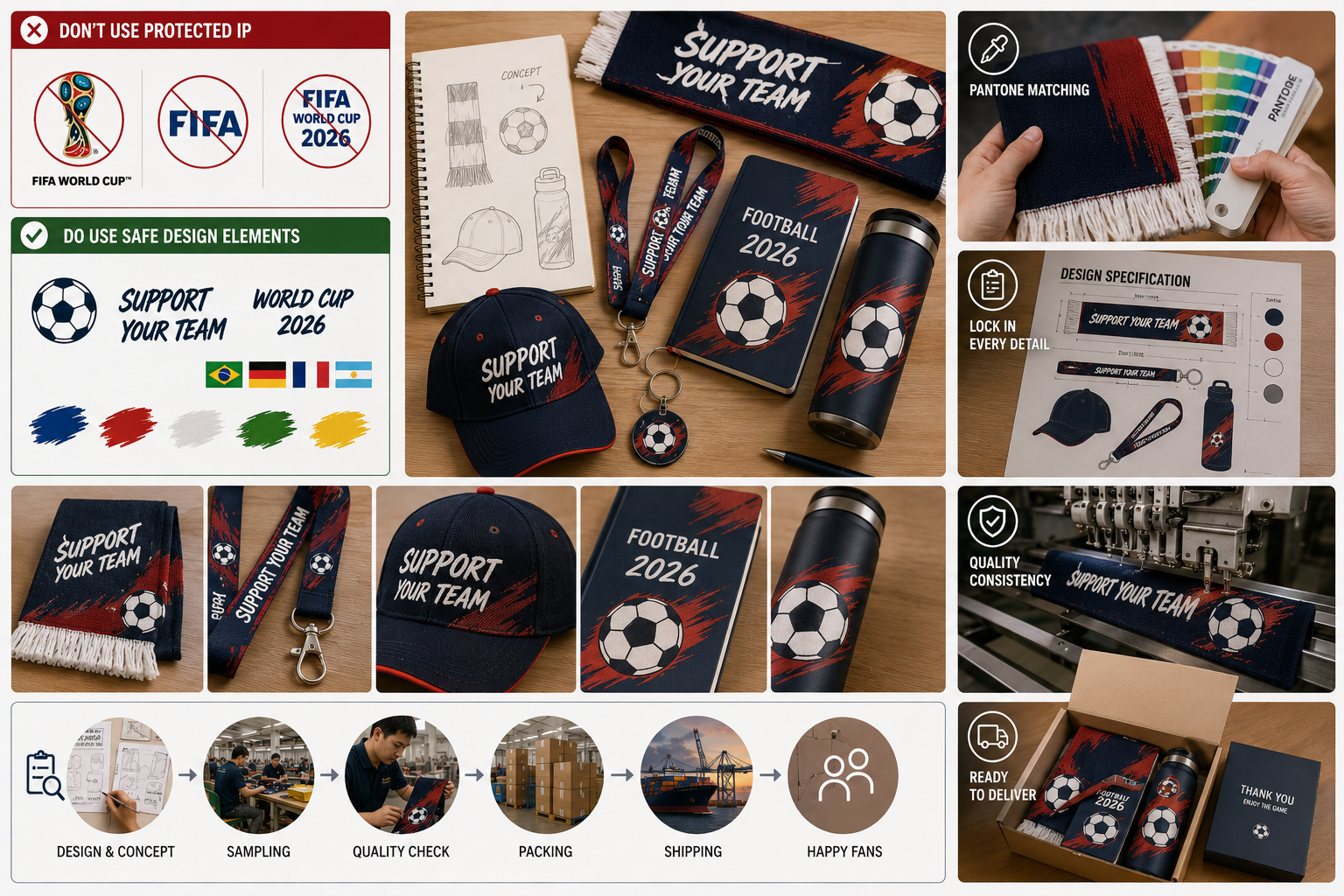
FIFA protects its intellectual property aggressively. Unauthorised use of official logos, the FIFA World Cup name, the official mascot, or official tournament branding can lead to legal action and seized shipments. This is not a theoretical risk it is a well-documented reality for buyers who have sourced products with FIFA-adjacent branding without securing the appropriate licence.
The standard and safe approach is to build your custom designs around generic football imagery, national colours, country flags, and phrases that reference football fandom without using protected tournament terminology or official marks. "Support your team," "World Cup 2026," and national flag designs fall into a grey area that most buyers navigate successfully with careful design choices and legal review. Official logos do not.
If you want to use officially licensed World Cup branding, FIFA's licensing process involves a formal application, approval, and royalty structure that significantly changes the economics of your kit. For most corporate hospitality and brand activation kits, this is neither necessary nor practical. Design around the moment, not the trademark.
On the supplier side, always specify your design in writing Pantone colour references, not approximate descriptions. "Navy blue" means something different in every factory. "Pantone 289 C" does not. Lock in colour references, logo placement, font specifications, and finish details in a written specification document that forms part of your purchase order. This single step eliminates the most common source of quality failures in customised product sourcing.
Step 5: Manage Lead Times Like Your Campaign Depends on It Because It Does
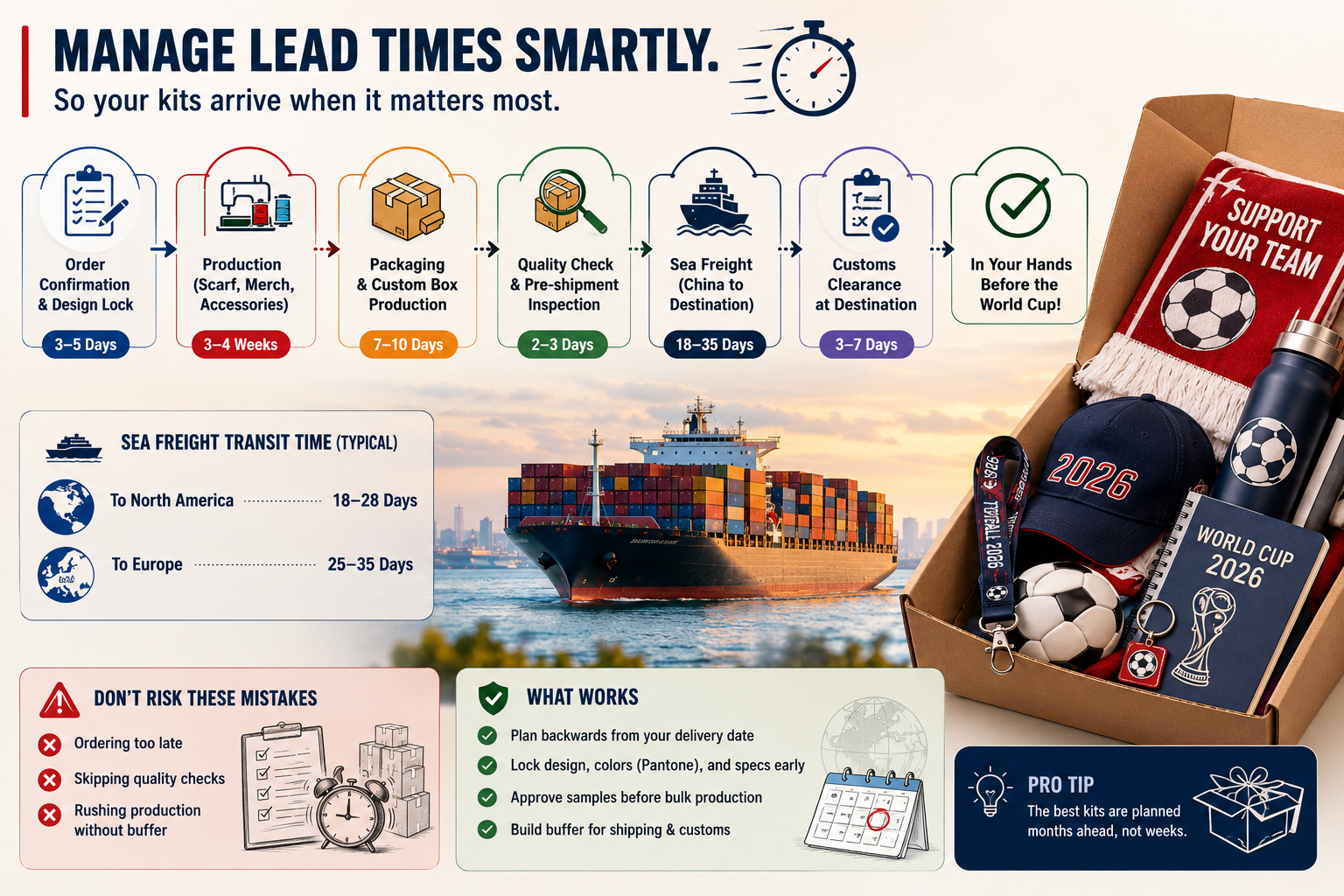
The World Cup window is commercially meaningful for roughly eight weeks: a period of peak demand beginning approximately two weeks before the opening match and declining sharply after the final. Everything you source needs to arrive before that window opens, ready for distribution. Working backwards from that arrival date defines every sourcing deadline in your project.
Production lead time for most fan kit items scarves, small merchandise, branded accessories runs three to four weeks from order confirmation and approved sample. Custom packaging typically adds a week to ten days. Pre-shipment inspection adds two to three days. Sea freight from China ports to North America runs eighteen to twenty-eight days; to Europe, twenty-five to thirty-five days. Customs clearance at destination adds three to seven days.
Run those numbers from your required in-hands date and you will quickly understand why experienced sourcing teams were placing orders months ago. For anyone still placing orders now, the realistic options narrow: air freight for smaller, higher-value items where the margin supports it, or sea freight with aggressive production timelines for suppliers who have genuine capacity.
What does not work is squeezing every stage of the timeline and hoping. Quality inspections skipped under time pressure are the single most common cause of kit failures. The shipment that arrives on time with the wrong Pantone, the wrong logo placement, or the wrong stitch count is worse than no shipment at all because you have neither the product you needed nor the time to fix it.
Step 6: Think Through Kit Assembly and Packaging Logistics
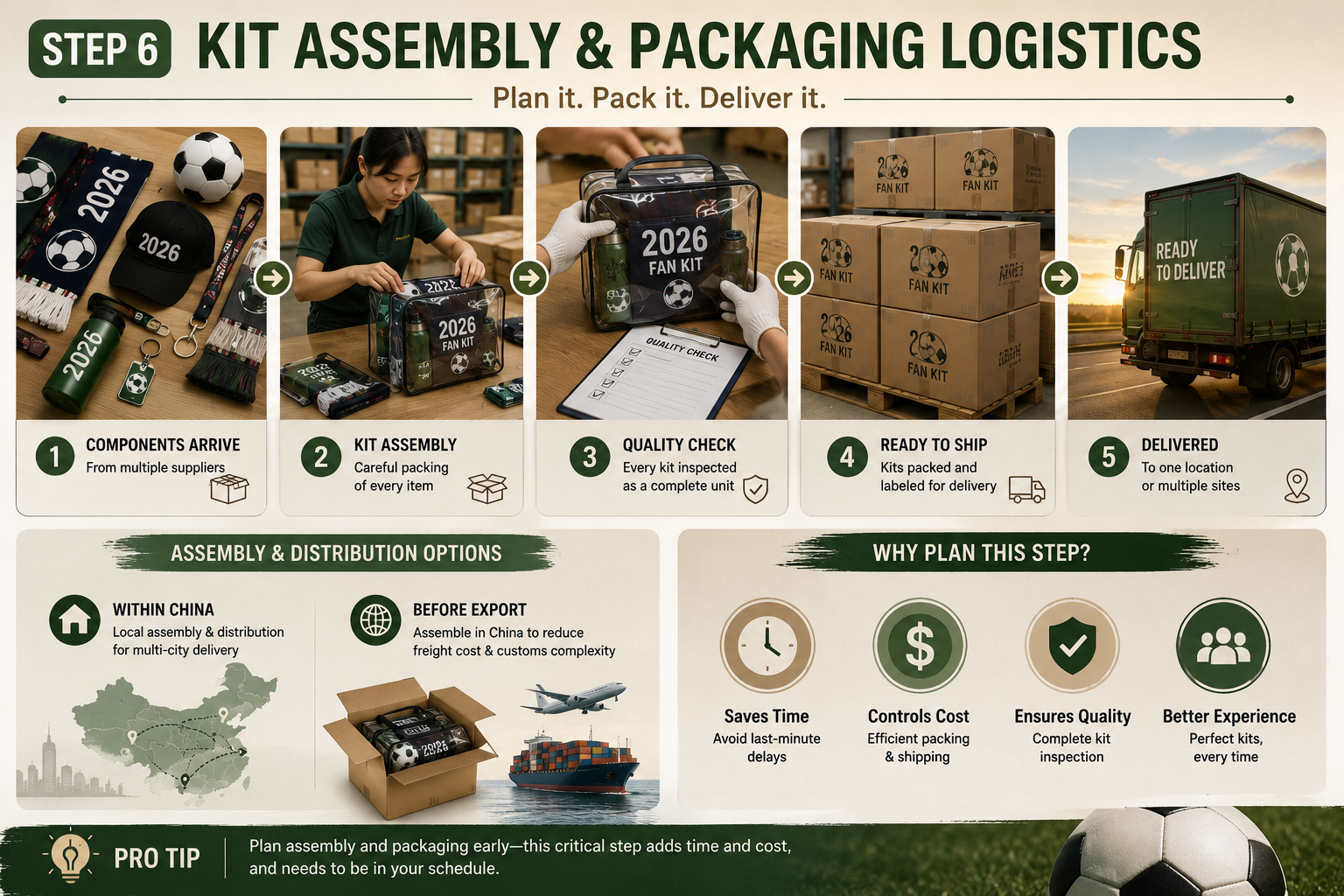
One aspect of fan gift kit sourcing that buyers frequently underestimate is the final assembly step. Individual items arrive from different suppliers at different times. They need to be packed into the kit packaging, quality checked as a complete unit, and either shipped to a single destination or distributed across multiple locations.
For kits being assembled and distributed within China for example, delivered to a hotel group with properties in Shanghai, Beijing, and Guangzhou local assembly and distribution is often the most efficient approach. For kits being shipped internationally as a complete assembled product, assembly in China before export typically reduces freight cost and customs complexity compared to importing components separately and assembling at destination.
Whichever approach you take, plan the assembly logistics before you finalise your production timeline not after. The space between "all components have arrived" and "completed kits are ready to ship" is a step that adds time and cost, and it needs to be in your schedule.
The Kits That Work and the Ones That Don't
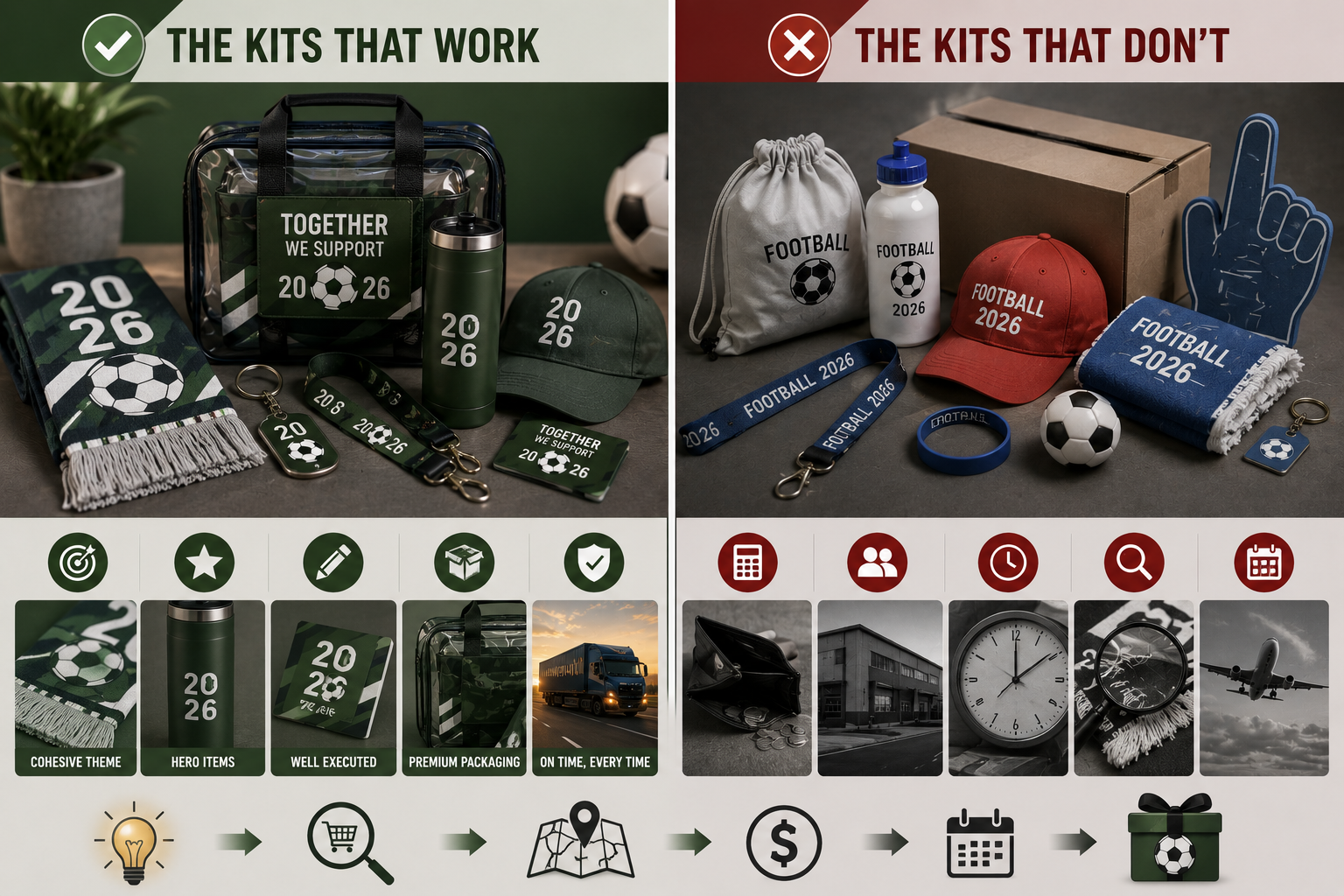
After all of this, the fan gift kits that genuinely work share a few common characteristics. They have a clear, coherent theme that runs through every item. They are built around one or two hero products typically a scarf and a piece of drinkware with supporting items that complement rather than compete. Their customisation is specific and on-brief, not generic. And they arrive on time, in packaging that makes the first impression count.
The kits that don't work tend to share a different set of characteristics. They were conceived without a clear budget. They tried to source everything from one supplier to simplify the process. They skipped the sample stage to save time. And they underestimated lead times by assuming the most optimistic version of every timeline.
The gap between these two outcomes is not creativity or ambition it is sourcing discipline. Know what you want. Know where it comes from. Know what it costs in total, not just per unit. And give yourself the time to do it properly.
How SourceWithAI Builds Kits With You
Fan gift kit sourcing is exactly the kind of multi-component, multi-supplier, multi-design challenge that SourceWithAI is built for. We work with brands, event organisers, and corporate buyers to take a kit concept from brief to completed product identifying the right manufacturers for each component, coordinating production across multiple factories, managing quality inspection, and consolidating shipments so the complete kit arrives where it needs to be, when it needs to be there.
Our supplier discovery and matching service gives you access to verified manufacturers across China's fan merchandise ecosystem the scarf factories in Jinjiang, the small goods producers in Yiwu, the packaging specialists in Guangdong so your kit is built from the best source for each item, not the most convenient single supplier. Our sourcing consultation service helps you navigate the decisions that shape the kit's commercial viability: product selection, custom design specification, timeline planning, and total landed cost modelling.
If you are building a fan gift kit for World Cup 2026 whether for hotel activations, corporate hospitality, retail, or brand events the window is tight but still workable with the right support.
Tell us what you're building and we'll tell you what's possible. Book a free consultation with the SourceWithAI team and let's get your kit into production.
SourceWithAI.com helps global buyers source smarter from China with verified suppliers, expert consultation, and on-the-ground expertise that buyers can trust.
Written by
Eva Liu
June 26, 2026 · 9 min read